Portada_AJ_0014544_watermark

Some structures see the light…

This morning we have enjoyed a very intensive day of much activity with multiple tasks and very good feelings. With the support of one of our inspectors, Mohamed, the GIS team has explored the site of El-Tarif, where they have taken points for the composition of our Digital Elevation Model (or DEM in abbreviated form). This will allow us to understand the Theban landscape in a better way.

Jesús and Kate (to whom José Pérez will join soon!) have developed a complete plan of work including not only El-Tarif but also Dra Abu el-Naga, Sheikh Abd el-Qurna, Asasif South and even some parts of Karnak in the East Bank. They are using a GNSS receiver Trimble R12 that connects with a satellite network of data correction in real time and allows us to take points in a quick fashion.

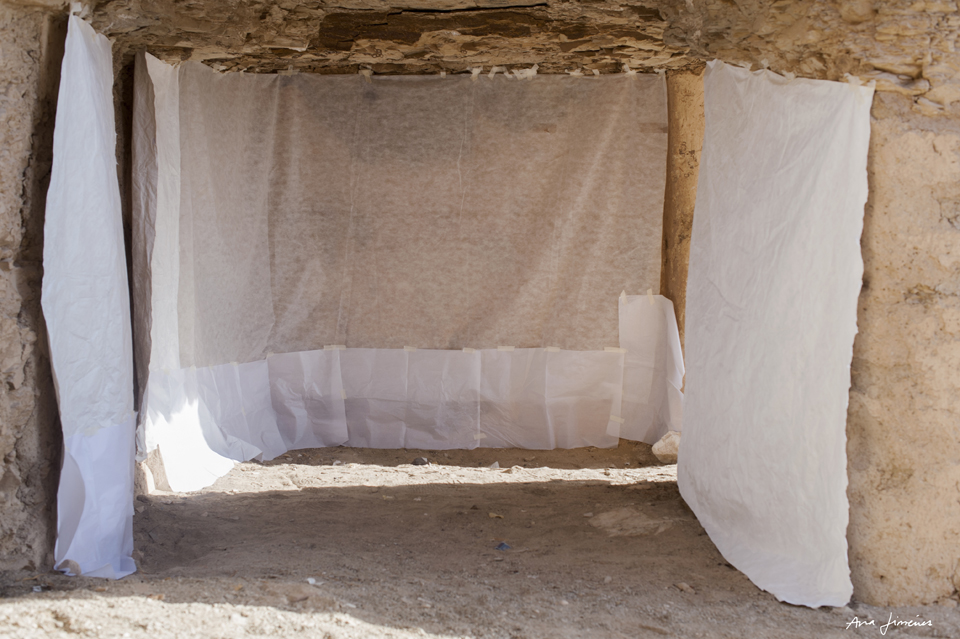
On the other hand, our archaeologists have faced their initial problems with the cleaning work in the transversal hall. While José Alba and Laura aimed at finding the bedrock (i.e., original floor of the tomb of Djari) surrounded by the especial fabrics installed here to cover the paintings, other workmen led by rais Alí continued cleaning the pile of debris at the southern slope in the complex. The removal of these remains (most of them modern!) will allow us to recover the complete plan of the saff façade and examine the southernmost pillar, which has been covered for many years. In fact, the publication of the tomb by Herbert Winlock and the Porter & Moss topogaphical bibliography do not include that area in their plans. At the end of the day, the cleaning of the transversal corridor has led us to the white limestone bedrock, which shows a fragile aspect and requires more work for its preservation (and to avoid stepping on it).

Regarding the tomb of Dagi, the cleaning of the easternmost section of the transversall hall has been initiated with the removal of the most superficial strata (mainly mud brought by heavy rains and fragments fallen from the tomb ceiling or its walls) and the search of the bedrock, which we hope to find tomorrow Thursday.

This morning members of the conservation team visited Djari to hang the protective coverings that they had tested yesterday in preparation for cleaning and excavating of the ground. Regarding Dagi’s tomb, the conservation team continued documentation of special finds, mainly consisting of decorated wall painting fragments, and have begun discussing the iconographic features they are seeing. So far, they have found multiple pieces that seem to belong to a geometric frieze and a Kheker relief that would have framed some of the scenes. This has allowed them to compare the fragments with the wall paintings that remain in Dagi, and it seems that certain areas were painted by different artists, as there are variations in their stylistics techniques. It is amazing to imagine how many different hands may have contributed to the decoration of this tomb. Some fragments also include hieroglyphs and Jaume has been tutoring the other team members about their meaning.

In discussion with Raúl and Antonio, they have begun recording the different layers of plaster that remain on the wall. Interestingly, in some sections there are up to four layers of preparatory mud plaster. This likely would have been done to smooth and make even the surface of the wall in preparation for painting. As they are now considering how they might reattach fragments to the wall once they have identified their original position, the conservation team will be learning from the craftspeople of the past in order to develop similar methods.

Portada_DSC4763

From Mentuhotep II to St Epiphanius

This year, one of the ramifications of working in the Asasif sector is that the situation allows us to face very different problems from the ones we experienced in the complexes of Henenu (TT 313) and Ipi (TT 315) in the northern hill of Deir el-Bahari.

In opposition to the considerable courtyards and the multiplicity of subsidiary chambers as found in the complexes of Henenu and Ipi, the tombs of Djari and Dagi welcome the visitors with a local architecture based on a very characteristic saff façade, a smaller courtyard, and colorful paintings imbued with significant symbolism. An example of the mythological meaning of these scenes is the presence of a sycomore fig tree loaded with figs that some men tried to collect –scene attested in both tombs–, which tells us about the patron goddess of the necropolis in this area, Hathor.

Another situation posed by the current season work is the presence of archaeological remains that expand from the reign of Mentuhotep II (beginning of the second milennium BCE) to the time of the followers of St Epiphanius of Thebes (s. VI AD). The types of analysis, documentation, and interpretations required by structures of mudbrick and stone bound over the centuries is really demanding. Thus, our team of archaeologists face these convoluted contexts, structures, and findings with good discussions, much observation, and the application of the most suitable methods and techniques. That is the reason why it is normal to see that we move from discussing the finalization of the cleaning in the southern slope to the interpretation of the accummulation of various levels and strata from Coptic times over the Middle Kingdom remains of Dagi.

Regarding the conservation team, now that we have initiated the cleaning of the transversal corridors it is critical that the conservators work hand in hand with our archaeologists. On the one hand, we just got a new member: Jaume Vilaró.

The first task for the conservation team was testing materials to cover the exposed wall paintings prior to the cleaning that will start in the corridor in the next few days. They tried out two different fabrics which will keep dust from settling on the paintings. They also received the first delivery of local materials they will use to begin testing recipes for repair mortars – with the help of Rais Ali and the workmen they began slaking crushed limestone, which they will investigate as a possible binding material.

In the case of Dagi’s monument, the conservation team continued to assist with the documentation of the wall painting fragments at Dagi, which has allowed them to begin prioritizing certain objects for treatment. This can be due to the fragility of the fragment, but also if they display especially important features which may help them reconstruct the decorative scheme in the future. Examining the fragments has also allowed them to understand some of the conservation challenges they will be facing, and they have started preparing several adhesives to test for the consolidation of the friable plaster layers.

Portada_DSC4491

Warming up motors (and moustareens)

The actions of today represent the final point for a week of bureaucracy, study, and documentation of the façades and transversal corridors of both monuments. Even if Dagi and Djari performed different functions and got buried in two very distinctive areas of the necropolis, each enjoyed a similar position of power. Dagi’s list of titles displays one of the most interesting positions and epithets of the late XI Dynasty. Djari, as prison director, probably dealt with the Herakleopolitan adversaries of Mentuhotep II and the Theban faction. Their monuments reflect their functions, prestige, and resources to built two of the most important tombs in the Theban necropolis at the beginning of the Middle Kingdom.

In Djari’s tomb we were able to complete the 3D model, document the actual conditions of the façade and transversal hall, and prepare the area for further work. The major task of our archaeologists outside will be the cleaning of the southern ramp in its western sector so that workers find it easy to take the materials out of the complex. In this way, we will avoid having to cross the courtyard of Dagi or to exit through the northern steep slope, too hard for our workers. Besides, our team has proceeded to clean the very surface of the transversal hall where we have already distinguished our initial stratigraphic unit (our S.U. 1000). In addition, our conservation team (Ella, Olivia and Reed) –to which Jaume Vilaró will join tomorrow– has explored the areas of the tomb with paintings to consider the best way to cover the walls during the cleaning.

The archaeologists in Dagi’s tomb have also started to prepare a 3D model, which they expect to finish between today and tomorrow. The size of Dagi’s complex require to extend the task for the next two days. Such a type of documentation –obtained by means of photogrammetry– allows us to know much better the actual condition of the tomb and prepare more detailed plans of the work areas and the monument. While our archaeologists conducted these tasks, the workers continued reconstructing the later wall of the monastery of Saint Epiphanius, the Coptic complex located in the tomb of Dagi and his neighbouring tomb of Sobeknakht, whose traces have reached us there.

Tomorrow, we will initiate the cleaning of the transversal corridors and will put in motion our archaeological work strategies, which include the help of our workers specialized with the shovel, the “moustareens”. At the same time, our GIS experts Kate and Jesús get ready for a new phase in their work; they will develop an ambitious plan to get GCPs (“ground control points”) for our Digital Elevation Model (DEM), the geolocalization of our monuments and the study of the landscape and territory around in Thebes.

Portada_AJ_0014100_watermark

A multi-spectral camera?

In the initial days of the Seventh Season the project progresses slowly and carefully. The archaeological teams continue with the documentation of the funerary complexes of Djari and Dagi, aiming at understanding their architecture, rooms, and materials.

In the complex of Djari (TT 366), Sergio has prepared two 3D models by means of photogrammetry. These models correspond to two crucial areas of the season, the southern sector and the tomb façade. The cleaning of the transversal corridor of the tomb by Sergio, Jóse and Laura will allow us to recover wall painted fragments that might have collapsed. These fragments constitute a very important part of the history of the monument, its texts and images that aimed at providing the deceased Djari with life.

In terms of conservation, while José and Laura continued their documentation of Djari, conservators Reed and Olivia began making plans for how to carefully remove the wooden boards that are covering many of the wall paintings. Because we do not yet know the condition of the paintings, they will have to remove the boards one at a time, making sure to document the entire process. They will also have to be ready to stabilize the wall paintings if it is needed, and will begin testing materials for this in the coming days.

In the case of Dagi’s tomb (TT 103), the primary task has been the recollection of the information regarding the tomb façade: structure and materials of the pillars, types of wall scenes, Coptic architectural modifications, inscriptions from the IX Dynasty, graffiti from St. Epiphanius’s monastery (i.e., the monastery created in Dagi’s tomb between the sixth and seventh century AD), etc. All this information will be increased with the production of a 3D model tomorrow. In addition, our photographers have just used for the first time the multi-spectral camera. This devise has the capacity to recollect images with a very wide range of metadata, which makes it very efficient for epigraphy and conservation. As its name indicates, a multi-spectral camera can detect various types of light wavelength across the electromagnetic spectrum, visible and invisible. Multi-spectral imaging can be employed for the investigation of painted walls and inscriptions, and contributes to understanding the nature of the pigments, the agglutinating agent of the compositions, the types of morter and gypsum for the wall base, and even details regarding the artistic skilfulness with a precision that the human eye cannot perceive. Our photographers Patricia and Ana, with much patience and a relevant knowledge of the device, have already tested its capacities and collected the first results. From the flowing brushstrokes used by the artist in the tomb of Djari to represent the tails of oxen and donkeys to the compact appearance of the red pigment as employed in the monument of Dagi… there are many details escaping the human eye that we will soon know with the multi-spectral camera. 

As for the conservation work in Dagi’s monument, today our conservators Reed and Olivia started the morning discussing the unique mudbrick features that remain from the Coptic monastery in the tomb of the visier Dagi with Raúl. Preserving these traces of the continued use of the structure will be an important part of their work in the tomb, even if our main focus is on the Middle Kingdom! Afterwards they visited the eastern corridor with Raúl, where they planned how to protect the wall paintings when the workers start the cleaning in the next few days. There was one area of plaster detaching from the wall, which Reed and Olivia secured with a removable tissue support, to allow the workers to move around the area without causing any damage. This has also allowed them to practice documenting their work with the same system used by the archaeologists, to ensure that all of their work can be coordinated with the rest of the team.

Portada_AJ_firmado_DSC4996

The significance of documentation

Today, it was not as hot as in the previous days and this has contributed to the productive day we got. After our Friday break –and the incorporation of new members– we started at 6:30 am with the distribution of the initial duties (some of them really basic!) and the distribution of the project members. Some of them work in a particular tomb or must move around the site the entire day (e.g., photography, GIS). Therefore, early in the morning we were already in our positions and ready for the plans previously discussed.

Even our rais Alí encouraged our 25 workers to start working allahtool (in Arabic: “right away”). One of the initial problems to resolve was the reconstruction of the tents, which collapsed with the wind the previous night. With good fixing points, new ropes, and much excitement, our Qurnawi friends succeeded and fixed them in a few minutes. Truly, there are not many jobs where one feels that he learns about people as in our case, where the efforts, attitude and good mood of the Egyptians teachs us much (and deeply) about life and its meaning. Perhaps, that is the reason why our gafirs (Arabic for “guards of the necropolis”) offer themselves to take care of part of our equipment during the night, or why we enjoy local food for breakfast, or even why a local worker shares a motorbike ride with one of our colleagues to the hotel where we stay. Everyday, work fuses with respect, care and the feeling that we do love what we do.

Of course, all these anecdotes and stories go hand in hand with the development of our work plans. One of the scientific interests of the Middle Kingdom Theban Project is the holistic comprehension of the monuments belonging to this period. Our presence in the necropolis of Deir el-Bahari and Asasif brings us this opportunity and we must gather all the trascendental information to confirm previous theories or to suggest new ones about this cemetery and the people who built it. Thus, is it of utmost importance to document the current status of the tombs, as well as to register both manually and digitally all the possible data and characterise every monument through the most advanced technologies and the traditional methods more practical. This procedure, which sadly is not as common as one would believe, allows to begin the archaeological excavations with all the original information, before being part of the creation of a new story for the monument.

In the tomb of Djari today’s work consisted on the preparation of targets and points to document the area that we are going to clean and adequate for the archaeological tasks to carry out next week. This area of the courtyard (south) will soon become an effective exit form the funerary complex without being to step onto other concessions. On the other hand, José and Laura were focused on verifying the location and current condition of the paintings in the façade of Djari’s tomb. For those who are not familiar with the wall paintings from this period, the scenes of the tomb of our director of Theban prisons are one of the most significant (and lesser known!) of the provincial art of the XI Dynasty. The works our team will carry put during the next weeks will allow to raise interesting questions about the painting and composition style as well as about the craftsmen who create them, besides other technical aspects such as the preparations of the walls, the mortar and the pigments.

The team working in Dagi’s funerary complex has also started to assess the current state of the tomb, paying special attention to the most problematic issues regarding the preservation of the wall paintings of the tomb. Despite the quality of the stone and the high level of artistic skills of the author or authors, these paintings present some deterioration and require a thorough study and an appropriate restoration methodology. On the other hand Jaime, Carmen and Raúl were able to locate some graffiti of the Coptic era that tells us about the reuse of the tomb as part of the monastery of Saint Epiphanius.

Regarding the conservation team, on their first day in the field, conservation team members Reed Hudson and Ella Andrews were joined by new team member Olivia O’Dwyer. They spent the day examining the wall paintings of Dagi and Djari and organising the conservation materials for the season. Last season they started documenting the wall paintings in Dagi and planning their conservation treatment, and continuing this work will be one of their first priorities. In addition, they are excited to begin work in Djari, which will present an interesting challenge – many of the wall paintings are hidden! At some point in the past wooden boards were installed to protect the wall paintings from the elements, and now the team will have to find a way to remove the boards, while ensuring that the wall paintings hidden behind them aren’t damaged. We will make sure to share photos of the process and the uncovered wall paintings, which haven’t been seen in decades.

_DSC4058

“Fortify your borders and buffer zones for it is expedient to work for the future” (Teaching for Merikare, Pap. St. Petersburg 1116A)

In anticipation to the entangled years to come, the governor at Moalla, Ankhtify, prepared the series of troops that he succeeded to control in the three southernmost Upper Egyptian nomes and advanced against the Theban king Intef II and his coalition with Koptos. The references to the arrangements and intentions of this local leader are a clear example of the situation in the country of the Two Lands, with several regional parties struggling to control the Egyptian throne. Interestingly, a few years before Ankhtify appeared in the sources as part of an “altruistic” mission expanding from Elephantine to Hierakompolis that aimed at counteracting the effects of a dramatic famine and, above all, contributed to distinguish him as an exceptional nomarch. Without such pretensions but keeping the same spirit of Ankhtify “the brave, he who made himself”, the members of the MKTP wait for the initiation of our works tomorrow Saturday. With the help of rais Alí Farouk el-Qeftawi and our incredible workers and friends, we will work for the next four weeks to develop our plans and continue making use of the information to understand the great Theban mountain.

Last night, we received the first six members of the project who joined the small group that was already in Luxor (Patricia, Raúl, Sergio, and Antonio). The group included a couple of members with experience at Deir el-Bahari (José Alba and Carmen Díaz), the new members Jaime Colás (UAH fellow), Laura Hernando (UAH fellow), Jesús Martínez (Margarita Salas postdoc fellow, URV), and Ana Jiménez, professional photographer that joins the team this year. Besides, this morning around 8 AM we also welcome from Great Britan and US three of our conservators, Ella Andrews, Reed Hudson and Olivia O’Dwyer. All of them will enjoy the visual experience of the Theban necropolis and a kind of job that we all love and wish to develop through our field duties.

Despite the heat and too little sleep, the team organized today at 10:30 AM the first work meeting to face with clear plans the first duties in the tombs of Djari and Dagi. The main goals in this season are the excavation, documentation, and conservation of the two façades of the tombs, including their texts and scenes. The originality of these compositions at the end of the XI Dynasty demonstrates the influence of the Theban pre-reunification style in later works. All these works will soon become the target of our researchers’ work and passion.

Portada_DSC4116

Raising the curtains

468 days after our last farewell to Deir el-Bahari, we are back again opening the tombs of a familiar landscape that is at the same time so different. For the first time after 6 archaeological seasons focused on the north and eastern areas of the Theban hill, in the tombs of Ipi (TT 315), Henenu (TT 313) and E1 (MMA 521), in this 7th season all our efforts will be concentrated in the Asasif area.

Our goals this season are the funerary complexes of the vizier Dagi (TT 103) and the director of prisons Djari (TT 366). Both Middle Kingdom monuments still preserve painted decoration on their walls of extraordinary quality, even though the passing of time has caused some damage to them. Thus, an international team of restorers, the biggest we’ve had in the MKTP up until now, will assess the current state of the paintings to decide which is the better strategy to follow in order to preserve as much as possible these treasures of the ancient Egyptian art. 

Our day today was a day of settling in in the field to get it ready for the next three weeks of work at full esteem. A day of reunion with our local experts in Luxor who over the years have become part of the MKTP family, lead by our esteemed rais Ali Farouk, and who we haven’t seen for more than a year. We visited the tombs to ases the current state of preservation, we built the tents which will give us a bit of shadow under the strong Egyptian sun, electricity has been installed, and we discussed in situ how to better proceed with all the plans that we’ve been building the past months in the university offices.

Mid morning our GIS expert, Kate Rose, joined the team already in the field, our moudir Antonio Morales, subdirectories Raúl Sánchez and Sergio Alarcón, and the photographer Patricia Mora. Tonight most of the members of the team of this summer season will arrive from Madrid and Barcelona, all keen to start working next Saturday. No doubt we start a new stage of tasks, research and adventure…

Portada_DSC3977

Four thousand years of administration

Djari and Dagi were comrades in the court of king Mentuhotep II. In fact, Djari was younger than Dagi when the latter was at the peak of his career with an impressive list of prestigious titles. Both served the famous king who had reunifed the country after a life marked by the Theban opposition to the Herakleopolitan power. This event transcended the history of Thebes after a century and a half of internal struggle, irregular economy (though full of opportunities), and the emergence of local chiefs eager of power. The reorganization of the country allowed many officials loyal to the Theban king to promote within the new echelons in the country, while many local elite families that opposed to Thebes disappeared. The administration got new structures and these two officials became two of the most important figures in the new statal domain: Dagi was one of the most important men of the country, visir, Upper Egyptian lord, and even funerary official in the capital; Djari, head of prisons, was a prominent person at Thebes.

After attending the funerals of these two individuals in their tombs at Asasif, not many colleagues of Dagi and Djari could imagine that four thousand years later a team of archaeologists from the University of Alcalá would investigate their history, life, and the ways in which they participated in the changes of this period. The administration represented by these officials in 2000 BCE echoes through the documents, permissions, and concessions of the Permanent Committee in actual Egypt, which protects and cares for the pharaonic monuments. Today, May 3, we initiate the Seventh Campaign with our visit to the officials in Luxor and the West Bank, where Dr. Fathy (General Director) and the directors Dr. Behaa and Dr. Ezz helped us to complete the bureaucratic process and to begin this archaeological and epigraphic adventure of The Middle Kingdom Theban Project. In our Digging Diary, we hope to present the work, progress, and discoveries of our mission, a multi-disciplinary and international initiative that we put in place once more with good expectations: step right up, come right in… see for yourselves!

MKTP - Middle Kingdom Theban Project - Recuperando el pasado
logoUAH-footer

El proyecto

El Middle Kingdom Theban Project tiene como objetivos la excavación, estudio y publicación de varias tumbas de la necrópolis del Reino Medio en Deir el-Bahari (Henenu, Ipi, Neferhotep, E1) y de las tumbas de Dagi (TT 103) y Djari (TT 366) en la necrópolis de Asasif.

MKTP - Middle Kingdom Theban Project - Ministerio Egipcio de Antigüedades

Con la colaboración del Ministerio Egipcio de Antigüedades y las autoridades del Alto Egipto, Luxor y la Orilla Occidental.

Las tumbas

Las tumbas de Henenu (TT 313) e Ipi (TT 315) se encuentran en la colina norte de la necrópolis de Deir el-Bahari, donde fueron enterrados algunos de los oficiales más importantes de Mentuhotep II y principios del Reino Medio. 

La cámara funeraria de Harhotep (CG 28023) fue localizada en el patio de la tumba TT 314 y constituye uno de los ejemplos más interesantes en arquitectura, iconografía y epigrafía del yacimiento. 

En la planicie de Asasif, las tumbas de Dagi (TT 103) y Djari (TT 366) también representan monumentos a la memoria de altos cargos tebanos del reinado de Mentuhotep II que ayudaron a construir un gran estado.

MKTP - Middle Kingdom Theban Project - Patrocinadores - Ministerio de Ciencia e Innovación
MKTP - Middle Kingdom Theban Project - Patrocinadores - Gobierno de Castilla-La Mancha
MKTP - Middle Kingdom Theban Project - Patrocinadores - Fundación para el Conocimiento madri+d
MKTP - Middle Kingdom Theban Project - Patrocinadores - Ministerio de Cultura y Deporte
MKTP - Middle Kingdom Theban Project - Patrocinadores - Fundación Palarq
MKTP - Middle Kingdom Theban Project - Patrocinadores - Parque Científico y Tecnológico de Castilla-La Mancha
MKTP - Middle Kingdom Theban Project - Patrocinadores - Asociación Española de Egiptología
MKTP - Middle Kingdom Theban Project - Patrocinadores - Asociación de Amigos de la UAH

Copyright 2020 MKTP ©  Todos los derechos reservados. Editor: Antonio J. Morales
(con la colaboración de miembros MKTP)
Cookies | Privacidad

Sitio Web realizado por MindHouse