Image: Patricia Mora Photography.
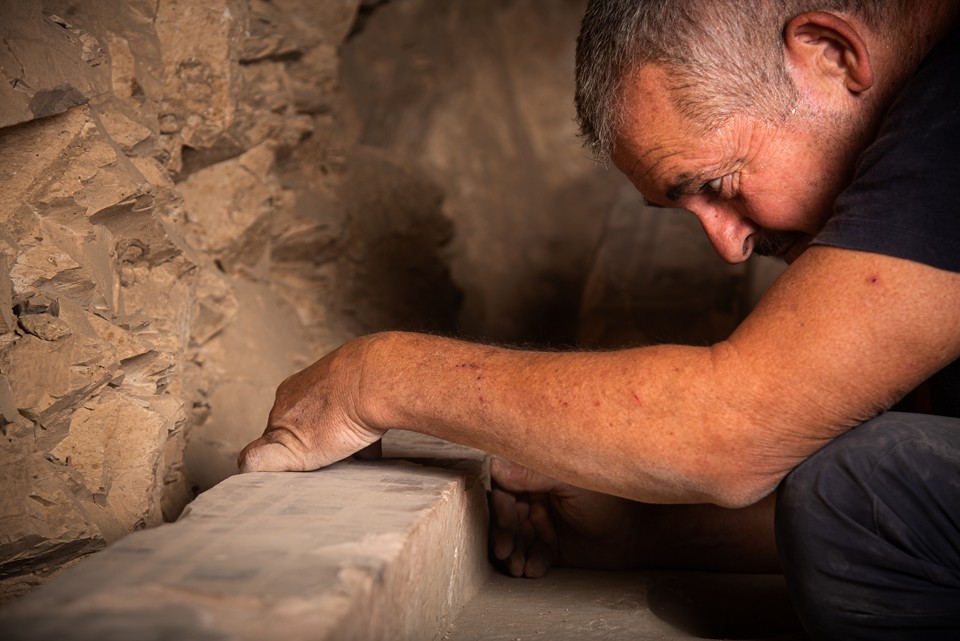
The work plans for this season included not only interventions in two key areas of our concession –the funerary chamber of Ipi and the transverse corridor of Djari– but also the documentation of the associated structures, so as to obtain more detailed information on the creative processes of the ancient builders, artisans, and scribes, and thus to continue our research on these two funerary complexes. On the one hand, we have always considered it significant that the vizier Ipi had a funerary chamber with a sarcophagus that was not placed where it had originally been intended, and that he wished to conceal –although this hypothesis still needs to be rigorously tested– beneath the chamber’s paving. On the other hand, the exceptional nature of the paintings decorating Djari’s transverse corridor implies a complex process of artistic creation. For all these reasons, our work has not only involved the slow, rigorous, and patient tasks of cleaning walls or dismantling heavy fragments, but also the documentation of all walls, images, and texts.
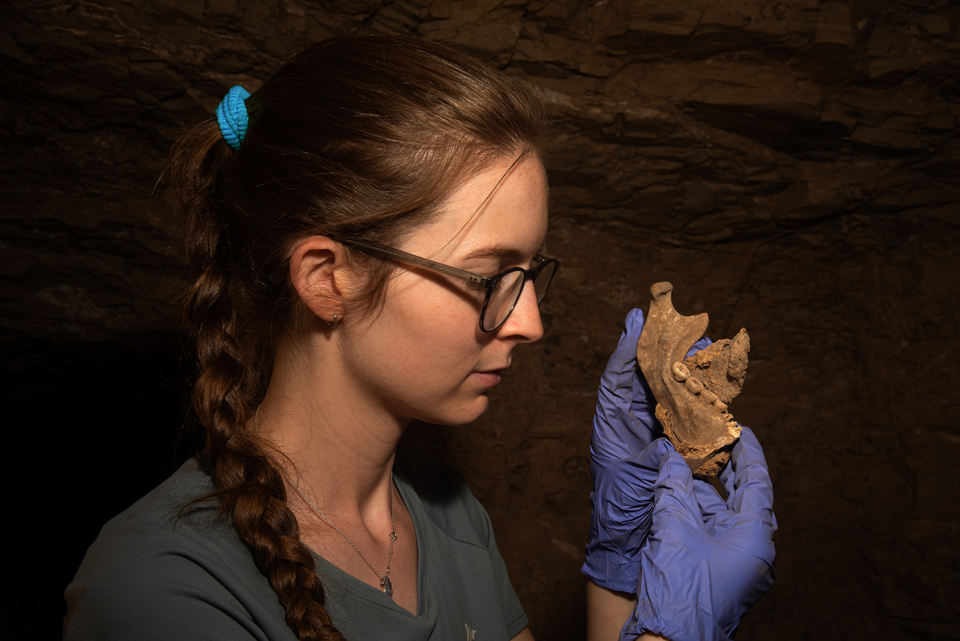
At the Ipi complex, our team has begun packing part of the materials, while our photographer and Miguel have focused on documenting the funerary chamber, the sarcophagus, and the remaining pieces still to be catalogued. One of the resources that most helps in formulating interpretations and closely observing spaces and finds is photogrammetric documentation, which will allow us –after a couple of days of work– to take this type of information back home with us. Meanwhile, Rebekah and Raúl have been searching for the final fragments that can be joined using RE-500 Hilti adhesive (known locally as “chocolata”), so that everything can be left ready for the next season, when we will be able to lift the sarcophagus, clean the rest of the chamber, and reconstruct the fragments that have been removed for restoration, examination, and preparation.
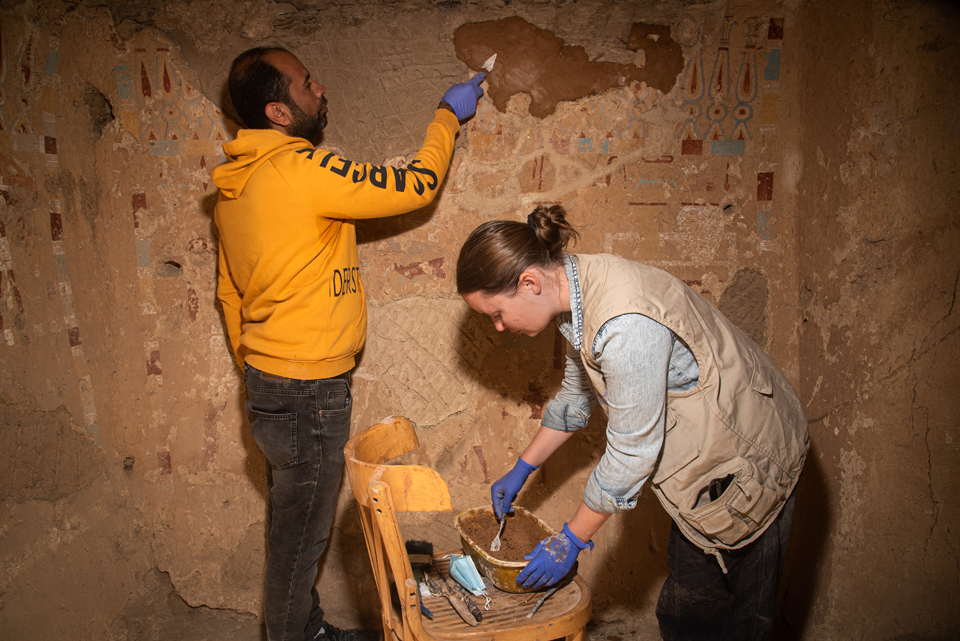
In the case of the tomb of Djari, the pace continues to increase as the final days of work approach. Our photographer, Patricia, has tirelessly documented the tomb in the various intended formats: architecture, general scenes, details, macro photography, multispectral imaging, and more. All this information will help us to gain a better understanding of this monument which, on the basis of its date (late Eleventh Dynasty) and its exceptional character (perhaps with the parallel of Intef in TT 386), constitutes one of the most interesting examples in the Theban necropolis. As for the work itself, Rebekah and Raúl have come over from the tomb of Ipi to assist with finds from previous years, while Miguel has removed all the working tents in the transverse corridor, and over the next two days we will begin installing the wooden panels that will protect the paintings until we are able to complete the structural reconstruction of the tomb. With this task, we set in motion today the plan to dismantle the temporary structures, and tomorrow we will need to start collecting tools and materials as the remaining tasks are brought to completion.
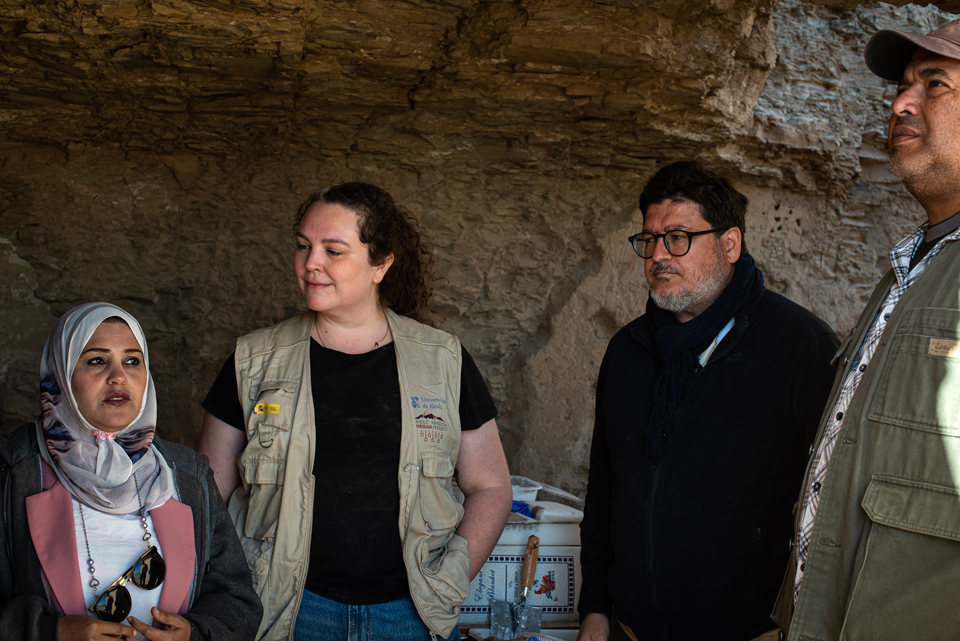
In terms of social visits, today we received numerous officials who wished to express their support and to see how we were bringing the season to a close. On the one hand, we were visited by the Director General of Luxor, Dr Beha Abdel Gaber, who commented on the great interest of the paintings in this tomb and expressed his curiosity about the team’s future work. Later in the afternoon, members of the Luxor restoration committee visited us and discussed the progress made through the use of special mortars for each section of the tomb. Finally, we were visited by our fellow conservators from previous years, Karima and Fatma, who came to greet us and ask about our work. Despite the intensity of the day, it has been a very positive one, in which we have felt strongly supported by our Egyptian colleagues, to whom we extend our sincere thanks.


