Image: Patricia Mora Photography
How could we sum up the end of the campaign in just a few words? Our rais, Ali Farouk, has been a fundamental pillar in the scientific, archaeological, and social fabric that an expedition in Egypt is meant to be. The inspectors, moreover, have contributed at every moment with their professionalism and experience. The gafirs, always watchful from their hills and wadis, have known how to keep—and will continue to keep—the monuments safe and free from incident. It can be said, without any doubt, that all the Egyptian staff have been key to achieving our objectives. And finally, there is the outstanding team of researchers, students, and fellows who have worked tirelessly and with great dedication to meet each of the goals set at the beginning of this adventure. The 2025 campaign represents a small step in the study of the tombs of Ipi and Djari, but it has achieved milestones that will be decisive for what lies ahead in the coming years. Insha’allah, we hope that one day we will be able to say that “it all began with the work carried out in 2025.”
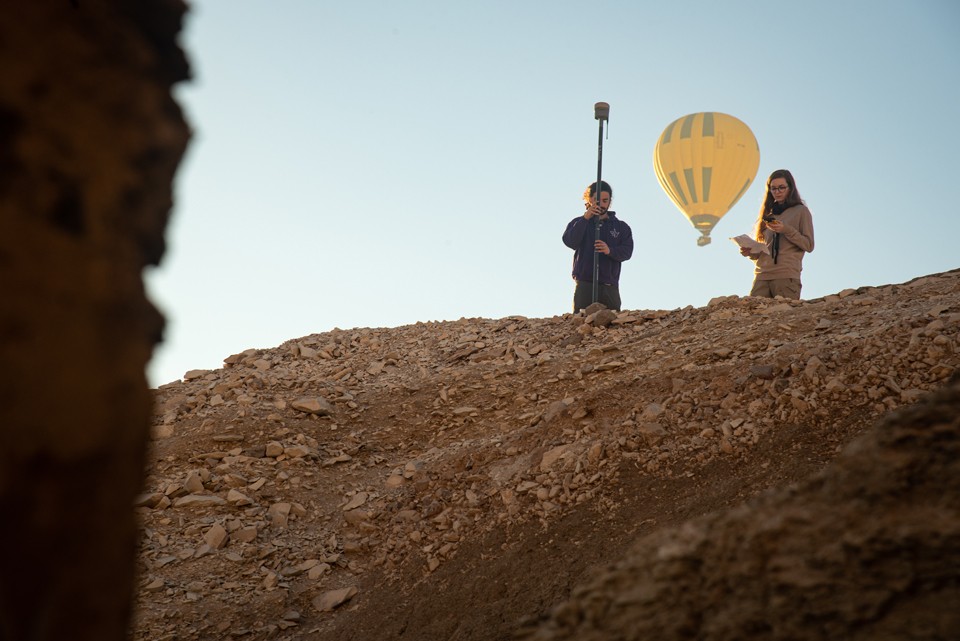
The close of the campaign has come after 30 days of intense work and many stages to overcome, in accordance with the team’s plans for this tenth campaign. The ten years of the University of Alcalá (UAH) expedition and its Middle Kingdom Theban Project outline a general plan that encompasses several tombs of study and a range of political, social, and religious aspects to be investigated. Each campaign, therefore, is a small achievement—a piece of a much larger puzzle that is gradually taking shape. One of the aspects we sought to review this season was the network of points created in previous years: as in the days before, Fernando—this time assisted by Rebekah, who had completed her work in the tomb of Ipi—took measurements throughout the UAH-MKTP concession to assess the accuracy of our data.
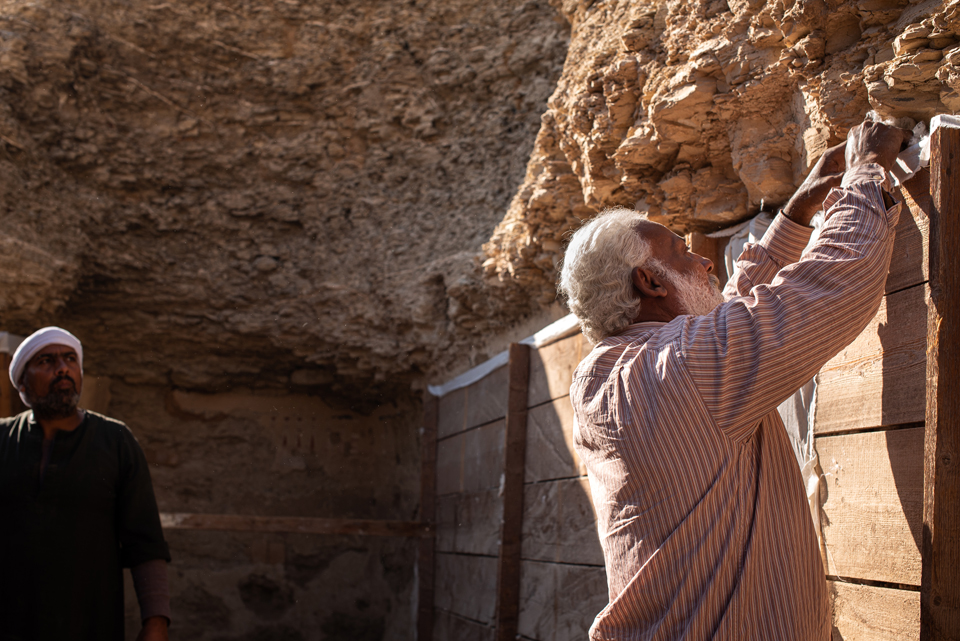
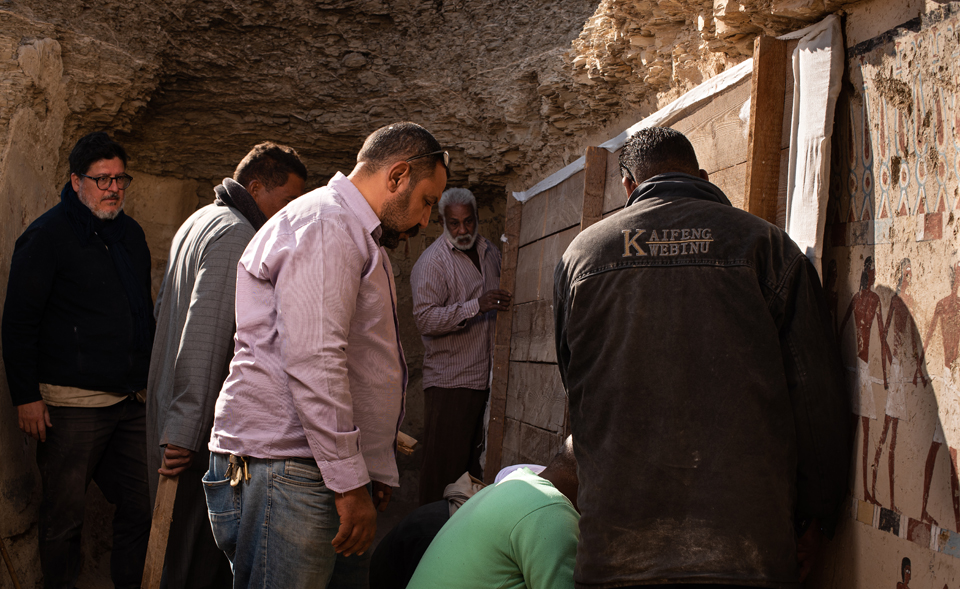
Meanwhile, in the tomb of Ipi, the definitive closure of this campaign was carried out. The head of the gafirs, Sheikh Hagag, fulfilled his duty in the orthodox and ceremonial manner that characterizes this stage, after which the team focused on completing, with some urgency, the remaining tasks in the tomb of Djari. At this monument, the time also came to leave the site, and the plan to protect the structure was put into action. On the one hand, the group of Coptic carpenters reappeared—after having taken measurements two days earlier—with the commissioned boards completed. It was crucial to ensure a padded surface to protect the paintings, as well as a robust and extensive set of boards to isolate them and prevent damage from sunlight, humidity, or any unforeseen mishap. Under the direction of the moudir, the boards were installed one by one with the help of Miguel and Raúl, who took great care to avoid risks, impacts, or accidents, while Patricia documented the process photographically. At the same time, the conservators sought to consolidate or protect certain areas where the installation of the boards might pose more of a problem than a solution.
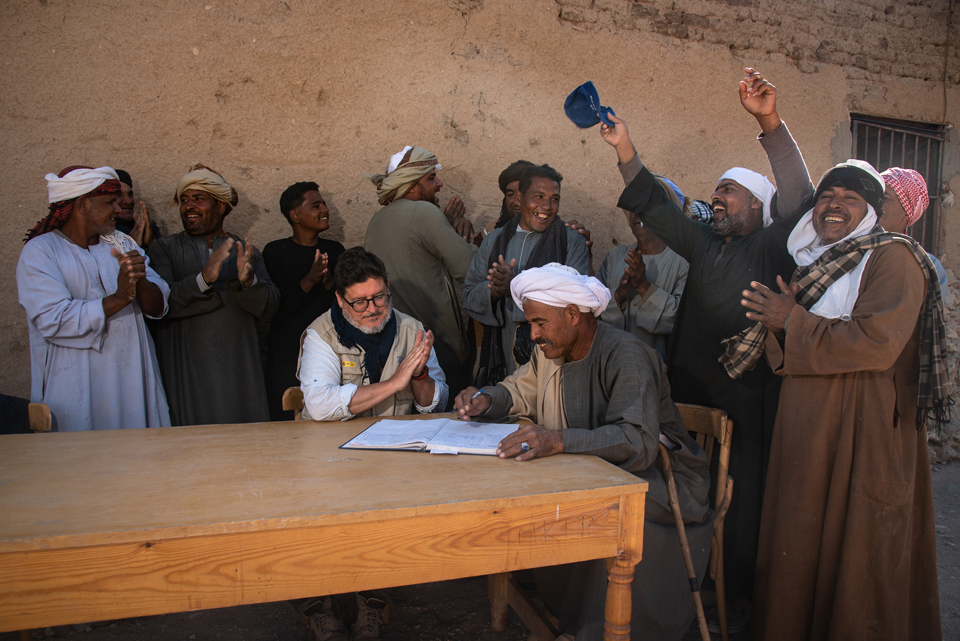
At the end of the day, as tradition dictates, the workers were paid and we all shared a small reception of pastries and drinks, along with the customary signing of the rais’s yearbook, which records all the teams, projects, and details of the expeditions with which our rais has worked.
Tonight, in the early hours, we depart back to our respective homes and institutions, with the satisfaction of having achieved our objectives and the feeling that it is time to take a short break away from the passion, intensity, and excitement that working in Egypt entails.
Thank you, Egypt, for everything you give us, and Happy Christmas to all our friends!


