1_DSC3569

Moving forward with the help of diligent inspectors

Every morning we arrive at the site with the feeling that it is a privilege to enjoy a job and a place like this. The Theban necropolis is one of those still-enigmatic places that holds countless secrets and attracts the attention of thousands of visitors. However, as soon as our work begins, that sense of fascination fades and is overtaken by the commitment and rigor demanded by the tasks we carry out —work that has a direct impact on Egyptian heritage and history. This is why, within minutes, everyone heads to their tables or corners where the materials await, ready to continue a fascinating yet rigorous and demanding endeavor.
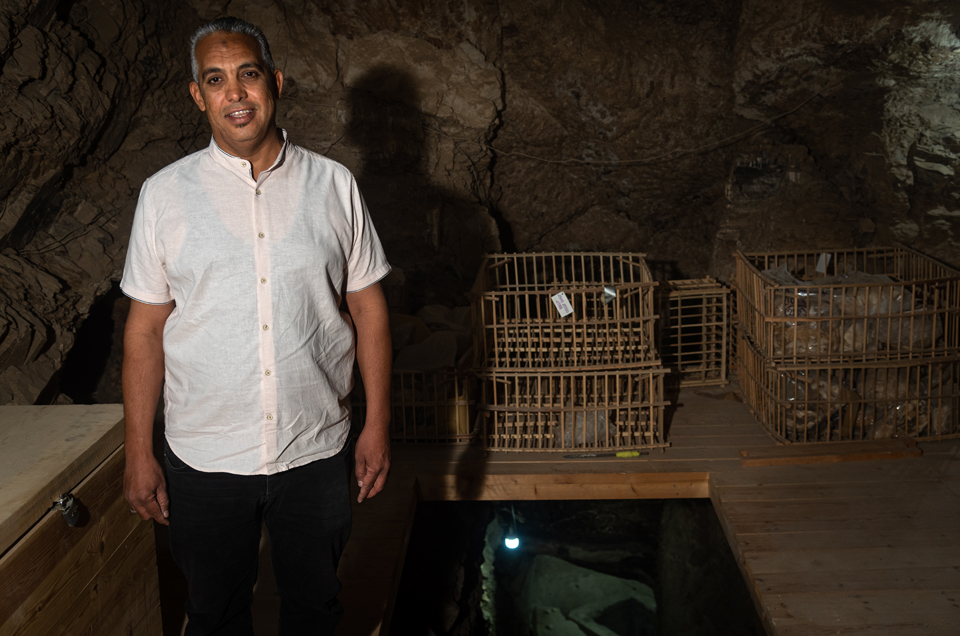
Image: Patricia Mora Photography

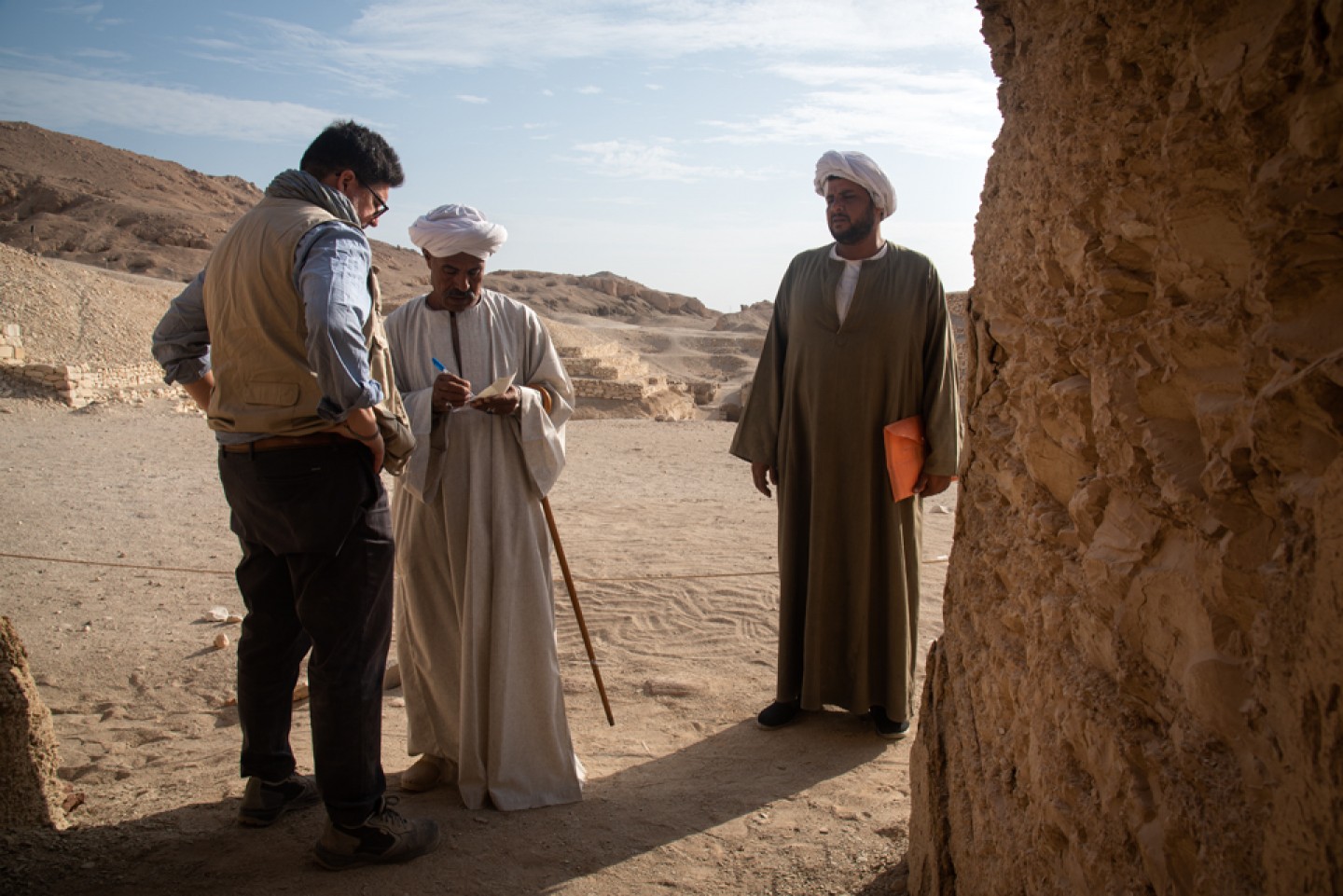
For the work in the funerary complex of Ipi (TT 315), this year we have been assigned an inspector well known to the team: Abu el-Qasem Hagag. Qasem has served as inspector for our project on two previous occasions, and because of that we know each other very well, sharing the kind of mutual understanding that only develops over time. Over the past few days, Qasem has been an essential help in preparing the work on Ipi’s sarcophagus, and we are certain that by the end of the season—as has been the case before—he will have become another member of the team, contributing just like everyone else to achieving the goals set for this campaign. He is an excellent inspector, with experience and the ability to assist, and this is evident in the day-to-day work. Together with Aabla, our inspector for the tomb of Djari, both can be considered important assets who bring value to the role of inspectors and strengthen the relationship between the teams and the Egyptian Ministry of Tourism and Antiquities.
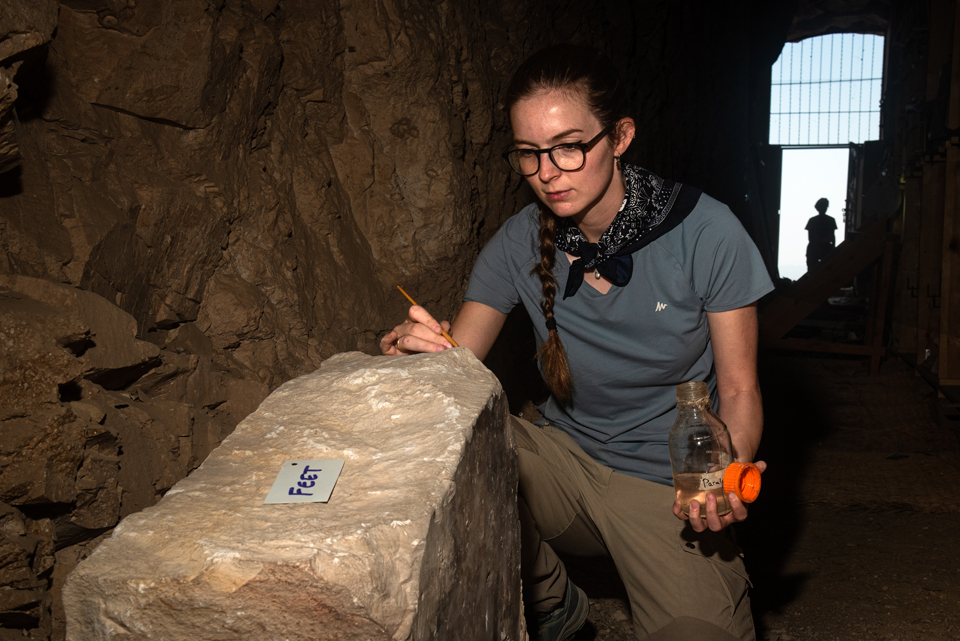
Image: Patricia Mora Photography

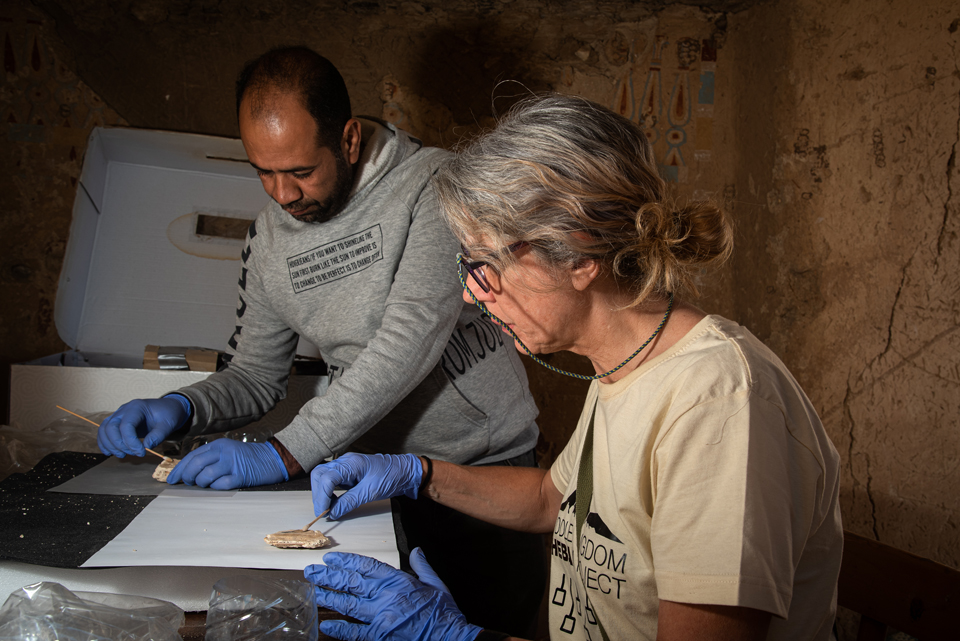
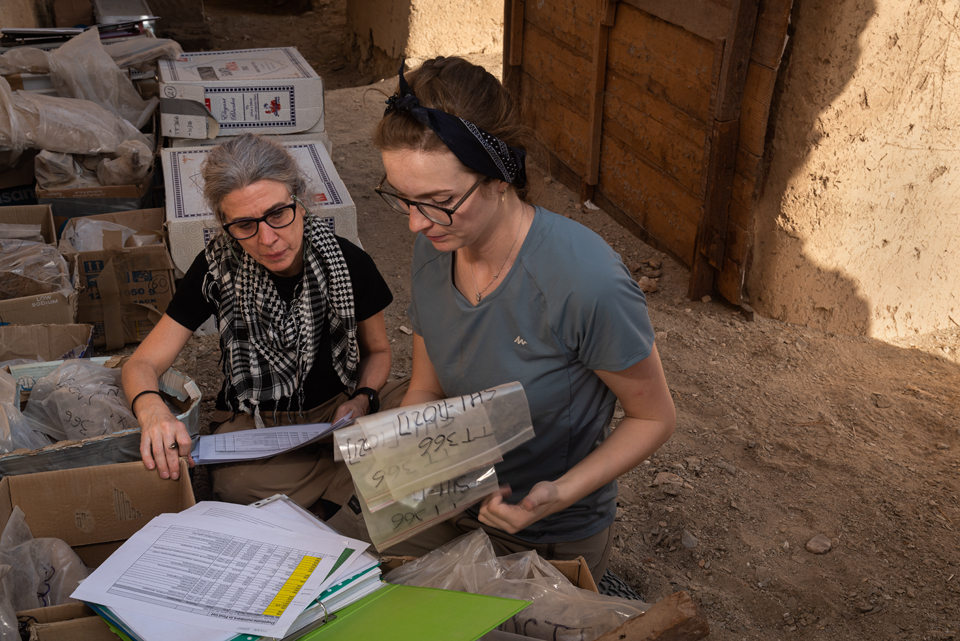
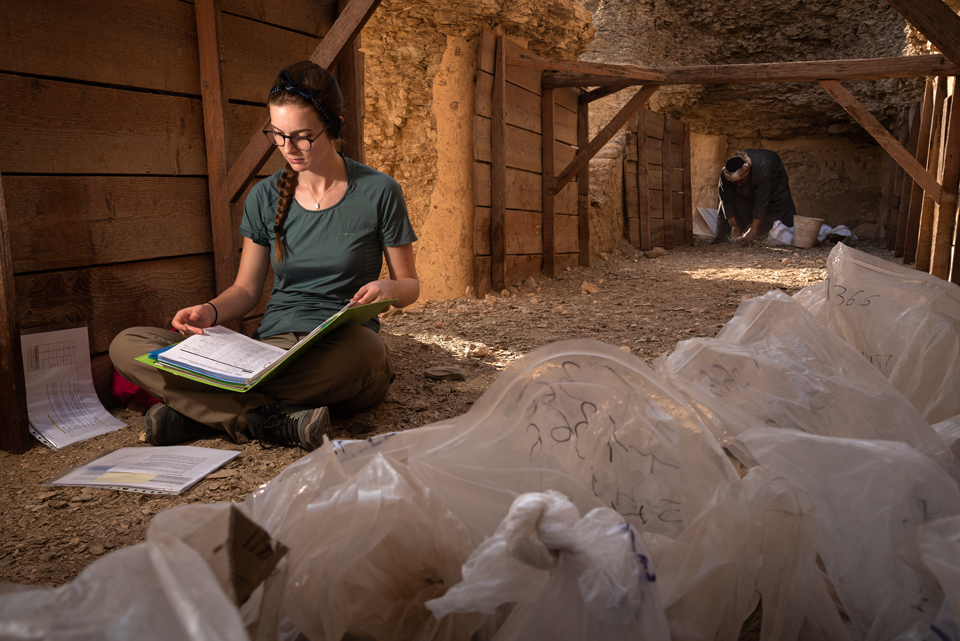
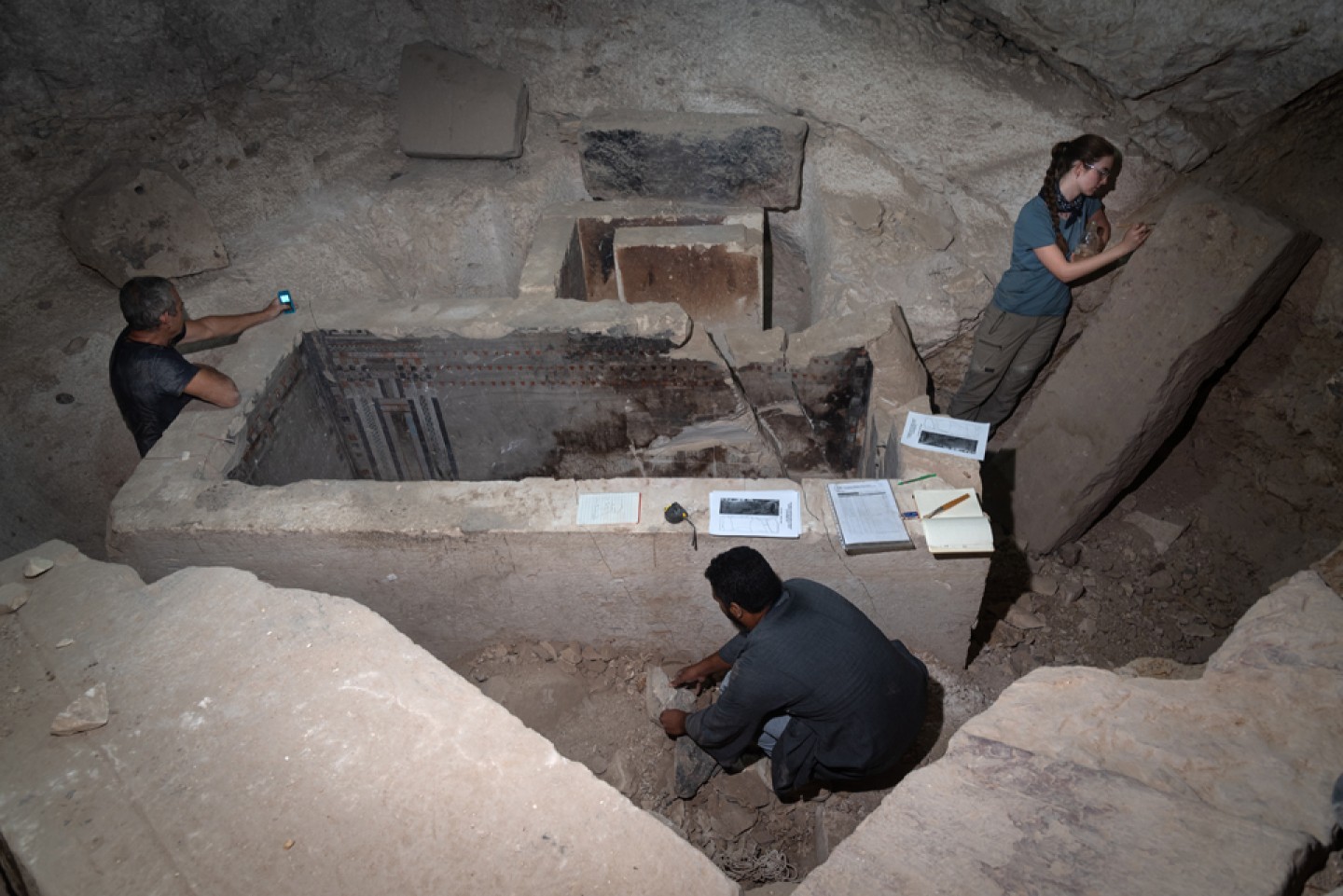
In addition to removing the fragments of Ipi’s sarcophagus —a task carried out by Miguel— the team dedicates time to inventorying the fragments to ensure that they are fully identified and located. These days, our colleague Rebekah has been working on this task, and alongside the systematic labeling of each fragment, she and Miguel keep a detailed record of the position each piece occupies on the plans of the sarcophagus walls. The cataloguing of each fragment —its original position, characteristics, photograph, and drawing— will later allow us to advance in the complete reconstruction of the high-quality limestone sarcophagus of the vizier Ipi.
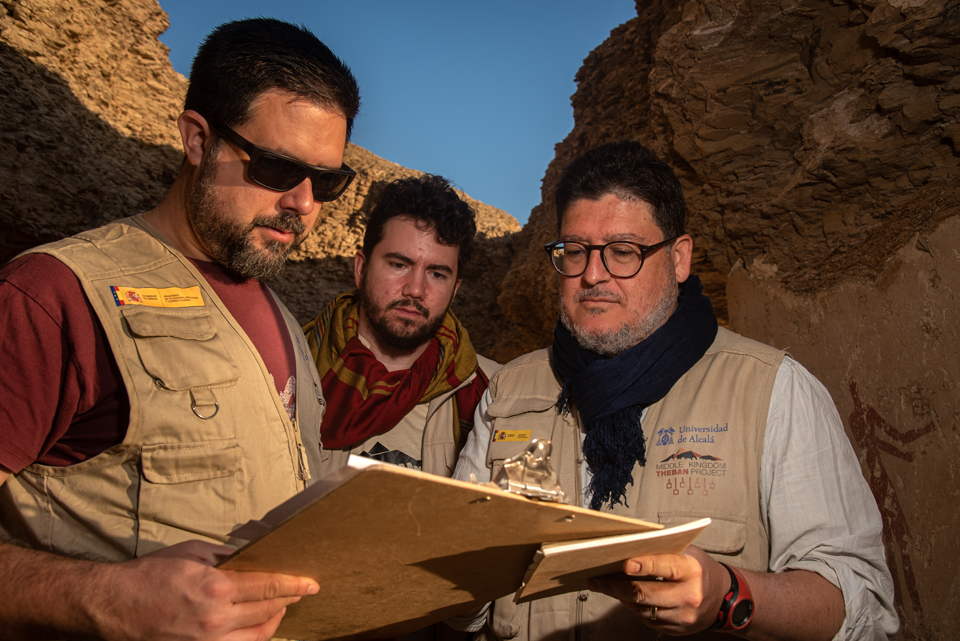
Image: Patricia Mora Photography

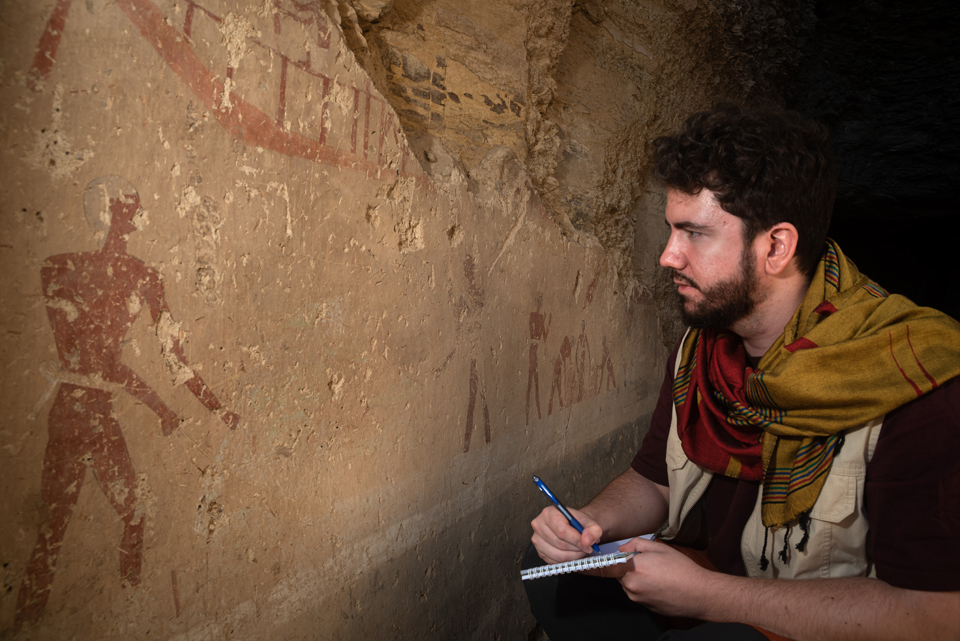
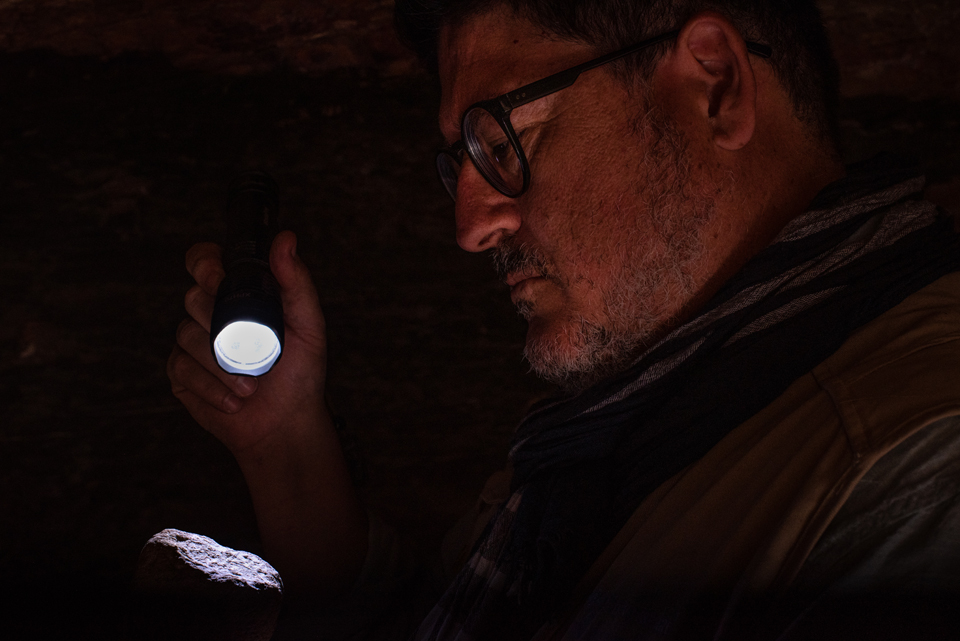
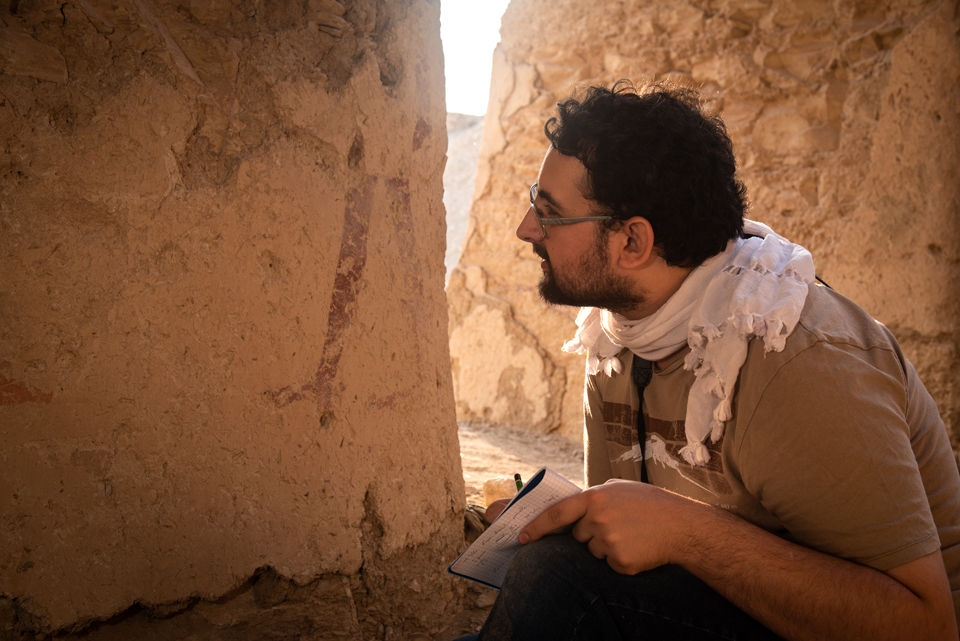
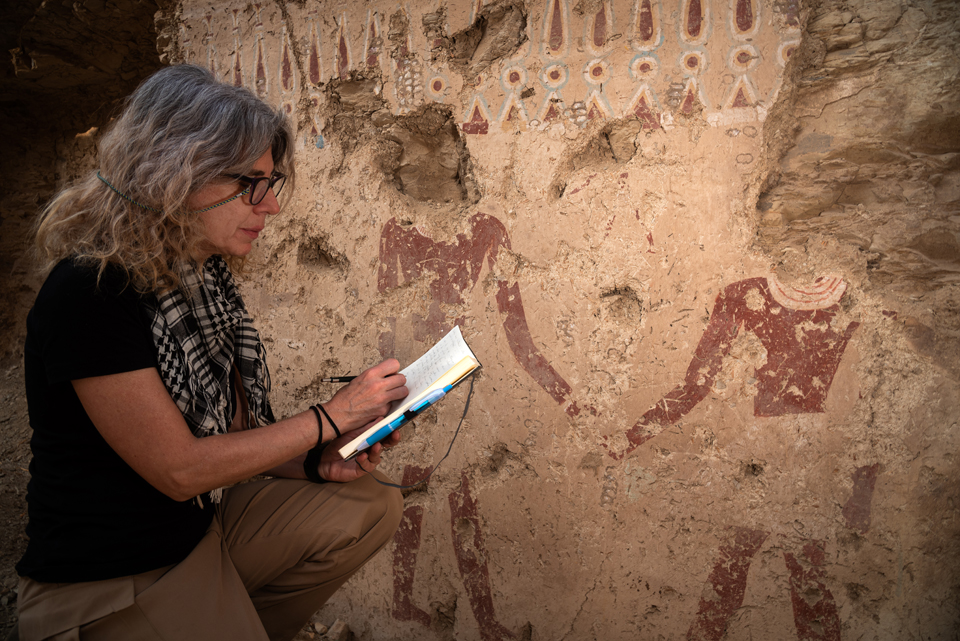
Meanwhile, in the tomb of Djari, we continue with structural and pictorial analysis. This leads to constant discussion about the potential problems that may arise during the restoration of pillars and walls, especially regarding the stabilization of the mud-plaster layers that support the paintings beneath a thin coat of gypsum —an issue the restorers are trying to address through suitability tests as part of the conservation process. This kind of analysis goes hand in hand with the documentation of the various paintings and scenes, as well as the examination of the inscriptions —mainly in hieratic— which serve as labels identifying individuals, scenes, and actions.
1_DSC3340

Puzzles with blocks and fragments

As has become customary, upon arriving at the site we immediately set about distributing the backpacks and materials that needed to be sent to the tombs of Ipi (TT 315) and Djari (TT 366). In the case of Ipi, many of the materials or tools brought up each day are used to ensure the safety of our specialists and workmen (straps, belts, hoists, helmets, slings, ratchet straps) or to continue building platforms, sledges, or protections for large loads made of metal or wood. As for Djari, the materials sent to this tomb are very different from those needed in the tomb of the vizier Ipi. Since the conservators are focusing on the wall paintings, the materials for this tomb consist mainly of chemical products and all sorts of utensils—brushes, goggles, gloves, scalpels, and wooden or metal spatulas—used for the meticulous work our specialists carry out on the paintings and mural remains.

Image: Patricia Mora Photography

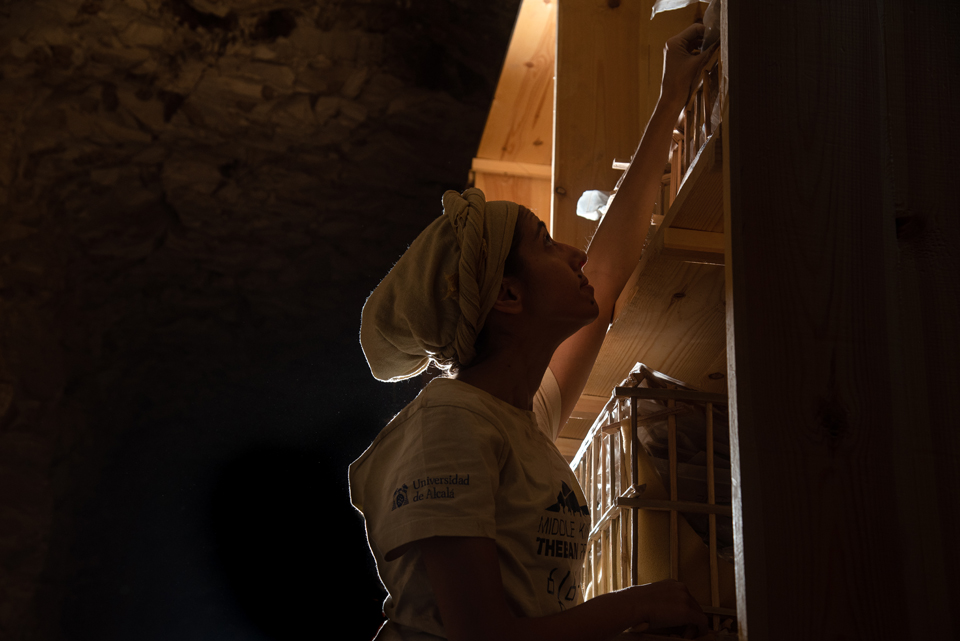
Today, Miguel went up ready to continue dismantling the sarcophagus of Ipi, starting with the fragments in the chamber that can be moved more easily. Rebekah and Bea assisted him in this task. The latter, taking advantage of the fact that the Italian mission she is currently working with had the day off, joined us to lend a hand in a complex she knows well. Rebekah has continued labeling each fragment; we also use a plan of the chamber and of each side of the sarcophagus to identify and keep track of all the pieces. Meanwhile, Bea gathered and prepared all the botanical materials (including a flower bouquet and garlands) that will be studied—upon his arrival in a few days—by the specialist Daniel Sánchez.

Image: Patricia Mora Photography

On another front, the team at the tomb of Djari has been joined since yesterday by Andrés, who came from Cairo to study part of the tomb iconography. Over the next few days, Andrés will examine the scenes of shoreline fishing, with traps or baskets, and in deep-water fishing (with nets, weights, and floats) represented in the main corridor of the tomb. Meanwhile, the restorers continue preparing alteration maps for each wall, pillar, and scene, which will inform and guide later interventions.

Image: Patricia Mora Photography

In addition to these tasks, the restorers Semah and Arantxa reviewed the boxes containing fragments that had fallen from the tomb walls and that we collected during the previous two seasons. Once consolidated and cleaned, these fragments will be stored again in preparation for the reconstruction of the rich iconographic program that we will undertake later on. Furthermore, at the end of the day our inspector, Aabla, informed us that our colleagues working in tomb TT 33 at Asasif, led by Prof. Claude Traunecker, had invited us to visit their monument. This tomb, belonging to the famous Chief of Lector-Priests Pedamenopet, is one of the most impressive monuments in the Theban necropolis.

1_DSC3156

Day of rest (“yaum el-gomaa”) and various activities

As has become tradition, the teams of archaeologists and Egyptologists working in Luxor make the most of Fridays by splitting into groups and engaging in all sorts of plans. Some prefer the comfort of the hotel or house where they are staying, sleeping a little longer and enjoying a relaxed breakfast before dedicating the rest of the day to continuing their work. Others —especially those visiting Egypt for the first time hope to see as many monuments as possible to enjoy and learn during their day off. In any case, a day of rest is good for all the members, allowing us to go for a walk and gather strength for the new week that will begin tomorrow, Saturday.

Image: Patricia Mora Photography

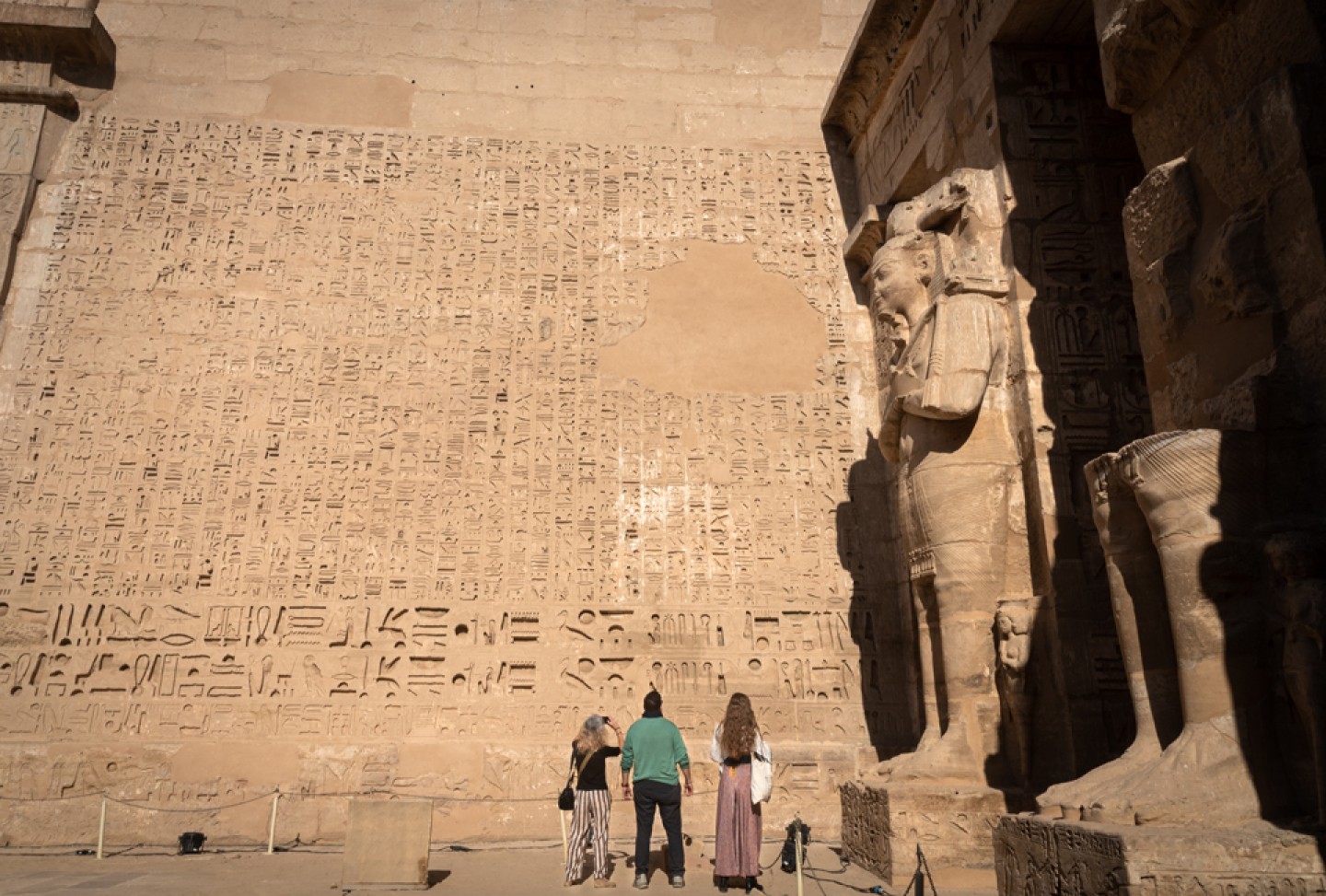
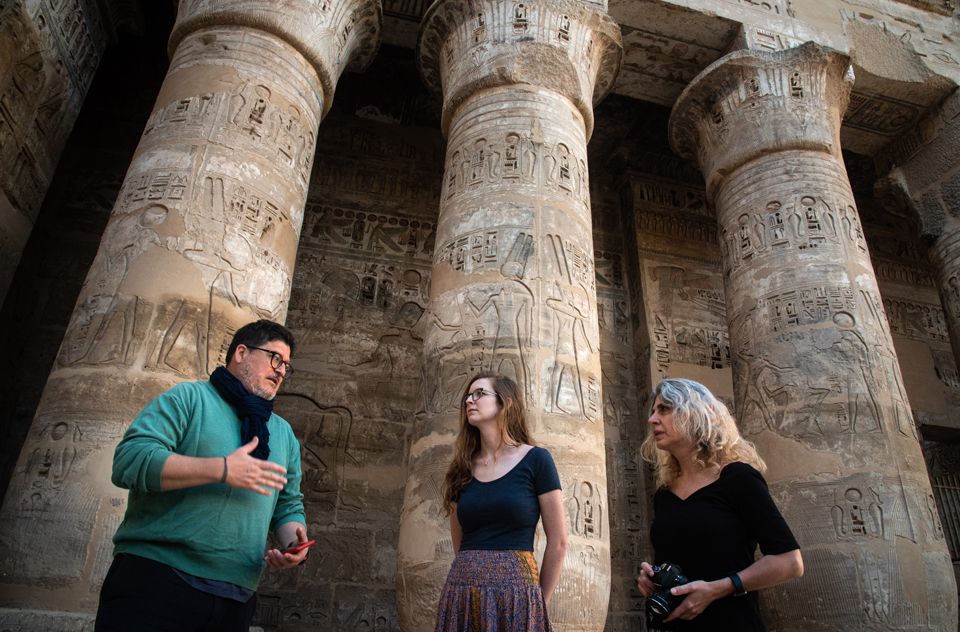
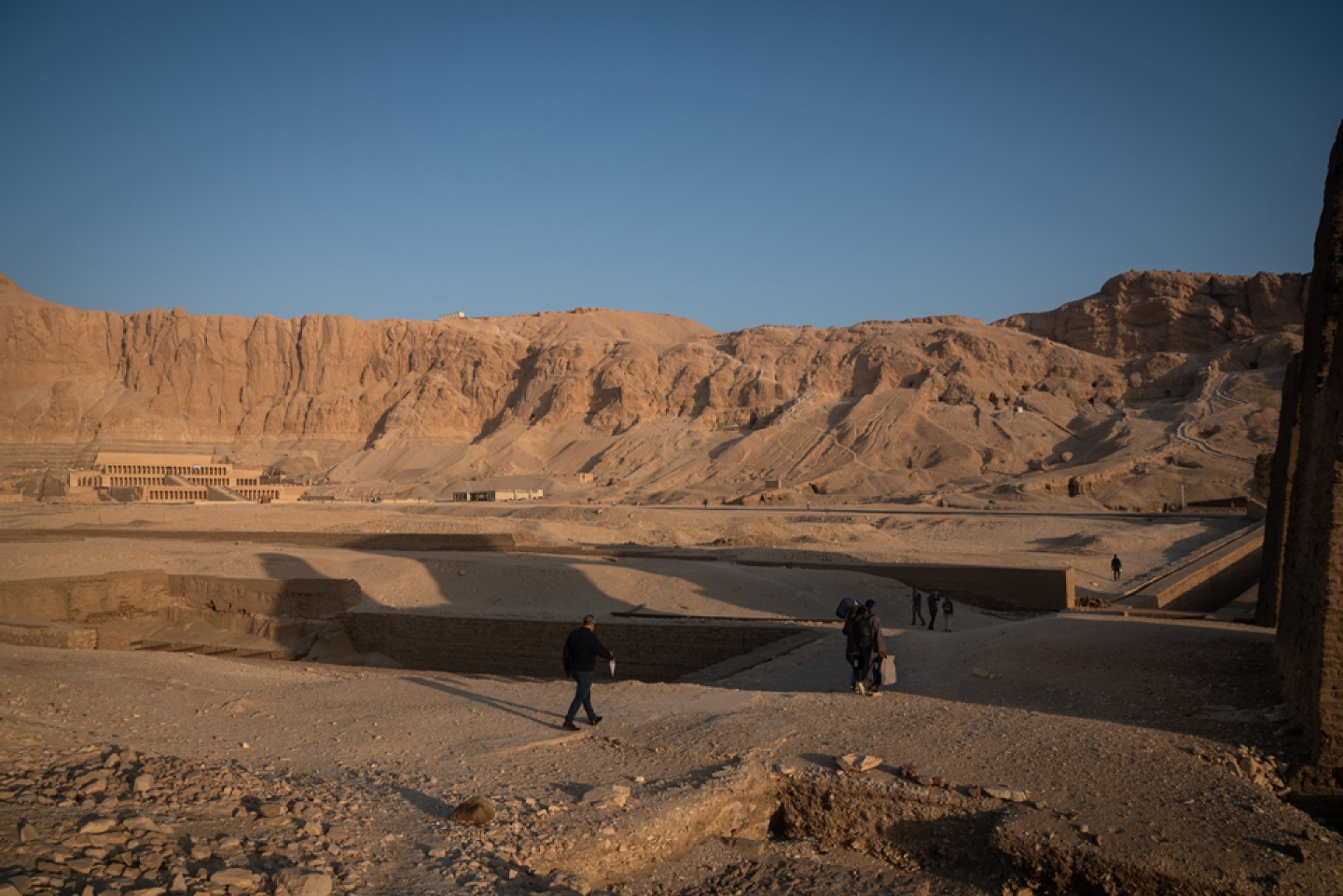
Early in the morning, one of the groups set off at full speed at 7:30 a.m. to enjoy the beautiful light at the mortuary temple of Ramesses III in Medinet Habu. This building is well known for its monumentality, the high-gate integrated into an oriental-style structure known as “migdol,” the majestic courtyards with statues of the king represented in his Osirian nature, and its sophisticated decorative program. Among the scenes, we may highlight religious celebrations (e.g., the procession of Amun-Ra), offerings to the gods (e.g., the king before Amun and Mut), or military events (e.g., the Sea Peoples, the recounting of hands and phalli of the enemies, prisoners from Nubia and Asia, etc.). On this occasion, Antonio accompanied the two students who received the UAH and AEDE grants to get to know this building, well documented in Ramesside texts. These sources mention the economic importance of its treasury and some events such as the first strike in history, an organised protest by the workers of Deir el-Medina distressed by not having received their wages in rations.

Image: Rebekah E. Davis

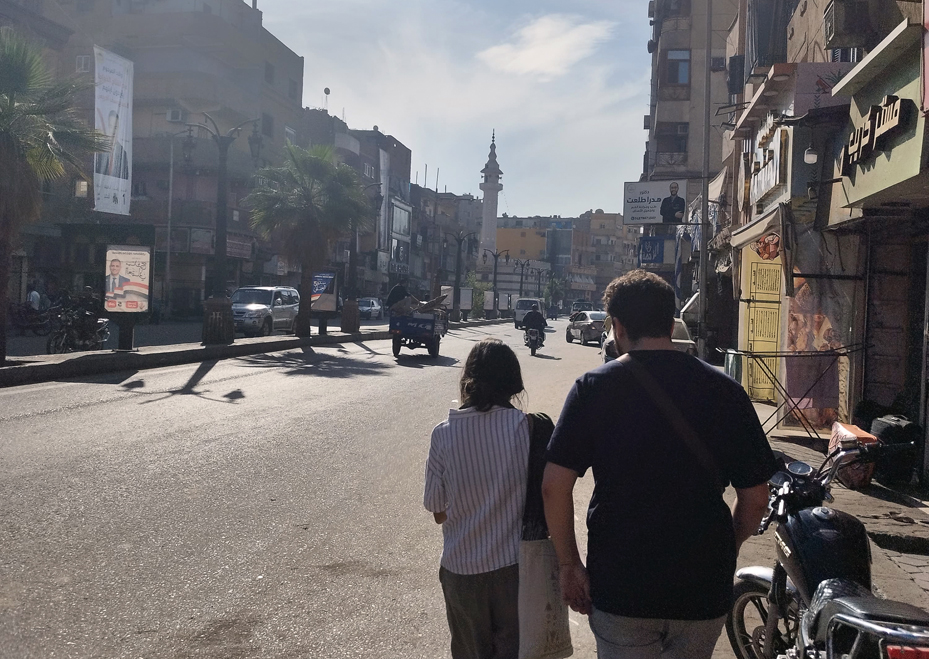
Meanwhile, others headed to the city of Luxor, where they took the opportunity to make small personal purchases and take care of some errands for the team. Simple purchases such as bottles of distilled water or alcohol, or the search for brushes of a specific size, are not as straightforward as one might think on an Egyptian weekend. These trips, in any case, are also used to visit bookshops, enter the temples of Karnak and Luxor, or look for typical gifts (scarves, pottery, glassware, textiles) to bring back home for the family at the end of the season.

1_DSC2050

Sledges, slings, and an exceptionally efficient crew

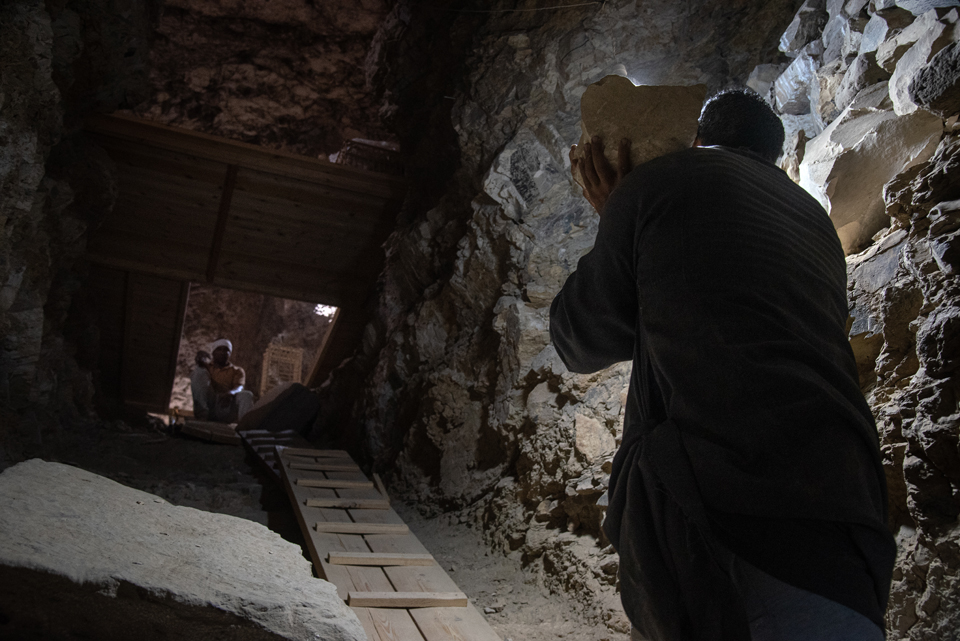
Early in the morning our rais, Ali Farouk, was already waiting eagerly to closely monitor some of the more complex tasks at the Ipi complex (TT 315). On the previous day, the team had devoted considerable effort to preparing the work chain that would take part in the dismantling of Ipi’s sarcophagus, one of the artistic jewels of early Twelfth dynasty funerary art in Thebes. Fully aware of the importance of these first steps —especially in launching and verifying that the entire procedure (i.e., fragment removal, transportation to the main corridor, cataloguing, initial restoration) would run smoothly— Ali hoped to set a pace that would allow the fragments to be removed quickly and in total safety. In our work inside Ipi’s sarcophagus chamber, the absolute priority is the safety of our workers and researchers, and we take every necessary precaution for this kind of tasks.

Image: Patricia Mora Photography

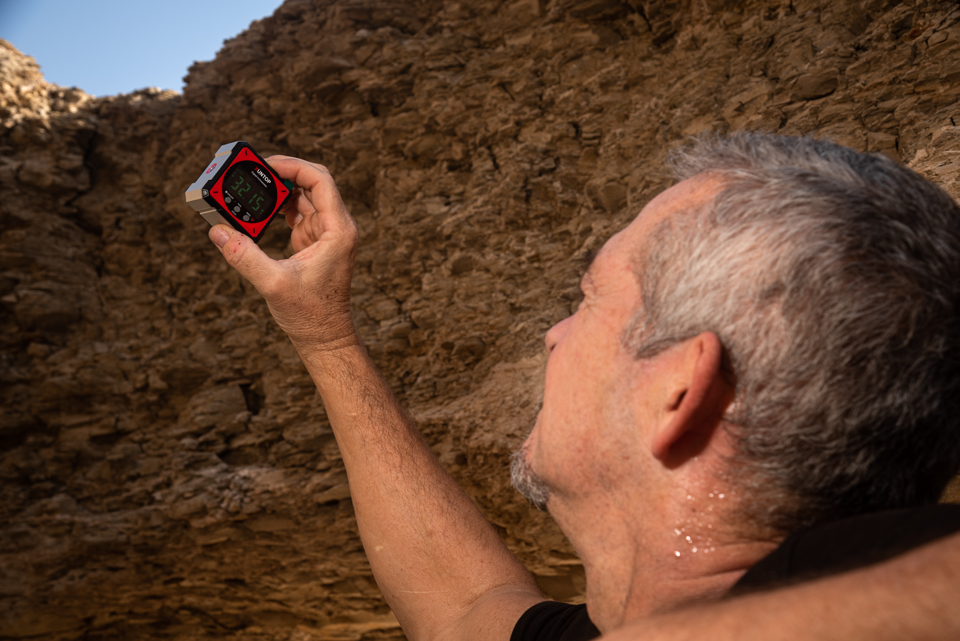
At the complex of Djari (TT 366), we continued analysing the structural conditions, which are greatly affected by the soft limestone (tafla) and by the natural tendency of the hill to exert pressure on the façade. Among other tasks, we examined where new plaster markers should be placed to monitor additional fractures, and we assessed which areas require priority intervention so that we can address those spots where the paint, mortar, or plaster demand immediate attention. In addition, together with our photographer, we discussed the action plan for detailed photographic documentation and the use of the multispectral camera in those scenes that require deeper analysis. Besides, Antonio took the opportunity to review the collection of funerary cones unearthed in previous seasons, which he prepares for publication.

Image: Rebekah E. Davis

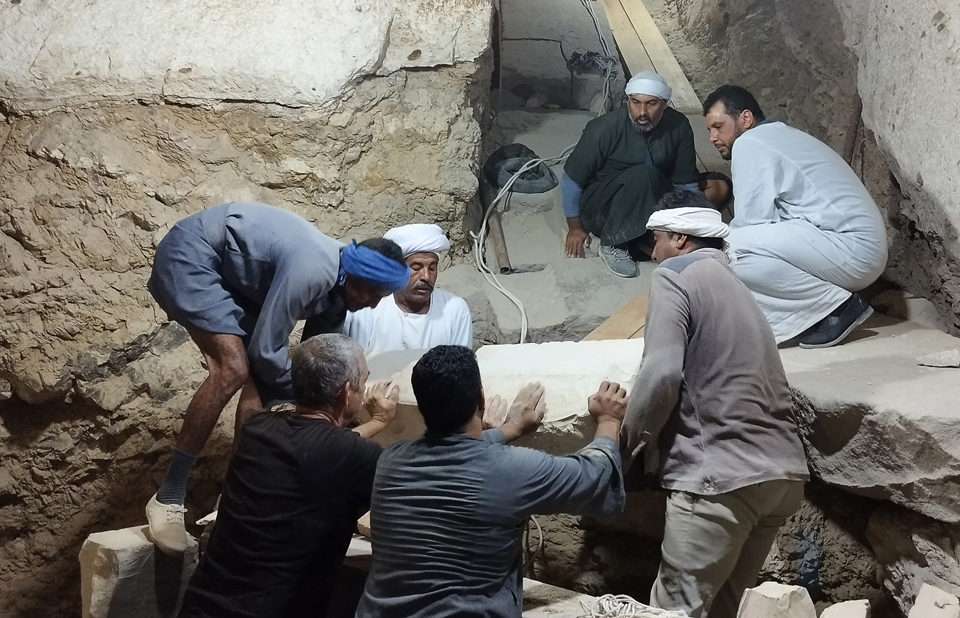
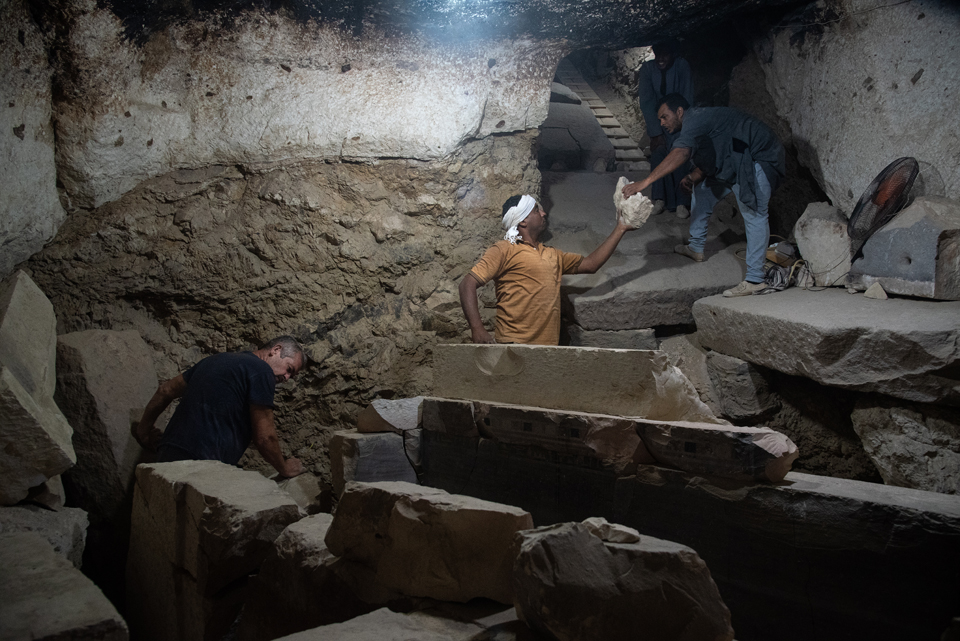
At TT 315, the team was eager to begin removing some of the sarcophagus fragments and thus start its reconstruction. This work will unfold in two phases: a first phase, involving the removal of loose fragments—which will take the entire season—and a second phase, involving the displacement of the sarcophagus box (once the loose fragments have been removed) so that the rest of the chamber can be cleaned and documented for a better interpretation of this space. Under the attentive eyes of our rais Ali and of Miguel, our stone and block specialist, the first fragments were carried out of the burial chamber. Whether manually by the workmen or using a sledge with slings and ratchet straps, each fragment was carefully removed, documented, and prepared for its subsequent manual restoration session, allowing for a first, direct, and straightforward treatment of the block. Arantxa and Sameh, our restoration inspector, examined each fragment and considered the various challenges involved in this task.

Image: Patrica Mora Photography

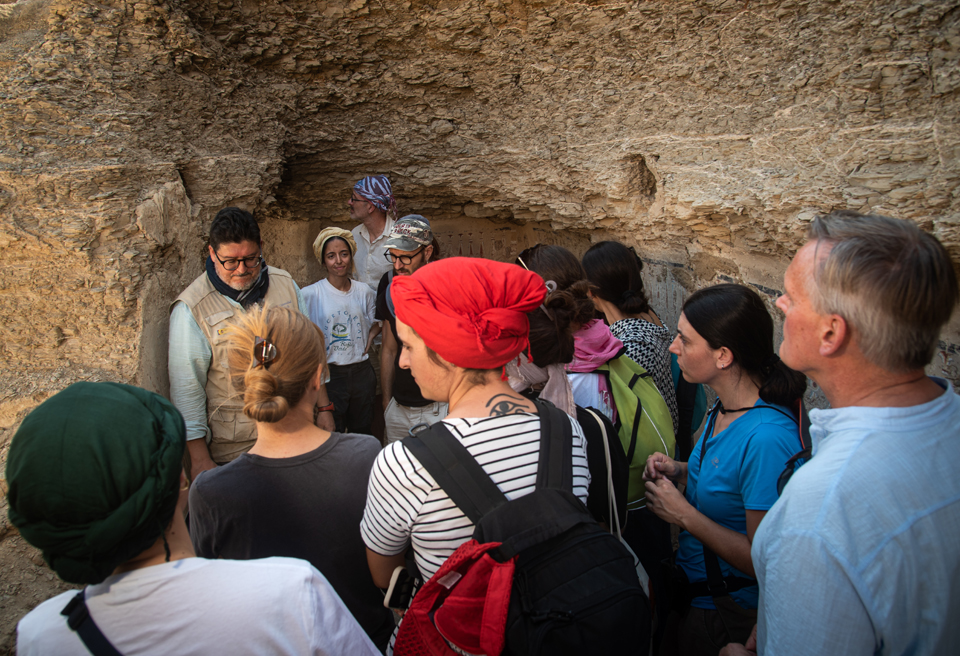
Late in the morning we welcomed our colleagues from the Italian mission of the University of Pisa in Dra Abu el-Naga (MIDAN), who are currently excavating tombs TT 14 and MIDAN 05 in this necropolis. The mission, directed by Prof. Gianluca Miniaci, visited the funerary complex of Djari and took a look at the newly uncovered paintings, prompting some interesting questions and discussions about the decoration of Theban tombs of this period and in the Middle Kingdom.

1_DSC2441

Deconstructing the limestone sarcophagus of Ipi

The morning began with the welcome news of the arrival of an inspector well known to the team: Abu el-Qasem Hagag. Qasem already served as inspector during the third season in April 2017, a period in which we enjoyed weeks of excellent work and highly significant results. The mummification deposit was (re)discovered by the team during that very season, so we might say that his presence brings good fortune. God willing (in Egyptian “inshaallah”), we will continue to benefit from his good work and luck.

Image: Patricia Mora Photography

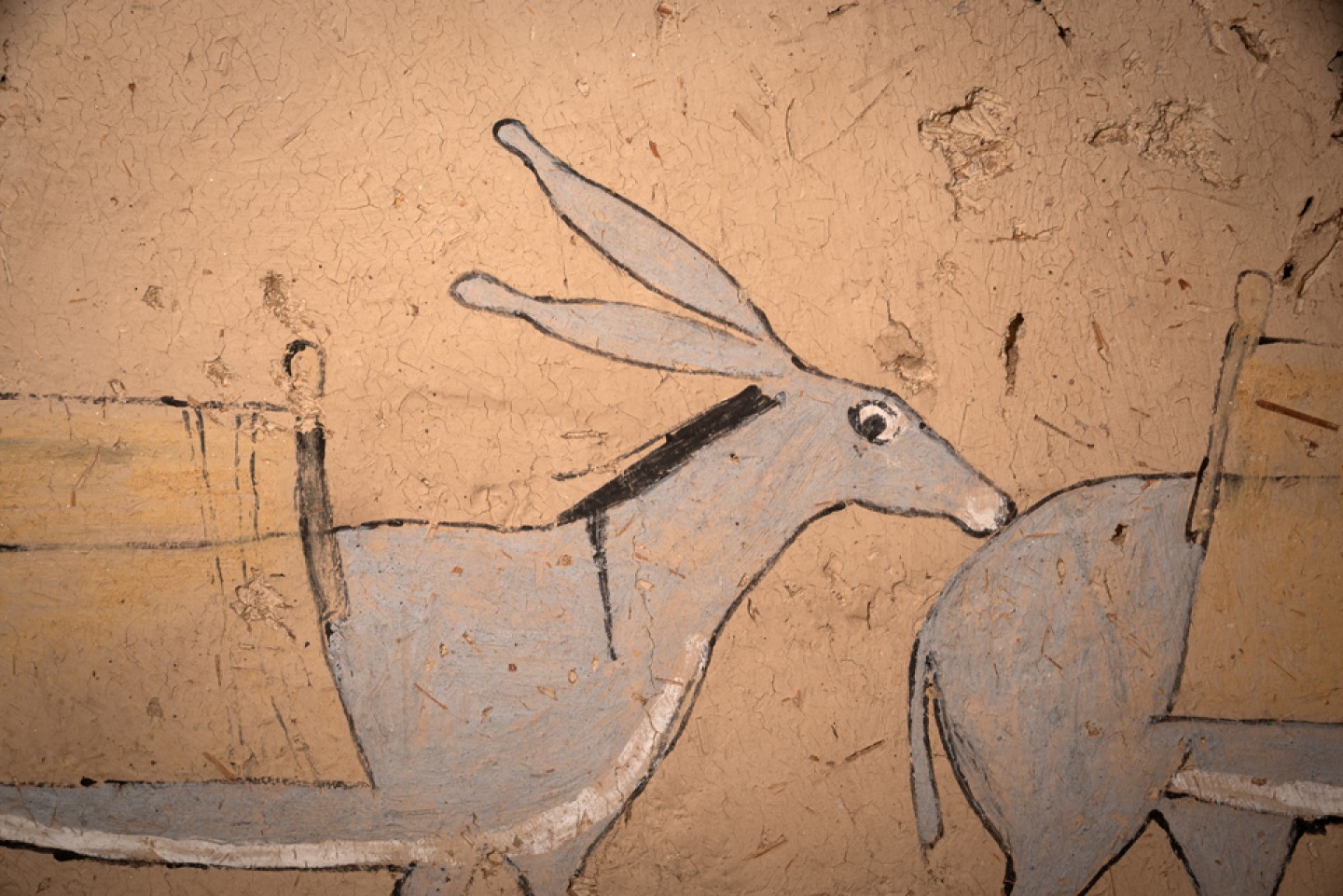
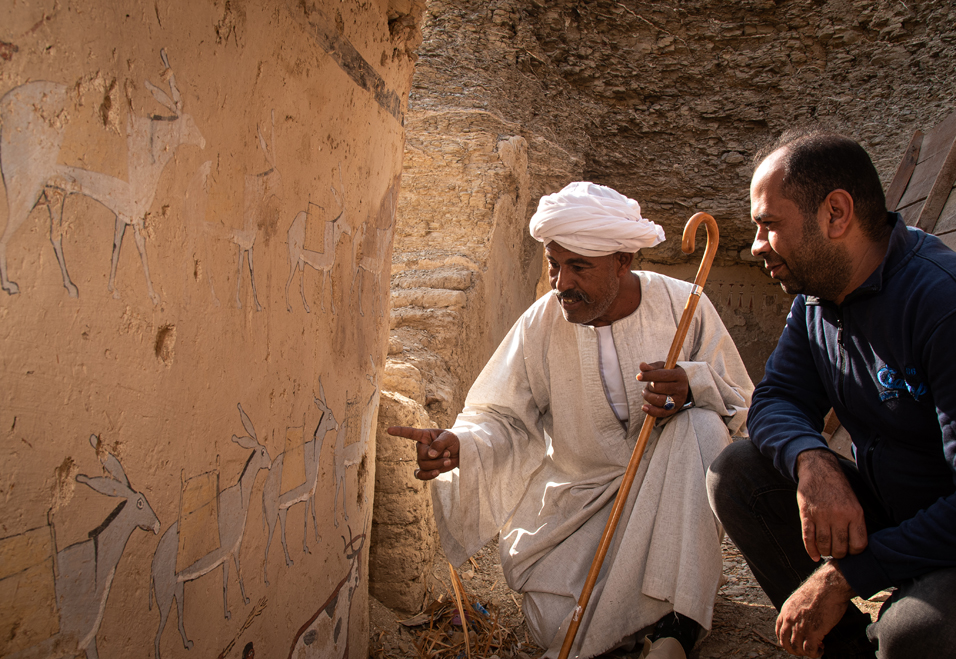
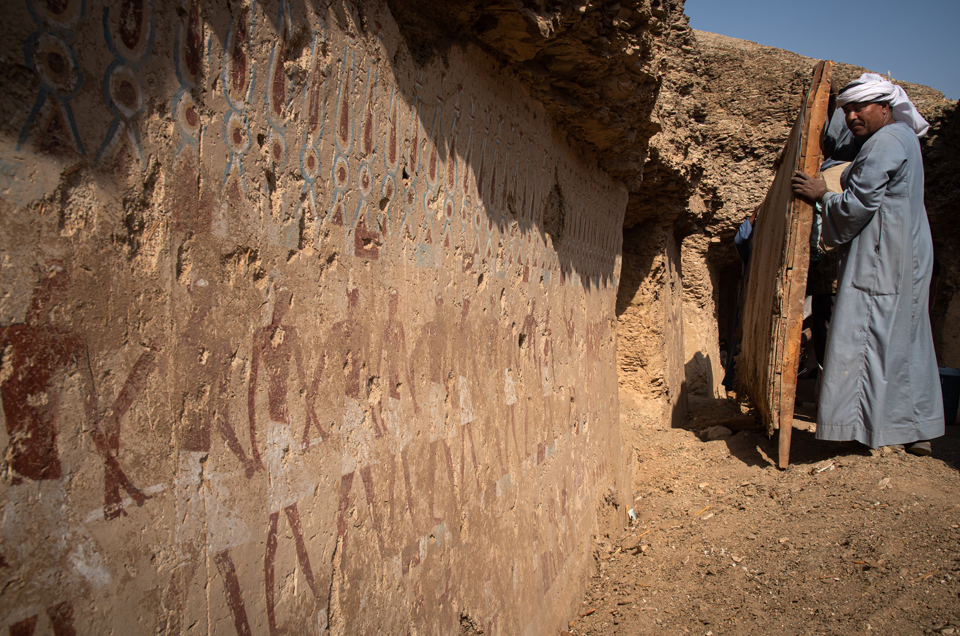
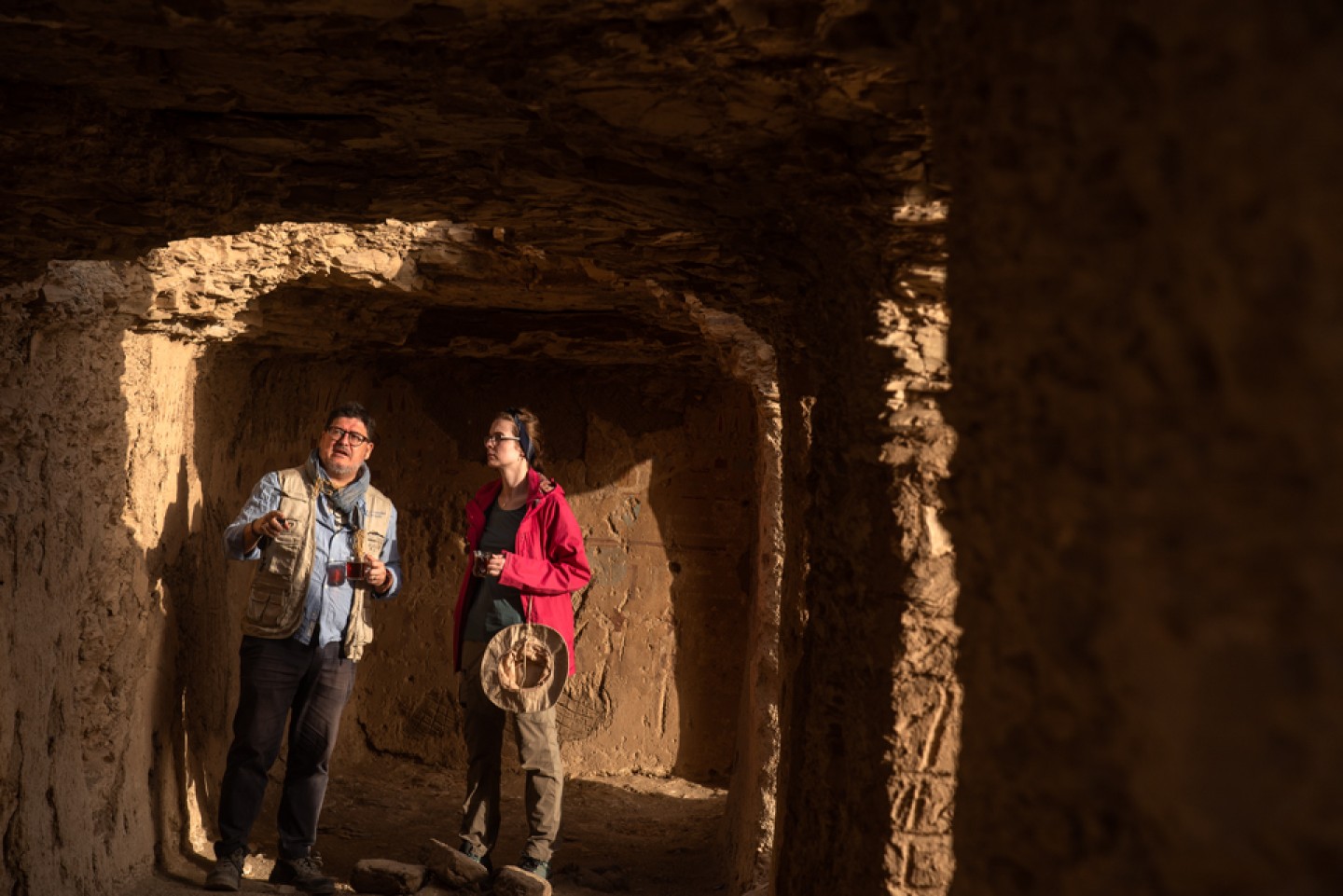
At the complex of Djari, today we began documenting the paintings in the various sectors where they appear. The best-preserved scenes are located in the southern half of the transverse corridor, where Winlock’s team had already uncovered exceptional representations of donkeys, herders, oxen, and fig harvesting. This traditional repertoire of daily-life scenes evokes joyful moments in the Egyptian land—spent with family and as part of the community—through which the artist adorns the tomb and perpetuates this dimension of life for the deceased and his experience in the afterlife. In contrast to these scenes, we find depictions of the deceased alongside his eldest son, enjoying a wrestling match, as well as depictions of his own funeral, which are far more formal and carry profound social and religious meaning.

Image: Patricia Mora Photography

Early this morning, part of the team was transferred to the funerary complex of Ipi (TT 315), where we began the restoration of his sarcophagus. Despite its alterations and fragmented condition, the object dominates the burial chamber—partly due to its size (ca. 12 tons) and partly thanks to the beauty of its colours, decoration, and inscriptions. Miguel, who had already outlined the necessary preparations, has set in motion a chain of operations that includes removing each fragment—starting with the smallest ones—recording and drafting an initial description of each piece, photographing them, and allowing the restorers to examine them for the first time, mainly to ensure a simple yet effective preliminary treatment that cleans and protects every fragment.

Image: Patricia Mora Photography

Thus, these first days have allowed us to prepare the work that we shall tackle intensively in the coming weeks. The goals are ambitious and the work will be demanding, but the scientific, heritage-related, and personal rewards make it more than worthwhile. As proposed by the Egyptian Ministry of Tourism and Antiquities (MoTA), we must work on the restoration of the wall paintings in the tomb of Djari—both to protect and document them, and ultimately to publish them—while also continuing the disassembly of Ipi’s sarcophagus for its cataloguing, cleaning, restoration, and publication.

1_IMG_3475

Curiosity for the paintings…

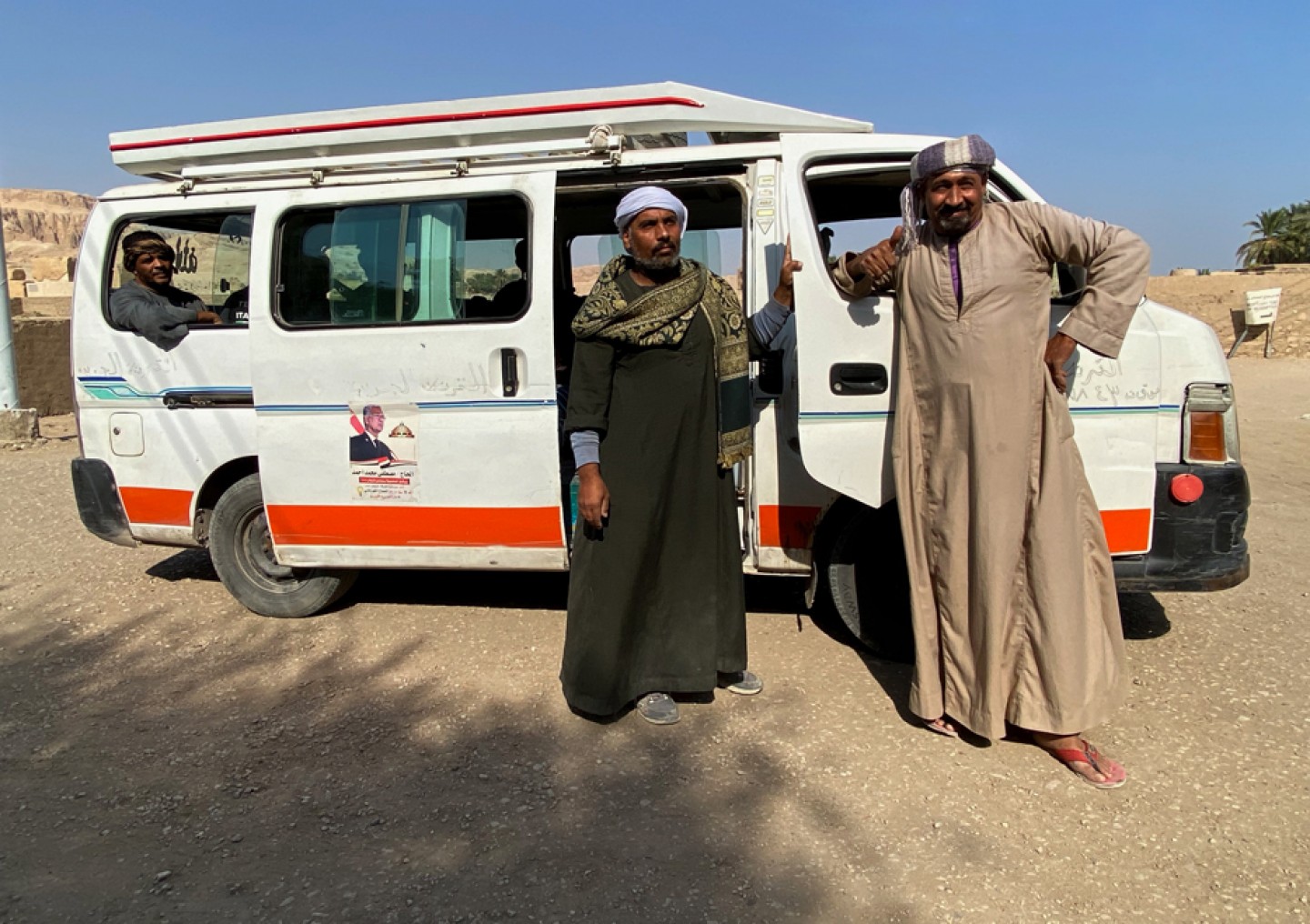
Every morning, our team’s driver, Azzab, shows up ready for a new workday and proudly right on time. Although he is not directly part of the team of researchers, inspectors, or workmen, the contribution of Azzab and other people such as the staff at the Marsam Hotel is essential for the smooth development of each day and for achieving the goals set for the season. In our daily updates we do not acknowledge these colleagues as much as they deserve, even though they make our work so much easier. From here, we want to send them our warmest thanks for those small moments that lighten our efforts. Shukran gazilan, ashab!

Image: Patricia Mora Photography

Today we enjoyed the second visit of Mateo Piñeiro, a researcher from the University of Lyon who studies the decorative programs of tombs from the First Intermediate Period and the Middle Kingdom for his doctoral dissertation. Mateo is currently visiting various sites and monuments relevant to his research, and we have been fortunate to hear about his progress and learn from his ideas and hypotheses. The tomb of the director of the kheneret Djari is one of the most compelling examples for his work due to the antiquity of the complex and the diversity of its iconographic themes.

Image: Patricia Mora Photography

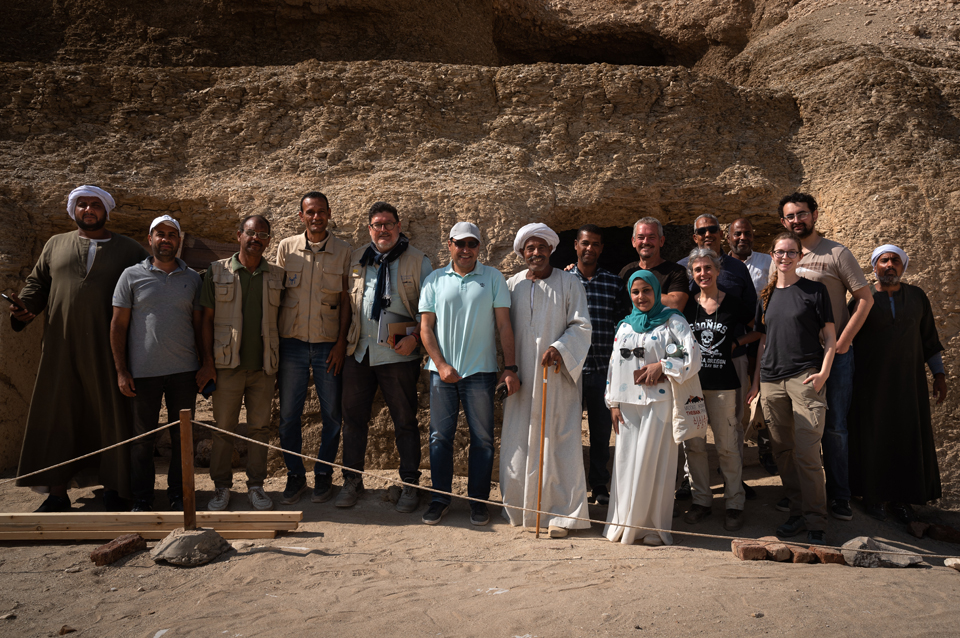
As we have been reporting, the removal of the wooden boards in Djari’s transversal corridor has revealed a truly unparalleled ensemble within the Theban necropolis. In fact, the uniqueness and vibrant colors of the paintings have drawn the attention of the authorities, whom we received today. The Director of the Upper Egypt Office, Dr. Abd el-Gaffar, and the Director of the Conservation and Restoration Office of the West Bank, Dr. Saadi, accompanied the manager of the central sector of the West Bank, Dr. Abu el-Hagag, on their visit to admire the religious and daily-life scenes. The team was able to engage in discussions regarding the activities represented in the tomb and the meaning of the scenes.

Image: Patricia Mora Photography

Also, this week we welcomed Sameh, our conservation inspector, who will undoubtedly contribute significantly to this season’s work. Sameh —sometimes accompanied by our inspector Aabla, by the rais Ali, or by Antonio— observes and discusses the scenes, and examines the various structural and pictorial challenges presented by these mural paintings. With his help and expertise —evident from several exceptional previous projects— we are confident that we will be able to achieve many of the objectives set for this tenth season.

1_IMG_3422

Almost a century of waiting…

Image: Antonio Morales

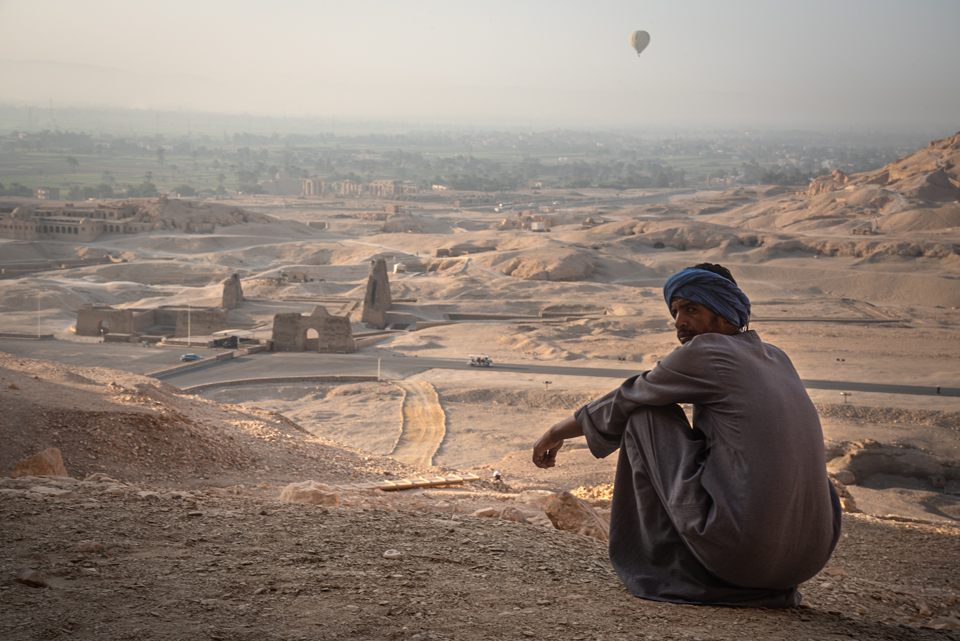
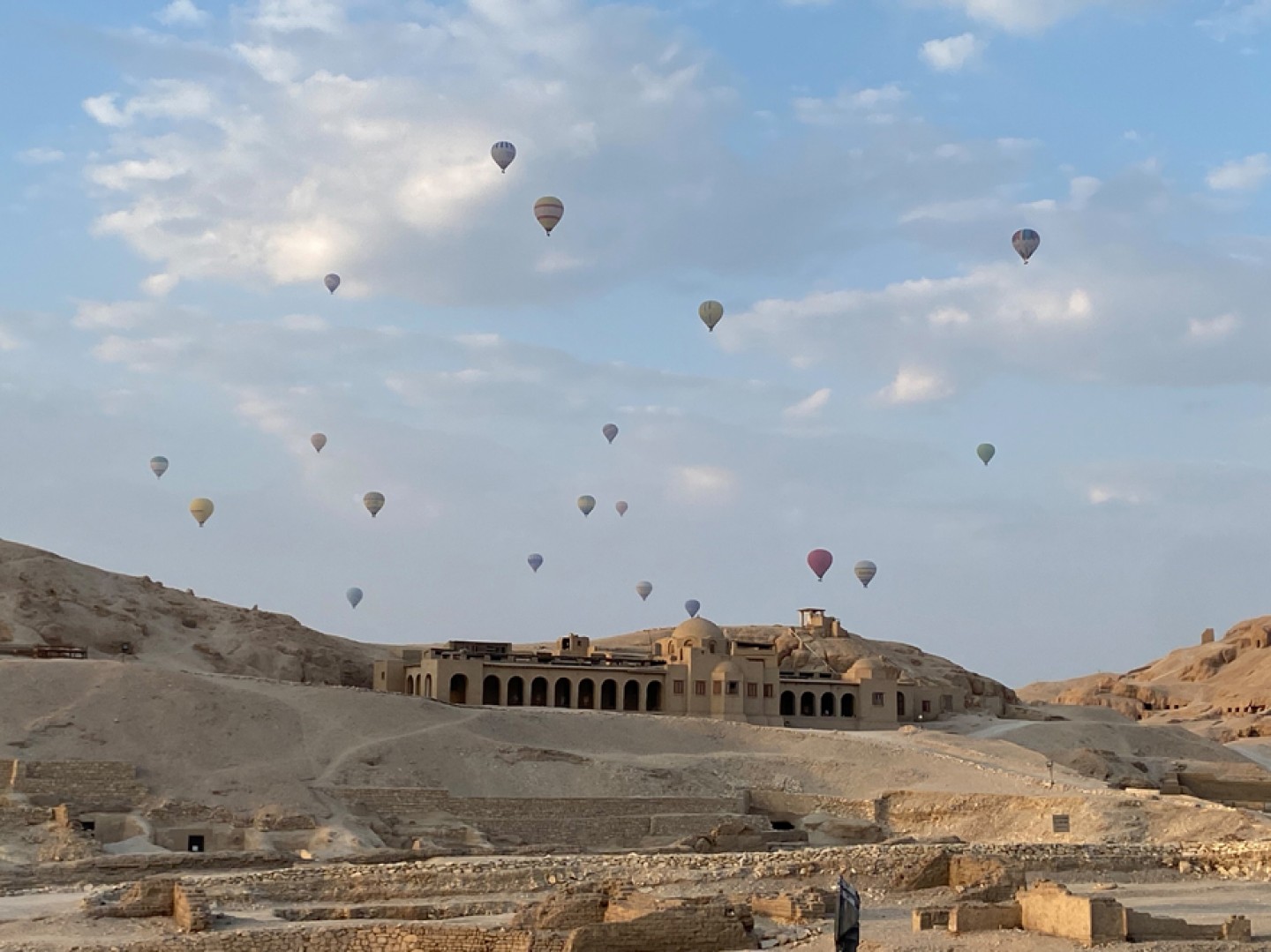
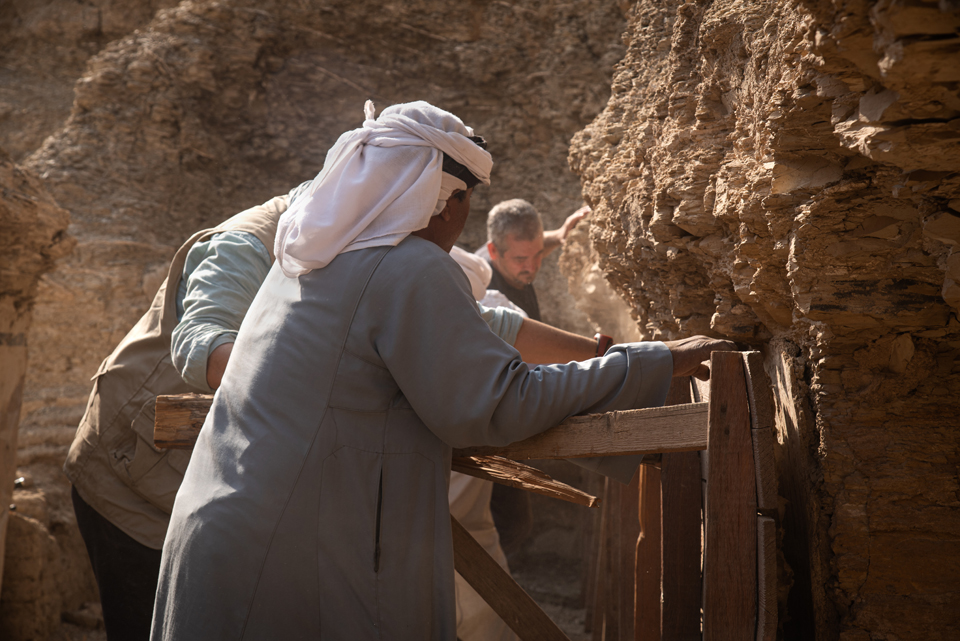
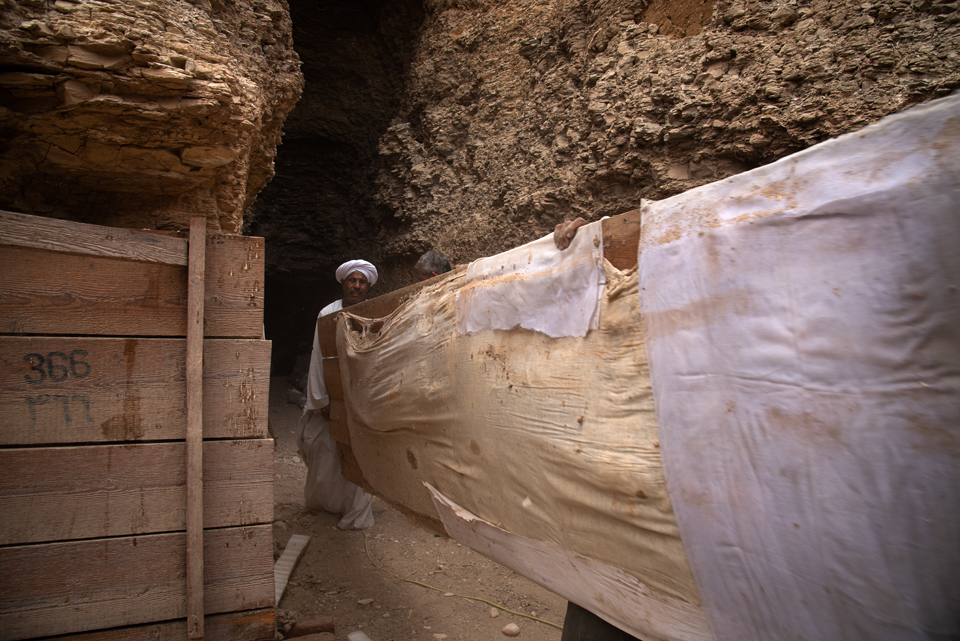
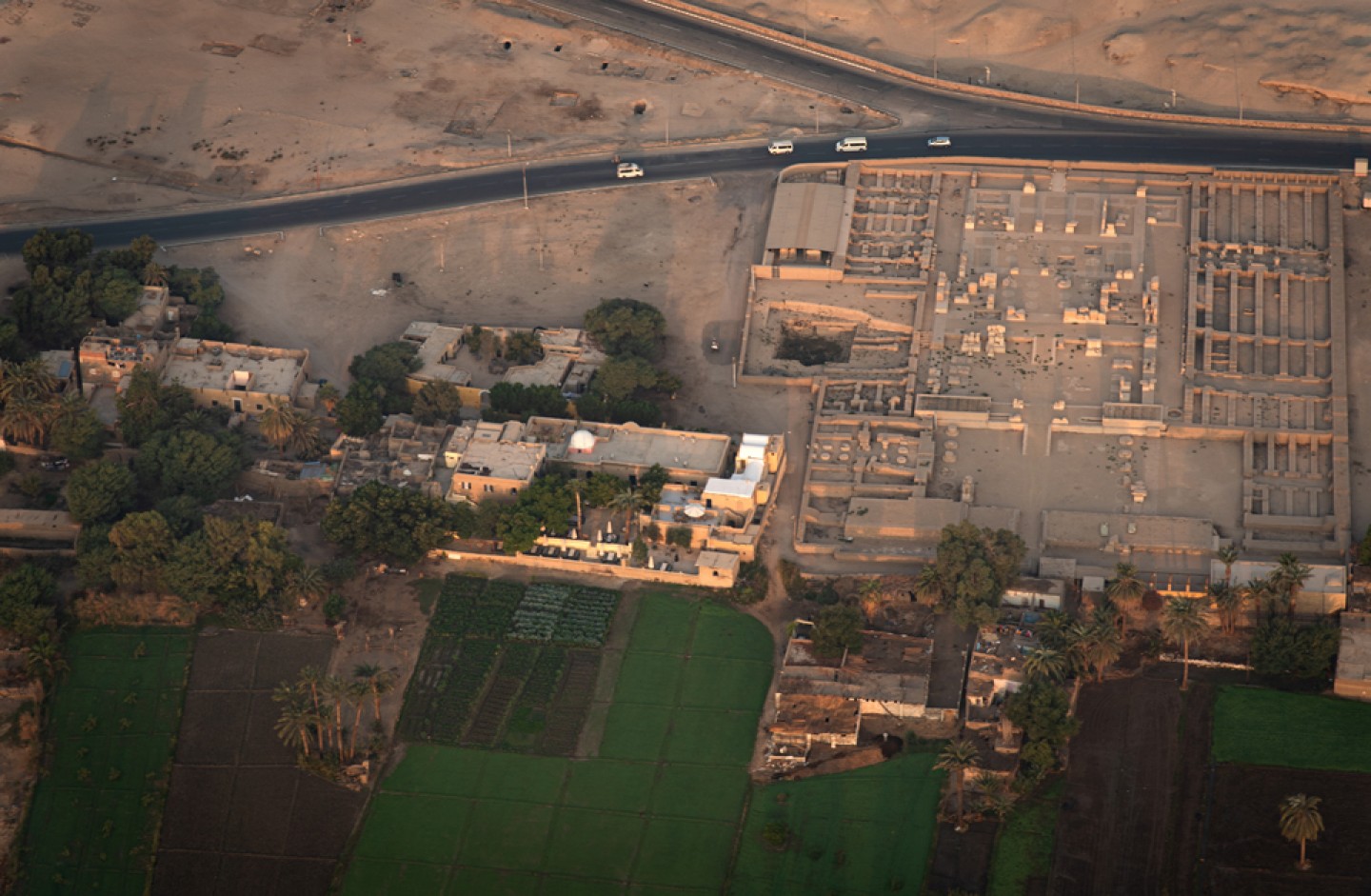
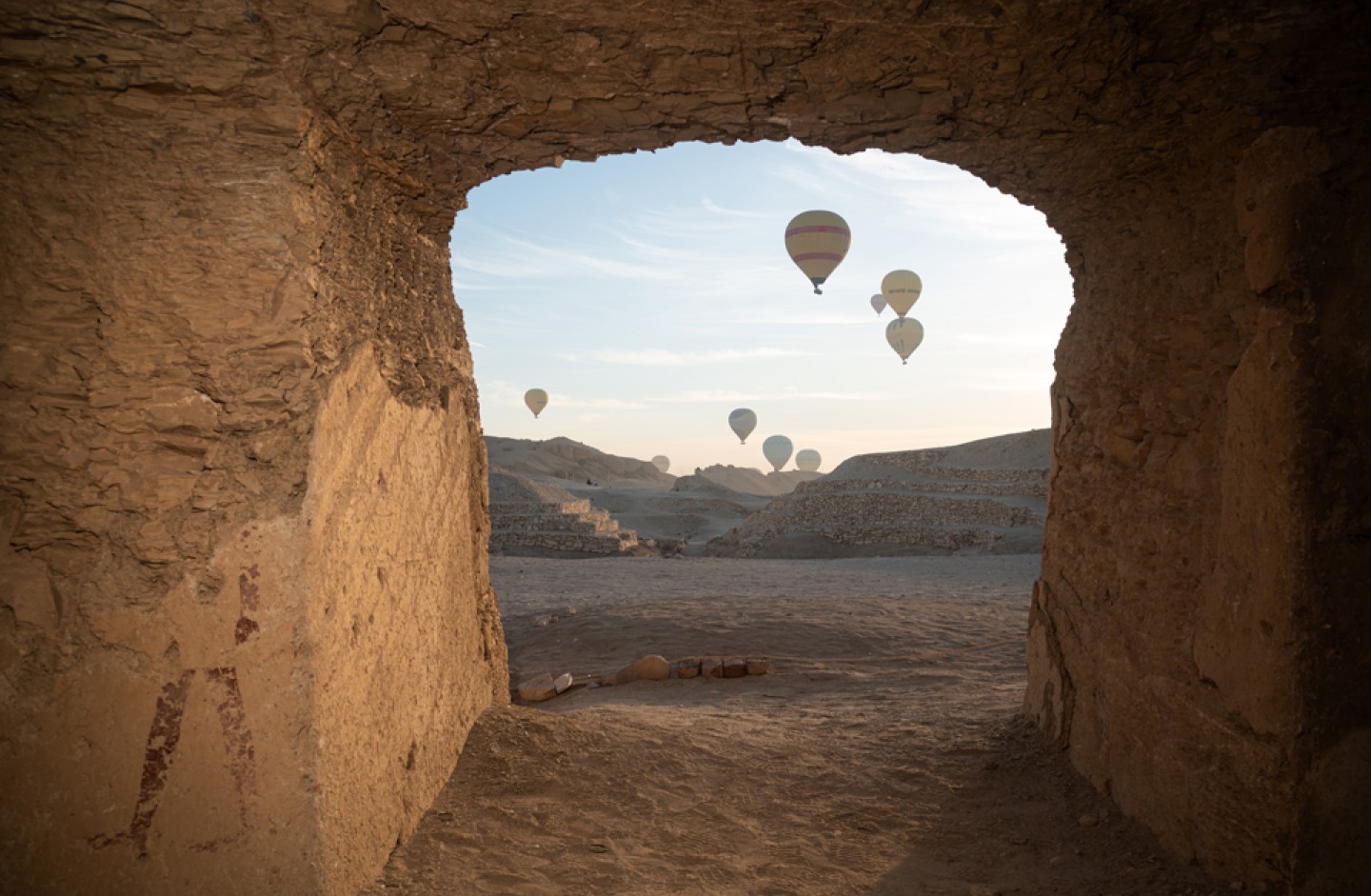
On our way from the Marsam Hotel to the site this morning, we were greeted by the colorful tourist balloons floating above the Metropolitan House, built on the hills of Qurnah in 1912. It was, in fact, the Met expedition led by Herbert Winlock that discovered and excavated this tomb. In their system, the tomb was designated as MMA 820. Today we completed the preliminary tasks in the tomb, and as of tomorrow we will begin working toward the core goals of the season. Rebekah dedicated her day to organizing the objects and searching for several objects Patricia needs to photograph. Meanwhile, Aran reviewed some of the structural and pictorial issues affecting the walls of the tomb. The rest of the team focused on removing the wooden panels that have protected the paintings of the transverse hall and the main corridor for years. The task was demanding, but we achieved our main objective—removing them without damaging the paintings—and allowed everyone present to admire their uniqueness, colors, and artistic brilliance.

Image: Patricia Mora Photography

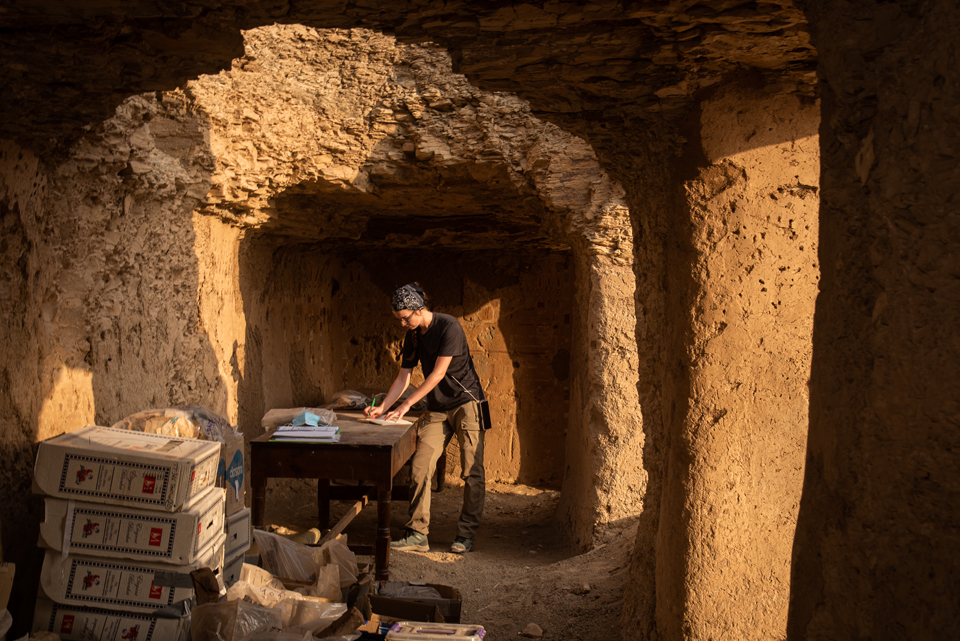
Stationed in the northern sector of the transverse hall, Rebekah continued her work with the inventory and objects. These days she is engaged in a tedious yet essential effort to correct the lists and update the database on our project server. In a couple of days, she will be transferred from her work area in Djari’s tomb to assist in cataloguing the fragments of the sarcophagus for the vizier Ipi in this other complex of the concession (TT 315). Ipi’s sarcophagus weighs nearly 12 tons, and the restoration and conservation process will begin with the removal of the smaller and medium-sized fragments that rest in position but are detached from the main piece.

Meanwhile, Aran has examined the walls and the condition of the mortars, plasters, and paintings. The paintings have experienced numerous changes and problems, and addressing their recovery and protection is a central task for the conservation team. Aran will analyze the paintings in detail to familiarize himself with the alterations and join the restoration efforts. Her work at this stage is focused on producing alteration maps for each of the scenes.

Image: Patricia Mora Photography

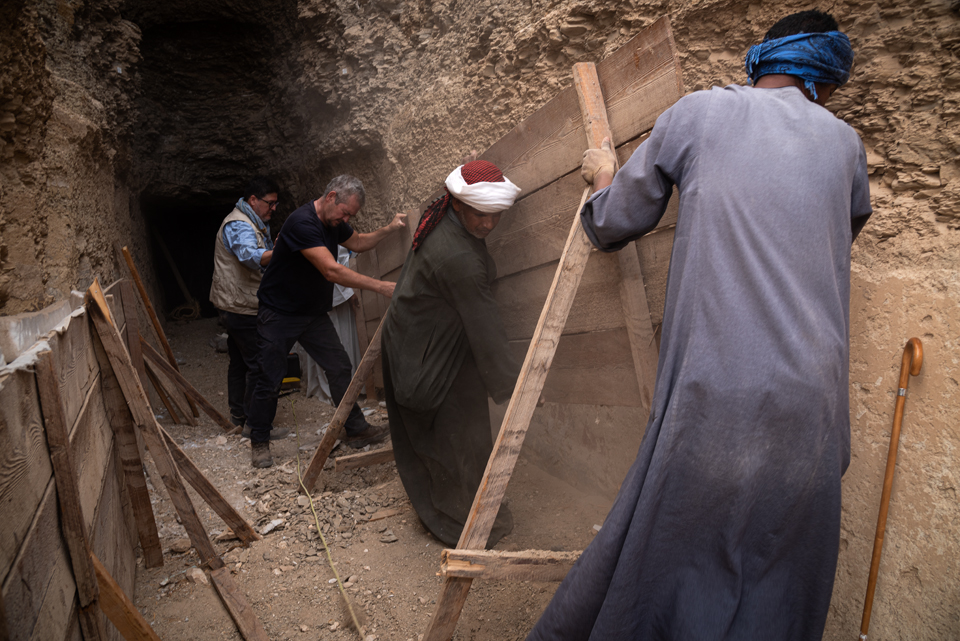
As for the removal of the wooden panels, it was a challenging task—not so much because of the complexity of the intervention but due to the delicacy of the paintings and the fragile state of the walls. Under the direction of the rais Ali and the watchful eye of the moudir, the panels were removed one by one with determination and efficiency, offering those who witnessed the operation the chance to admire an unparalleled iconographic program. Djari’s tomb (TT 366) preserves the earliest pictorial instance of the necropolis, a reflection of the society that lived in Thebes just before the reunification of the country.

Image: Patricia Mora Photography

The work of the Met expedition in the tomb of Djari was the last field project Winlock would direct in Egypt. The tomb was discovered in 1929 but was excavated during the 1930–1931 season, just as the American Egyptologist was attempting to complete his research on the early stage of the Middle Kingdom and preparing his return to the United States due to health concerns. This explains why, despite the beauty and uniqueness of the paintings, Winlock was unable to devote much attention to this discovery—which, 94 years later, is once again receiving the attention it deserves.

Image: Patricia Mora Photography

1_DSC1671

Djari’s pictorial program reemerges

Today we began our work with the wall paintings. After discussing the plans of the day with Antonio, our rais Ali Farouk supervised the careful removal of some panels installed years ago by the Supreme Council of Egyptian Antiquities. The scenes of Djari constitute one of the richest and earliest iconographic programs of the Theban necropolis, and they deserve proper documentation and appropriate restoration. This will allow many to admire the work of the artist (or artists!) who once captured some of the local ideas and traditions of the period preceding the reunification.

Image: Patricia Mora Photography

A new incorporation arrived yesterday evening, Aránzazu Vaquero, restorer of the Museum of Pontevedra and recipient of the AEDE-MKTP fellowship. The Spanish Association of Egyptology and the University of Alcalá project have been collaborating since 2019 through this call for AEDE members and we hope to open the 2025 fellowship call soon. The fellowship allows for an AEDE member to participate in the project season of the following year at Deir el-Bahari and Asasif, providing a unique opportunity for the selected candidate. As an expert in restoration, Arantxa will be joining the conservation team to contribute to our work with the restoration of the wall paintings of Djari, the sarcophagus of Ipi, and the findings from both sites.

One of the first tasks for Arantxa and Rebekah has been reorganizing the material boxes and locating specific inventory numbers that need to be studied. In this way, we will be able to move forward much faster in the coming days. In addition, Antonio has discussed with both of them the work plans for the next days and the kinds of tasks they will be assigned within the team, tailored to the types of work in which they are specialized.

Image: Patricia Mora Photography

In the second part of the morning, the team focused on two main tasks. On the one hand, Aabla and Miguel visited the tomb of Ipi to assess the condition of the sarcophagus chamber, where we will be working over the next few days. Reconstructing the sarcophagus requires locating, cataloguing, and studying the surrounding fragments, which will need to be restored before being reintegrated into the main piece. On the other hand, the removal of the wooden panels in the tomb of Djari revealed several scenes of great beauty and significance. In the coming days, we will proceed with the documentation and study of these scenes. This will include capturing photographs with the multispectral camera, which makes it possible to reveal details not visible to the naked eye.

Image: Patricia Mora Photography
1_DSC1489

Starting to gain momentum…

The arrival of new members always implies the mandatory submission of visa and passport copies to the inspector and the always gratifying reunion with old friends. So, our well-experienced Miguel was greeted by colleagues and workmen with whom he has worked for the last years, while Rebekah met for the first time the inspector and workmen in the site. No doubt, their contribution to the team work of the next weeks will be very valuable.

Image: Patricia Mora Photography

Rebekah, who finished her Master in Archaeology from the University of Alcalá, is the 2024 recipient of the UAH-MKTP fellowship, which allows a UAH student to participate in the expedition to Egypt every year. Today, she worked on the organization of the findings from Djari’s tomb, discussed some modifications to be inserted into the findings list, and prepared some special objects that Patricia had to photograph. As this was her first contact with the Theban necropolis and Djari’s monument, Antonio offered her a short introduction before the start. 

Image: Patricia Mora Photography

Regarding Miguel, we hope he can document the conditions of Djari’s façade and its pillars as part of the general plan of restoration and conservation of the project. Djari’s tomb preserves one of the earliest wall painting programs in the Theban necropolis, and safeguarding this artistic treasure is a priority for the project. With the exceptional support of Mehen Foundation (The Netherlands), this year we hope to document and restore part of this highly valuable historical, artistic, and archaeological heritage, contributing to a better understanding of the architecture of the late First Intermediate Period.

Image: Patricia Mora Photography

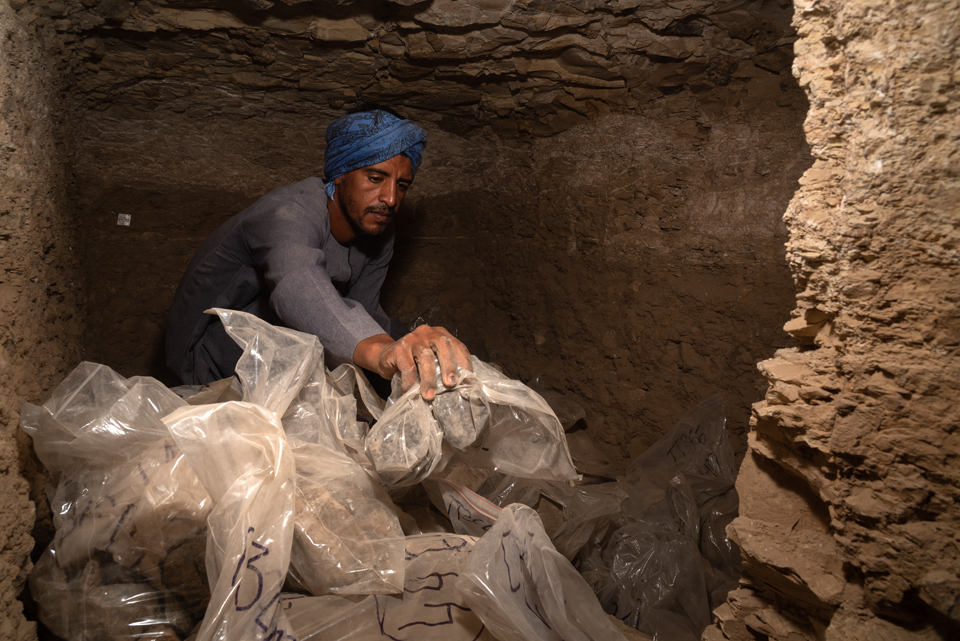
Another preliminary task was the reorganization of our storeroom, located inside the subsidiary tomb TT 366A. Thus, five of our workmen transferred bags and boxes from the storage therein to Djari’s main corridor, where we will be sorting them for the next days. Here, Rebekah –and Aran, arriving this evening– will examine the lists and objects in order to increase the accuracy of our listings, tables, and storage arrangements.

According to our plan, today we have almost finished the preliminary tasks, and in the coming days we will begin the intensive conservation work, study of the objects, and restoration of Djari’s tomb.

web_DSC2267-1

When the first weekend isn’t a break!

Our Friday started with two new project members joining us at breakfast, Rebekah and Miguel. Rebekah Davis got the 2024 UAH-MKTP fellowship to participate for the first time in the expedition and shall contribute to the management, documentation, and study of the findings produced in the tomb of Djari in the last seasons. In contrast, Miguel López –a well-experienced stone specialist– has joined us once more to continue with his examination of the tomb structure and support its restoration. Both will start tomorrow Saturday their participation in the 2025 season.

As Friday is the day off in Egypt, the members of the project took the opportunity to rest a bit, stroll around the nearby areas, and sort out their rooms. In reality, though, everyone ended up preparing materials, organizing plans, and considering the workload that awaits us in the coming week. It really didn’t feel like a day off!

Image: Patricia Mora Photography

MKTP - Middle Kingdom Theban Project - Recuperando el pasado
logoUAH-footer

El proyecto

El Middle Kingdom Theban Project tiene como objetivos la excavación, estudio y publicación de varias tumbas de la necrópolis del Reino Medio en Deir el-Bahari (Henenu, Ipi, Neferhotep, E1) y de las tumbas de Dagi (TT 103) y Djari (TT 366) en la necrópolis de Asasif.

MKTP - Middle Kingdom Theban Project - Ministerio Egipcio de Antigüedades

Con la colaboración del Ministerio Egipcio de Antigüedades y las autoridades del Alto Egipto, Luxor y la Orilla Occidental.

Las tumbas

Las tumbas de Henenu (TT 313) e Ipi (TT 315) se encuentran en la colina norte de la necrópolis de Deir el-Bahari, donde fueron enterrados algunos de los oficiales más importantes de Mentuhotep II y principios del Reino Medio. 

La cámara funeraria de Harhotep (CG 28023) fue localizada en el patio de la tumba TT 314 y constituye uno de los ejemplos más interesantes en arquitectura, iconografía y epigrafía del yacimiento. 

En la planicie de Asasif, las tumbas de Dagi (TT 103) y Djari (TT 366) también representan monumentos a la memoria de altos cargos tebanos del reinado de Mentuhotep II que ayudaron a construir un gran estado.

MKTP - Middle Kingdom Theban Project - Patrocinadores - Ministerio de Ciencia e Innovación
MKTP - Middle Kingdom Theban Project - Patrocinadores - Gobierno de Castilla-La Mancha
MKTP - Middle Kingdom Theban Project - Patrocinadores - Fundación para el Conocimiento madri+d
MKTP - Middle Kingdom Theban Project - Patrocinadores - Ministerio de Cultura y Deporte
MKTP - Middle Kingdom Theban Project - Patrocinadores - Fundación Palarq
MKTP - Middle Kingdom Theban Project - Patrocinadores - Parque Científico y Tecnológico de Castilla-La Mancha
MKTP - Middle Kingdom Theban Project - Patrocinadores - Asociación Española de Egiptología
MKTP - Middle Kingdom Theban Project - Patrocinadores - Asociación de Amigos de la UAH

Copyright 2020 MKTP ©  Todos los derechos reservados. Editor: Antonio J. Morales
(con la colaboración de miembros MKTP)
Cookies | Privacidad

Sitio Web realizado por MindHouse