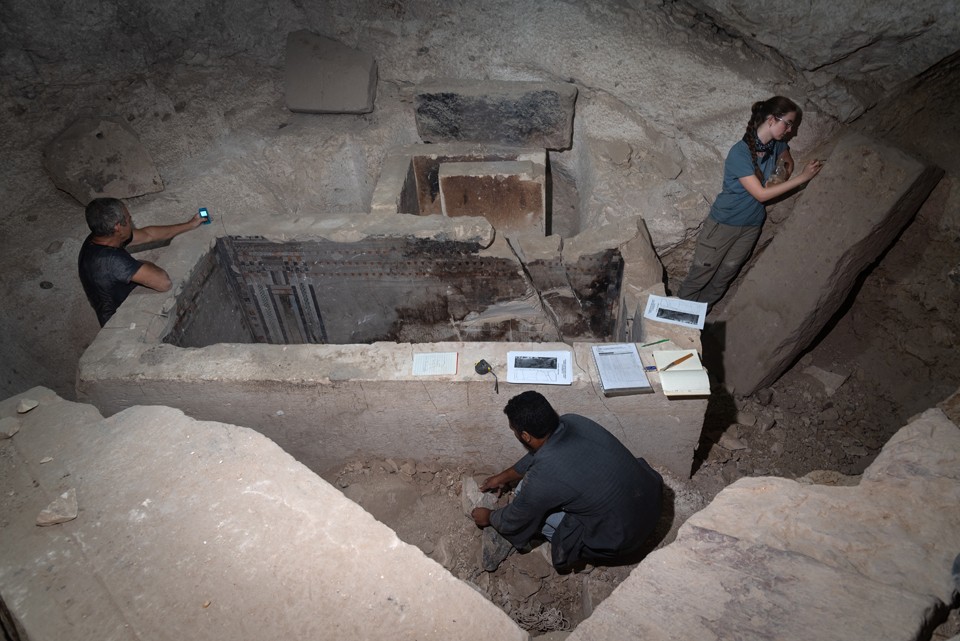
As has become customary, upon arriving at the site we immediately set about distributing the backpacks and materials that needed to be sent to the tombs of Ipi (TT 315) and Djari (TT 366). In the case of Ipi, many of the materials or tools brought up each day are used to ensure the safety of our specialists and workmen (straps, belts, hoists, helmets, slings, ratchet straps) or to continue building platforms, sledges, or protections for large loads made of metal or wood. As for Djari, the materials sent to this tomb are very different from those needed in the tomb of the vizier Ipi. Since the conservators are focusing on the wall paintings, the materials for this tomb consist mainly of chemical products and all sorts of utensils—brushes, goggles, gloves, scalpels, and wooden or metal spatulas—used for the meticulous work our specialists carry out on the paintings and mural remains.
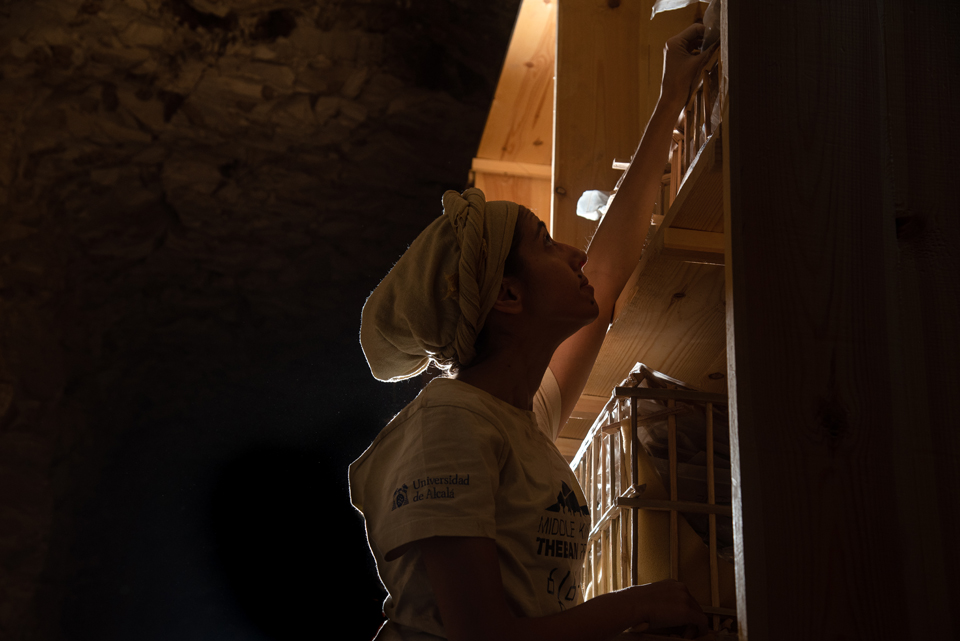
Today, Miguel went up ready to continue dismantling the sarcophagus of Ipi, starting with the fragments in the chamber that can be moved more easily. Rebekah and Bea assisted him in this task. The latter, taking advantage of the fact that the Italian mission she is currently working with had the day off, joined us to lend a hand in a complex she knows well. Rebekah has continued labeling each fragment; we also use a plan of the chamber and of each side of the sarcophagus to identify and keep track of all the pieces. Meanwhile, Bea gathered and prepared all the botanical materials (including a flower bouquet and garlands) that will be studied—upon his arrival in a few days—by the specialist Daniel Sánchez.
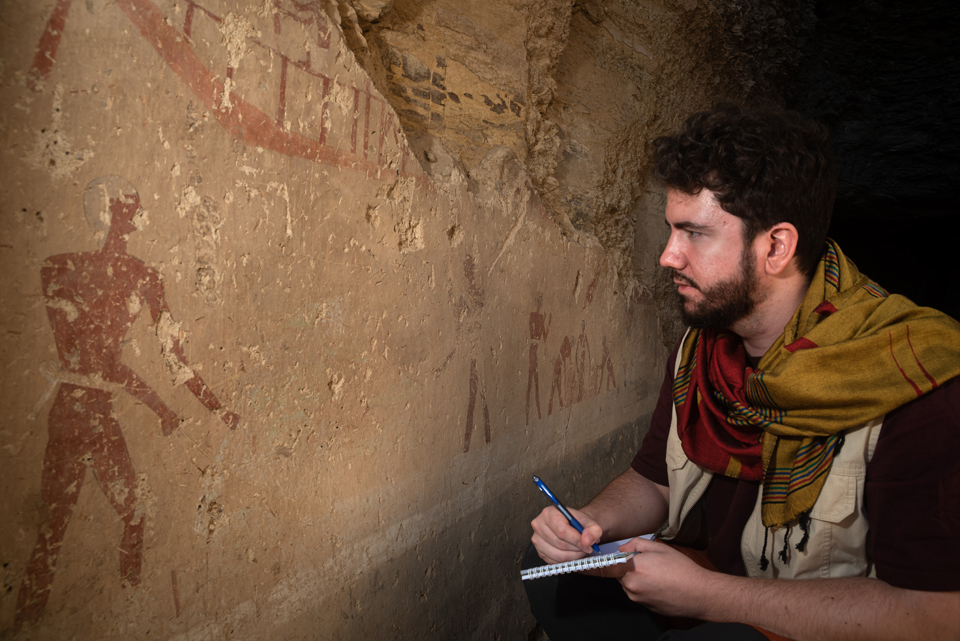
On another front, the team at the tomb of Djari has been joined since yesterday by Andrés, who came from Cairo to study part of the tomb iconography. Over the next few days, Andrés will examine the scenes of shoreline fishing, with traps or baskets, and in deep-water fishing (with nets, weights, and floats) represented in the main corridor of the tomb. Meanwhile, the restorers continue preparing alteration maps for each wall, pillar, and scene, which will inform and guide later interventions.
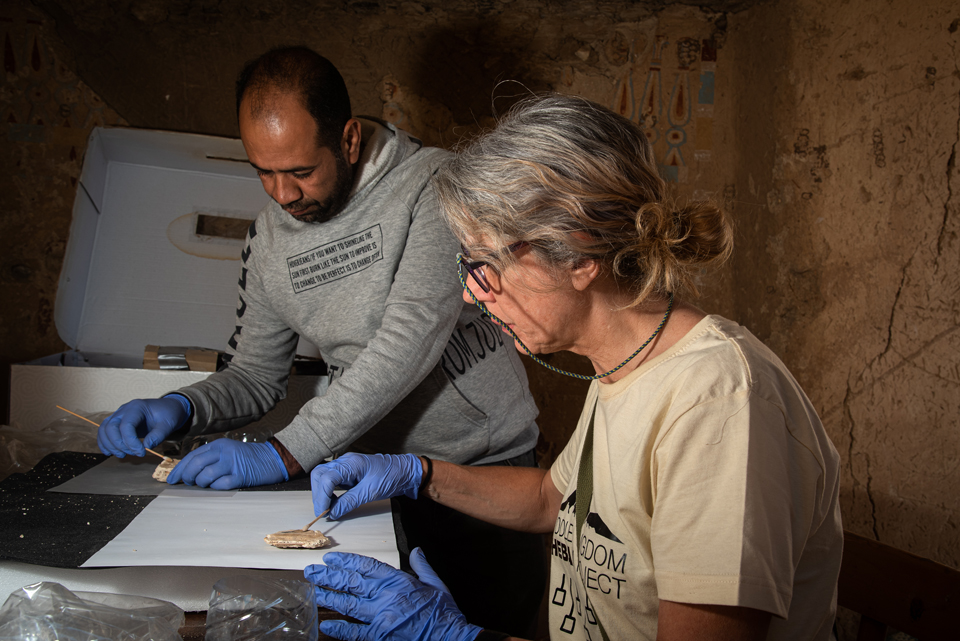
In addition to these tasks, the restorers Semah and Arantxa reviewed the boxes containing fragments that had fallen from the tomb walls and that we collected during the previous two seasons. Once consolidated and cleaned, these fragments will be stored again in preparation for the reconstruction of the rich iconographic program that we will undertake later on. Furthermore, at the end of the day our inspector, Aabla, informed us that our colleagues working in tomb TT 33 at Asasif, led by Prof. Claude Traunecker, had invited us to visit their monument. This tomb, belonging to the famous Chief of Lector-Priests Pedamenopet, is one of the most impressive monuments in the Theban necropolis.


