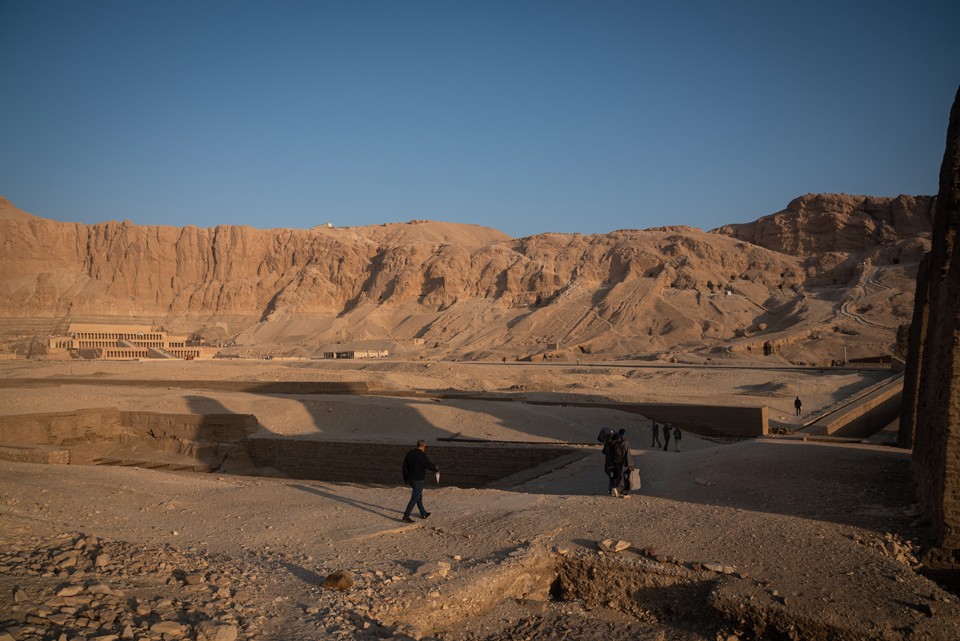
The morning began with the welcome news of the arrival of an inspector well known to the team: Abu el-Qasem Hagag. Qasem already served as inspector during the third season in April 2017, a period in which we enjoyed weeks of excellent work and highly significant results. The mummification deposit was (re)discovered by the team during that very season, so we might say that his presence brings good fortune. God willing (in Egyptian “inshaallah”), we will continue to benefit from his good work and luck.
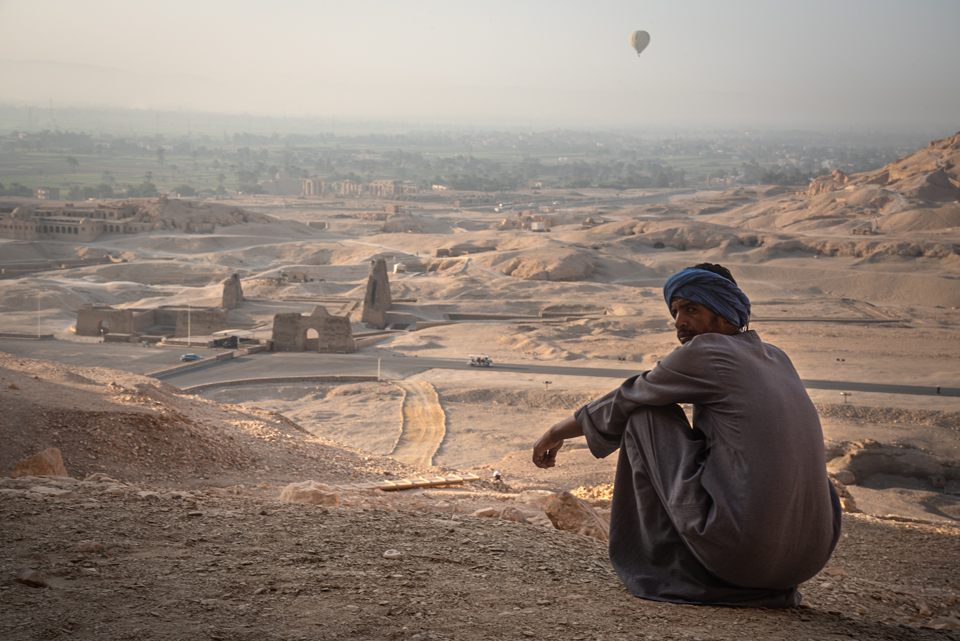
At the complex of Djari, today we began documenting the paintings in the various sectors where they appear. The best-preserved scenes are located in the southern half of the transverse corridor, where Winlock’s team had already uncovered exceptional representations of donkeys, herders, oxen, and fig harvesting. This traditional repertoire of daily-life scenes evokes joyful moments in the Egyptian land—spent with family and as part of the community—through which the artist adorns the tomb and perpetuates this dimension of life for the deceased and his experience in the afterlife. In contrast to these scenes, we find depictions of the deceased alongside his eldest son, enjoying a wrestling match, as well as depictions of his own funeral, which are far more formal and carry profound social and religious meaning.
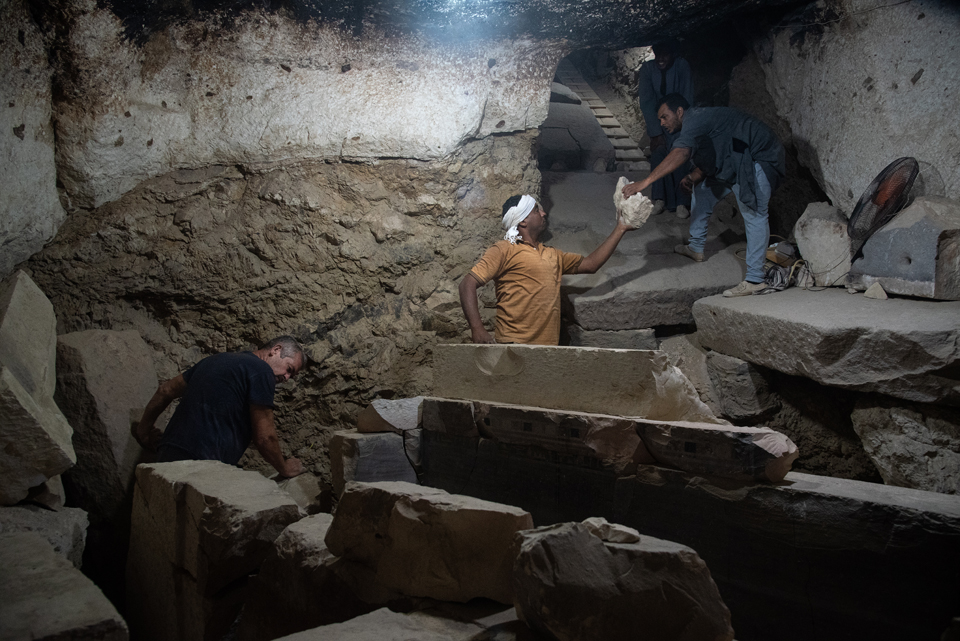
Early this morning, part of the team was transferred to the funerary complex of Ipi (TT 315), where we began the restoration of his sarcophagus. Despite its alterations and fragmented condition, the object dominates the burial chamber—partly due to its size (ca. 12 tons) and partly thanks to the beauty of its colours, decoration, and inscriptions. Miguel, who had already outlined the necessary preparations, has set in motion a chain of operations that includes removing each fragment—starting with the smallest ones—recording and drafting an initial description of each piece, photographing them, and allowing the restorers to examine them for the first time, mainly to ensure a simple yet effective preliminary treatment that cleans and protects every fragment.
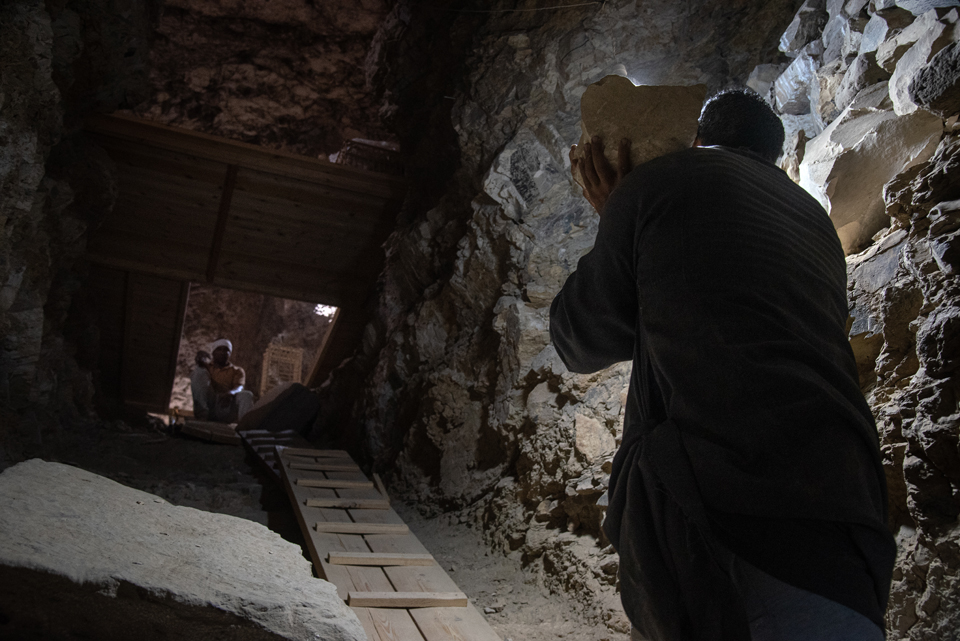
Thus, these first days have allowed us to prepare the work that we shall tackle intensively in the coming weeks. The goals are ambitious and the work will be demanding, but the scientific, heritage-related, and personal rewards make it more than worthwhile. As proposed by the Egyptian Ministry of Tourism and Antiquities (MoTA), we must work on the restoration of the wall paintings in the tomb of Djari—both to protect and document them, and ultimately to publish them—while also continuing the disassembly of Ipi’s sarcophagus for its cataloguing, cleaning, restoration, and publication.


