1_DSC1446

Getting the measure of the site

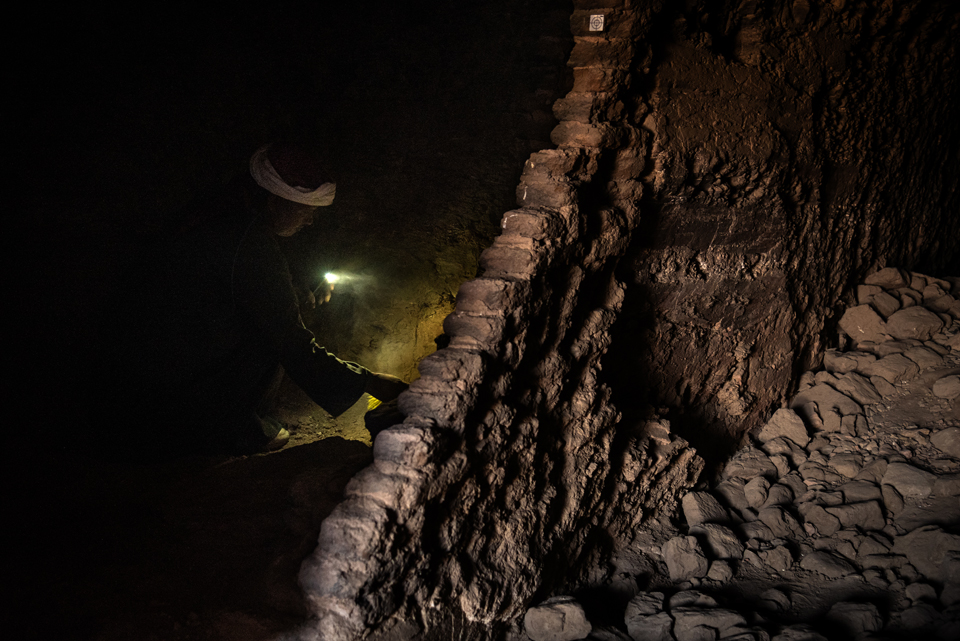
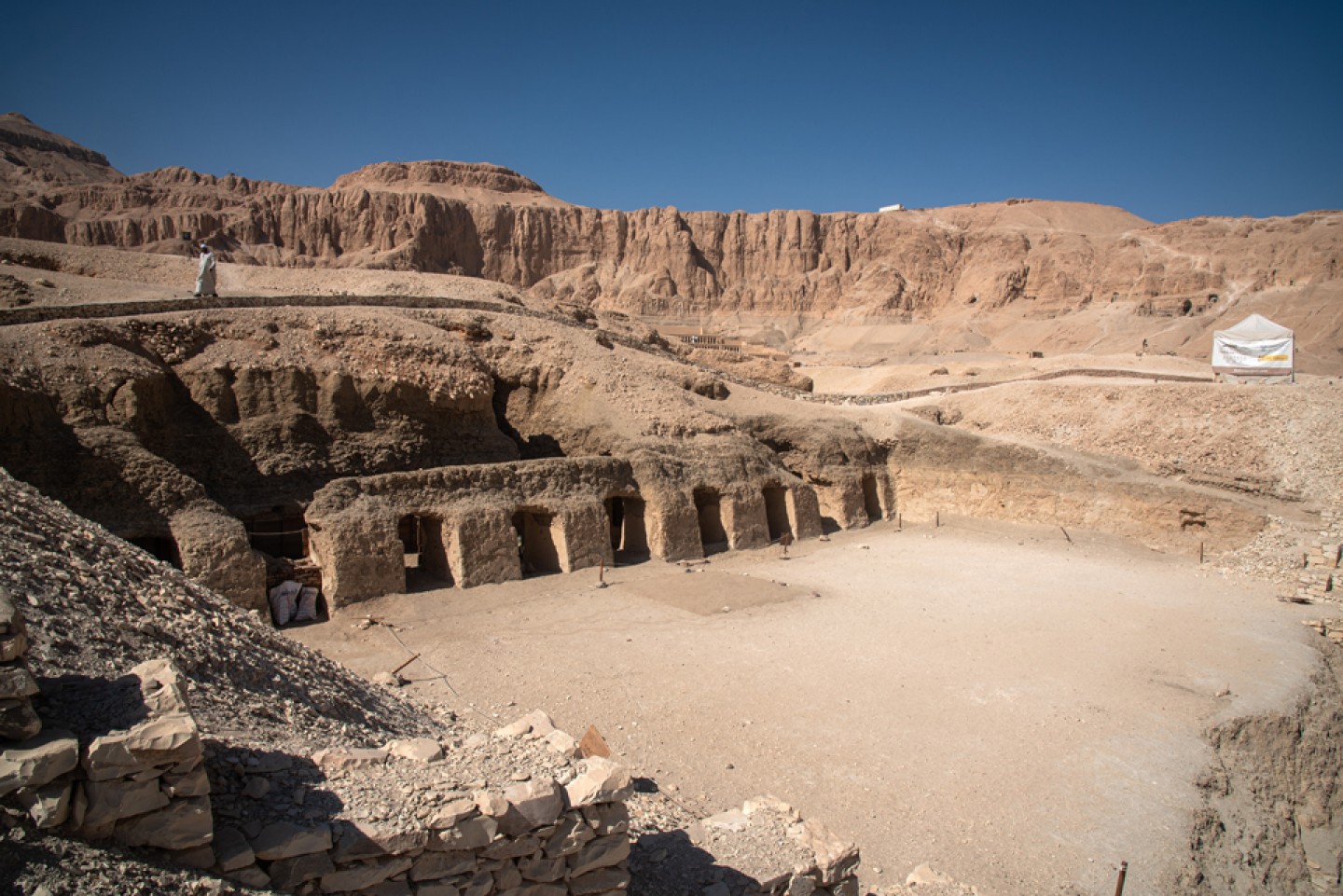
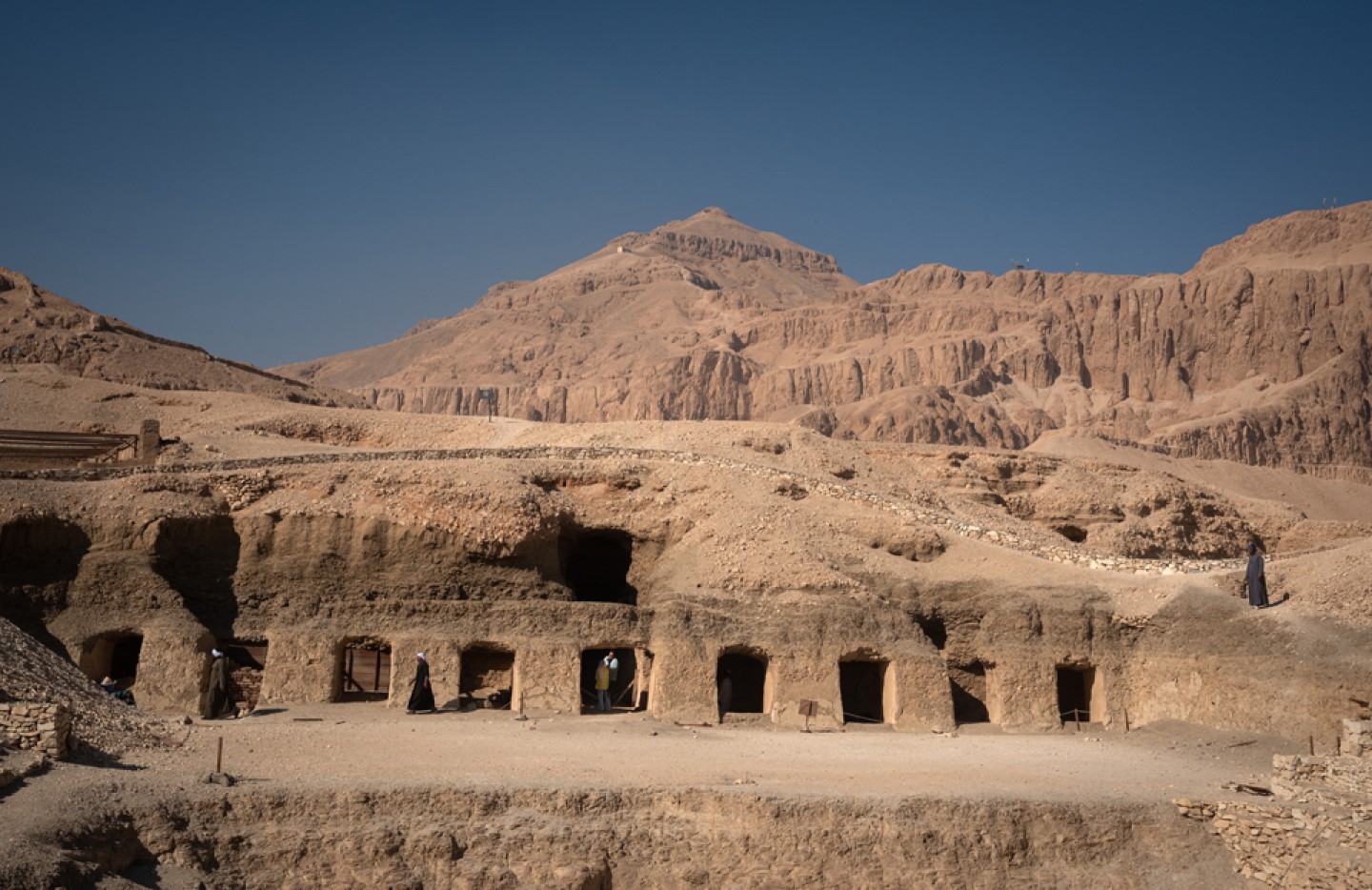
One could say that our second day was a simple continuation of the previous one. It is true that we were occupied with general arragements and basic tasks for most of the morning, although we got a couple of exceptional moments. One was the confirmation that the structure of Djari presents the same conditions as in the previous year. His funerary complex shows structural and geological issues, which are being documented, analyzed, and treated for the recovery of the monument. Today we completed the checking of the testing witnesses with good results and the certainty that we can continue our work in the next years.
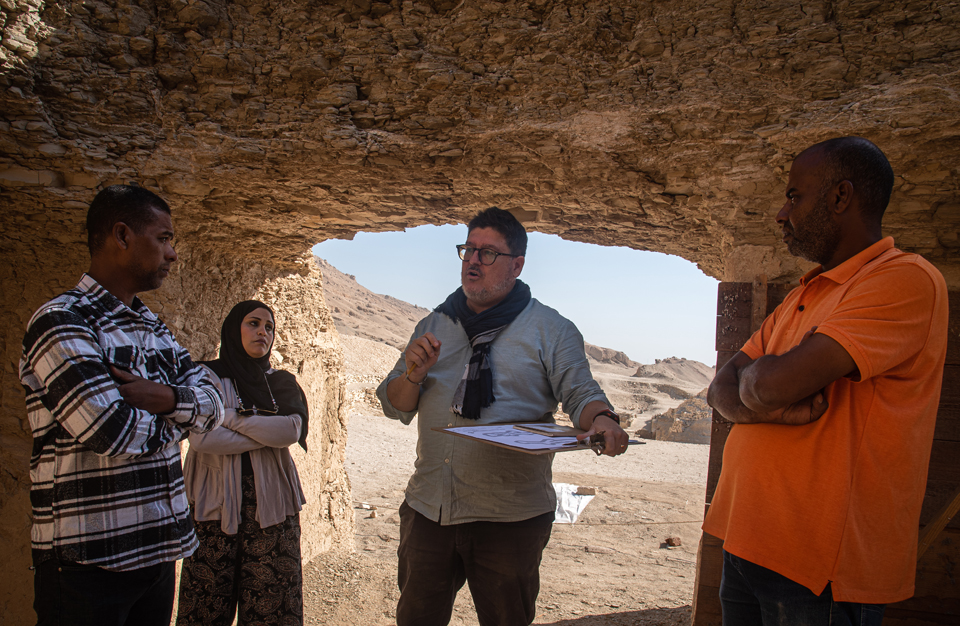
Image: Patricia Mora Photography

The second exceptional moment of the morning was the much-appreciated visit of Dr. Abu el-Hagag, head of the Middle Sector in the West Bank, and Mr. Mohamed Hussein el-Dabawi, chief inspector. Both found some time in their busy schedule to come to the site, offer their support, and discuss the main steps and objectives of our season. Extremely encouraging is to see officials of the Ministry of Tourism and Antiquities like them whose major concern is to protect the monuments and support their conservation, documentation, and publication. Thank you for passing by and sharing your thoughts with us!
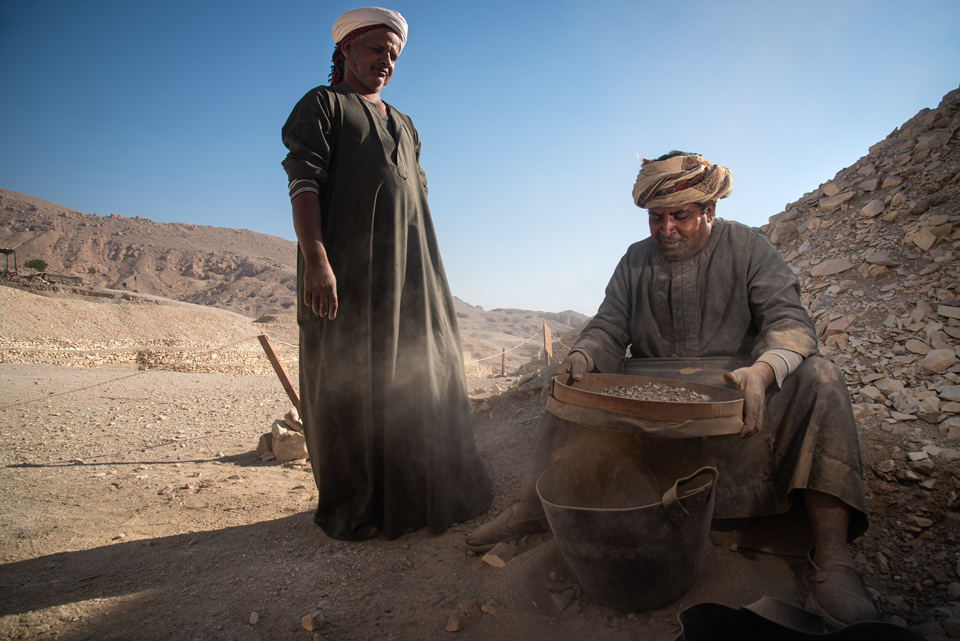
Image: Patricia Mora Photography

Also, we should refer to the workmen that year after year dedicate their efforts to the missions and their archaeological campaigns, offering not only their experience and wide knowledge of the necropolis and its tombs, but also their hospitality and camaraderie. Talaat, Karam, Hussein, Khaled, Hamdi, Gomáa, Badawy, Bassam, Behary or Antar are some of the workmen with whom we begun our work years ago and have now become our friends and colleagues. Our shared history –through the good times and difficult ones– has contributed to build an honest, lasting friendship. In the image, Hussein and Talaat are sieving sand to obtain a fine material that can be used in conservation work. 
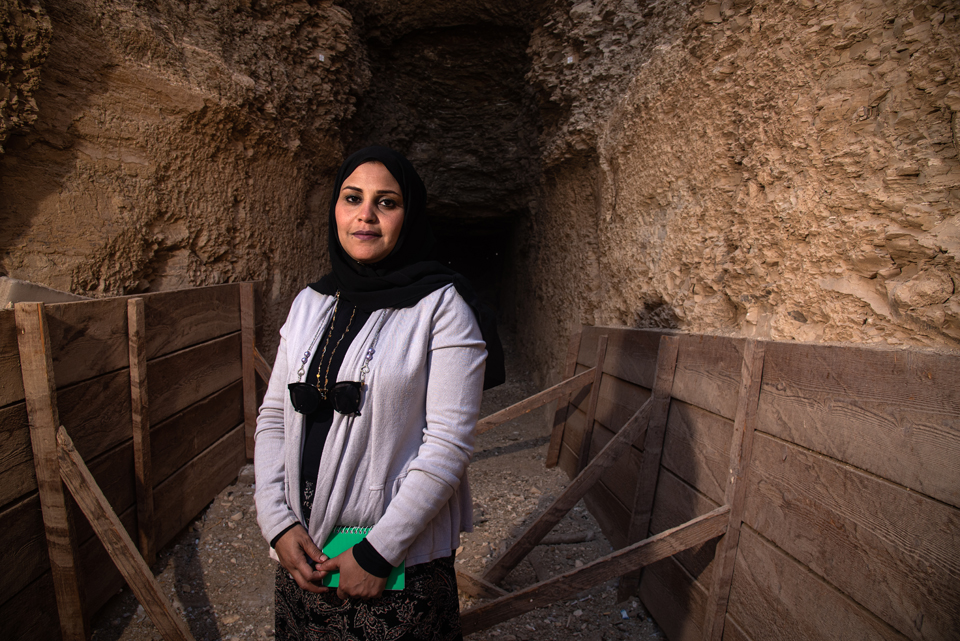
Image: Patricia Mora Photography

In addition, we discussed the iconographic and textual program of the tomb of Djari with our inspector, Aabla Abd el-Hak Ahmed. She will be supervising our work in the inner section of the tomb, beyond the façade, and it has sense that she wants to know about our steps in the restoration and conservation of the tomb and its paintings. 
1_DSC1278

Djari is greeting us again

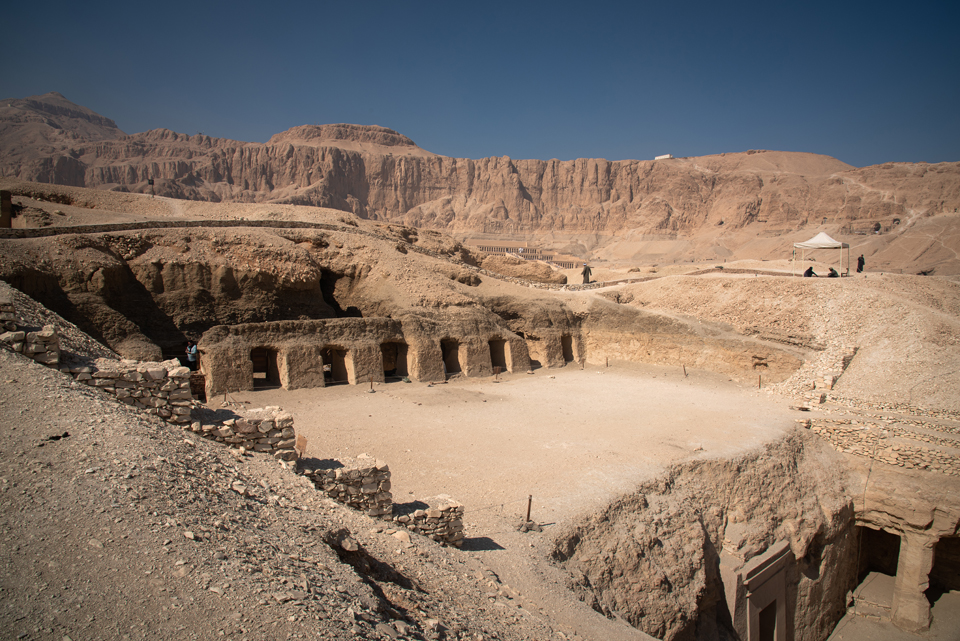
We are back in the site! After a pause of a year, we have returned to the funerary complex of Djari (TT 366), where we expect to conduct a fruitful and intensive season. This year, under the auspices of the Ministry of Tourism and Antiquities –to whom we thank once again their support, permission, and hospitality– we shall focus on the documentation, restoration, and conservation of the tomb structure and wall-paintings. It is indisputable that many of the monuments in the Theban necropoles require an elaborate plan of restoration and conservation and the MKTP team will concentrate on the consolidation and revamping of the tomb of Djari, as an exceptional example of the artistic production in the times of Mentuhotep II.  

Image: Patricia Mora Photography

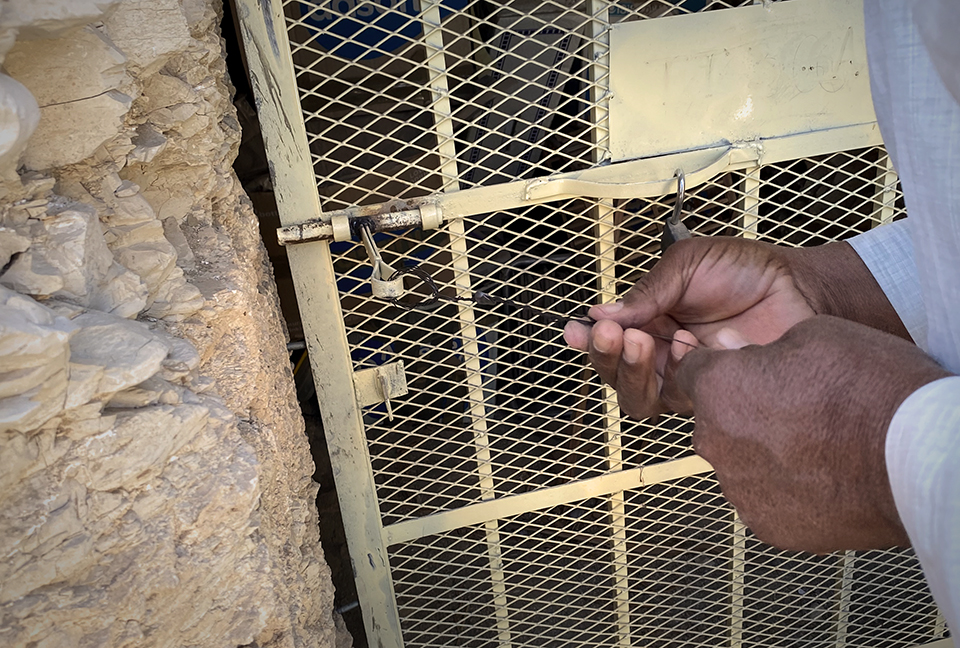
Despite having experienced the same event for the past ten years, today we found ourselves moved once again as the sheikh guardian of the area, Sheikh Shahad, opened the door of Djari’s tomb anew. Under the watchful eye of the inspector, whose name is Aabla, all the materials, tools, and findings were brought out and organized in a secure area of the monument. Soon we will need to employ them in the documentation of the monument, the study of the special findings, and the restoration of the wall-paintings.

Image: Patricia Mora Photography

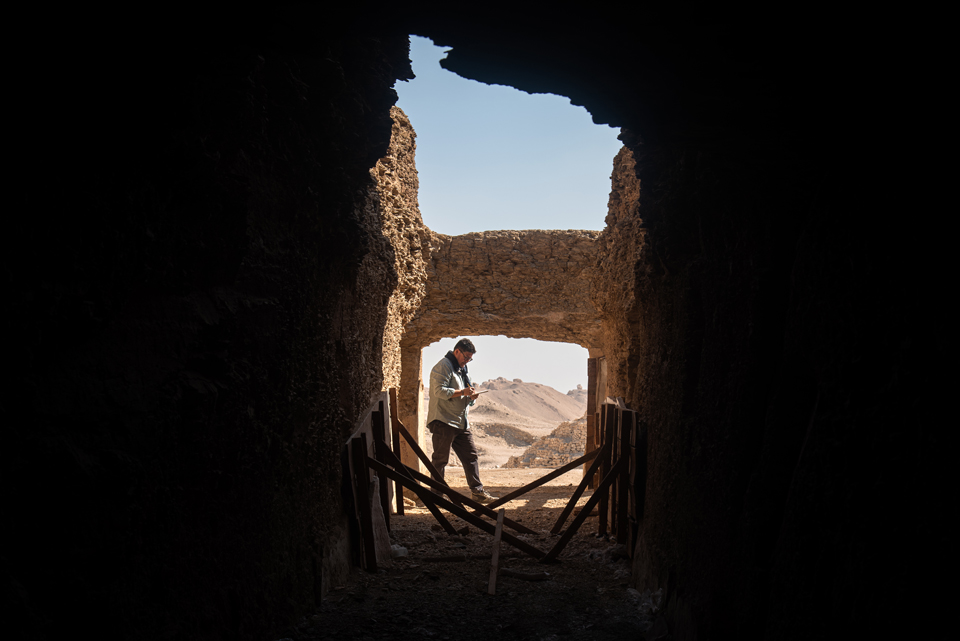
One of the most important tasks in the first day is to check the condition of the monument and its findings. So, one important step is the examination of gypsum witnesses placed in the major and most fragile points of the tomb: fortunately, they seem to indicate that the tomb has not suffered major changes in the last months. Besides, it is very important for us to reinstall the security rope barrier with wooden posts of the courtyard, which reminds us about the delicate condition of the monument in that area. In this initial stage, our moudir devoted part of his work to explaining to the inspector the objectives and tasks of this season, as well as the major issues to face in the coming years. Aabla seems a competent inspector with years of experience in the Valley of the Kings and the Carter Magazine, and today we already noticed that she will contribute enourmeously to the season.

Image: Patricia Mora Photography

In the first day, another customary operation is the installation of the studio lab for our photographer, Patricia Mora. However, we decided that the chamber selected for this purpose should be cleaned and reconditioned for that purpose. Without the slightest delay, Hussein proceeded to clean the tomb chamber. The chamber –which once housed Djari’s wooden models– will be ready tomorrow. 

Image: Patricia Mora Photography

In a way, this first day encapsulates what we hope will be an intense, fruitful, and enjoyable campaing, mainly devoted to the restoration of Djari’s monument. As the ancient Egyptians longed, the perpetuation of the deceased’s memory, the reiteration of this name in inscriptions and conversations, and the perpetual existence of his monument are, as in Djari’s case now, a living reality… 

MKTP - Middle Kingdom Theban Project - Recuperando el pasado
logoUAH-footer

El proyecto

El Middle Kingdom Theban Project tiene como objetivos la excavación, estudio y publicación de varias tumbas de la necrópolis del Reino Medio en Deir el-Bahari (Henenu, Ipi, Neferhotep, E1) y de las tumbas de Dagi (TT 103) y Djari (TT 366) en la necrópolis de Asasif.

MKTP - Middle Kingdom Theban Project - Ministerio Egipcio de Antigüedades

Con la colaboración del Ministerio Egipcio de Antigüedades y las autoridades del Alto Egipto, Luxor y la Orilla Occidental.

Las tumbas

Las tumbas de Henenu (TT 313) e Ipi (TT 315) se encuentran en la colina norte de la necrópolis de Deir el-Bahari, donde fueron enterrados algunos de los oficiales más importantes de Mentuhotep II y principios del Reino Medio. 

La cámara funeraria de Harhotep (CG 28023) fue localizada en el patio de la tumba TT 314 y constituye uno de los ejemplos más interesantes en arquitectura, iconografía y epigrafía del yacimiento. 

En la planicie de Asasif, las tumbas de Dagi (TT 103) y Djari (TT 366) también representan monumentos a la memoria de altos cargos tebanos del reinado de Mentuhotep II que ayudaron a construir un gran estado.

MKTP - Middle Kingdom Theban Project - Patrocinadores - Ministerio de Ciencia e Innovación
MKTP - Middle Kingdom Theban Project - Patrocinadores - Gobierno de Castilla-La Mancha
MKTP - Middle Kingdom Theban Project - Patrocinadores - Fundación para el Conocimiento madri+d
MKTP - Middle Kingdom Theban Project - Patrocinadores - Ministerio de Cultura y Deporte
MKTP - Middle Kingdom Theban Project - Patrocinadores - Fundación Palarq
MKTP - Middle Kingdom Theban Project - Patrocinadores - Parque Científico y Tecnológico de Castilla-La Mancha
MKTP - Middle Kingdom Theban Project - Patrocinadores - Asociación Española de Egiptología
MKTP - Middle Kingdom Theban Project - Patrocinadores - Asociación de Amigos de la UAH

Copyright 2020 MKTP ©  Todos los derechos reservados. Editor: Antonio J. Morales
(con la colaboración de miembros MKTP)
Cookies | Privacidad

Sitio Web realizado por MindHouse