Image: Patricia Mora Photography
The week began with the arrival of another one of our conservators, Reed Hudson. Having landed in the early hours of Friday morning, today was her first full day with the team. The morning was devoted to catching her up on the progress made so far and bringing her into the ongoing discussions about mortar and plaster tests. Sameh and Arantxa had already been experimenting with mixtures based on last season’s calculations, so Reed stepped in at the perfect moment to evaluate how these mortars—whether lime-based or not—behave when applied to the tafla stone of the Djari complex.
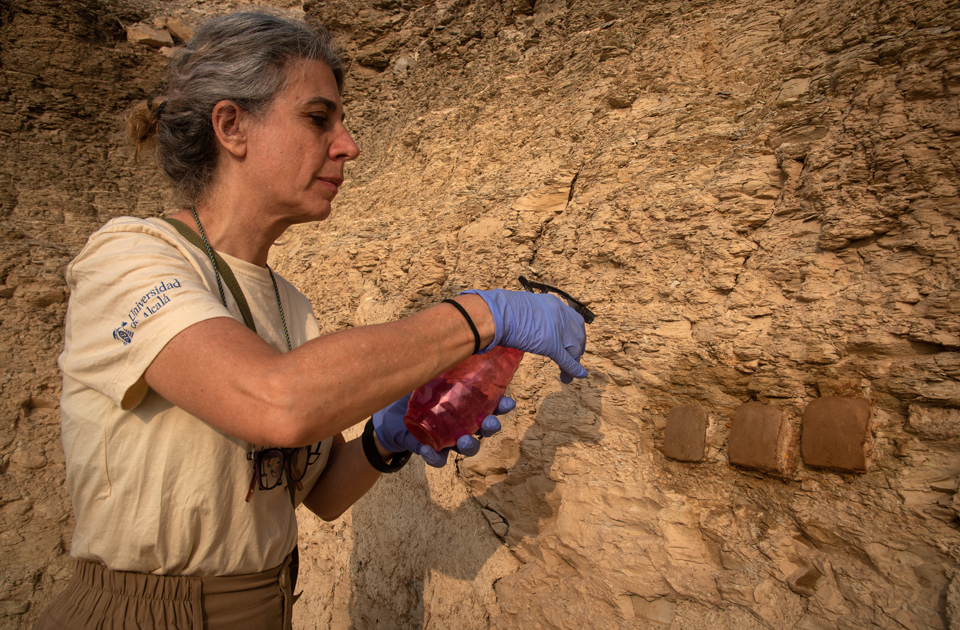
Arantxa and Reed spent much of the day revisiting previous trials, weighing questions about the proportion of lime to add, and even considering whether some of the lime traces might originate naturally from the stone itself or from the jiba used during the preparation of the mortars. Within the team, the study of the original components of the paintings, mortars, and plasters is being carried out with great care, allowing us to define the most appropriate strategies for structural reconstruction and conservation. Meanwhile, Andrés continued his meticulous documentation of the fishing scene in the main corridor—a vivid tableau showing three different fishing techniques on the river, complete with two crocodiles, those formidable creatures that symbolize both the dangers of the Nile and the vigilant guardianship over the tomb’s entrance.
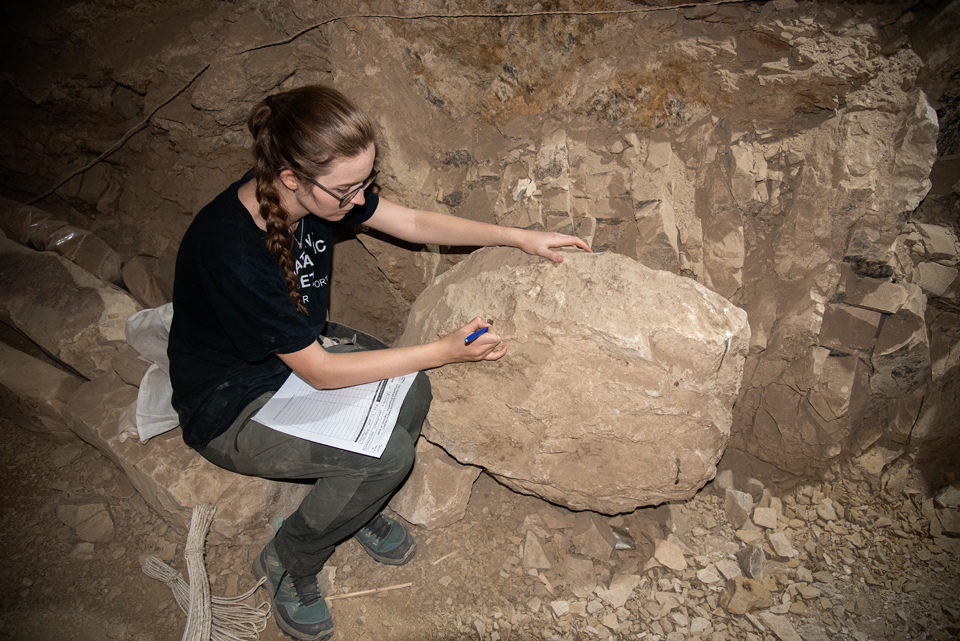
At the funerary complex of Ipi, however, the day was cut short. A power outage left us without electricity, and without proper lighting we could not risk moving large stone blocks, even with battery-powered lamps and torches. We were told during the morning that a new transformer box was being installed on the West Bank, which explained the interruption. Taking advantage of the forced pause, Miguel assisted Raúl and Rebekah in reviewing the lists and documentation of the previous finds, before everyone made their way down the slope of Deir el-Bahari to join the rest of the team at Djari, on the Asasif plain.
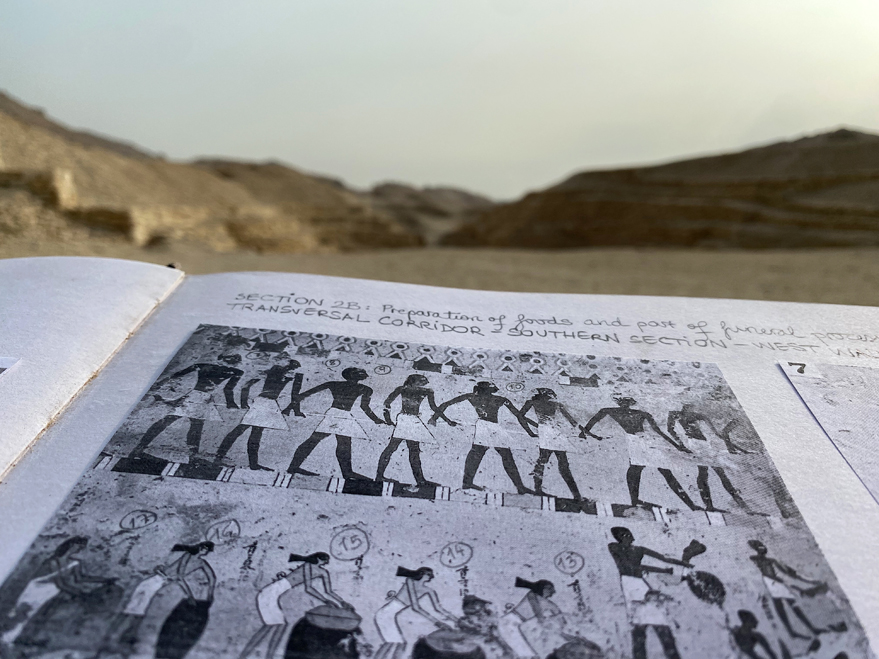
With the Ipi-team now on site, we were able to push ahead with several tasks awaiting completion at the Asasif tomb. One of them was the final installation of the tent fabrics, which needed to be secured to the frames of the protective shelters covering the wall paintings. As Miguel and Rebekah finished fastening the last sections, Raúl and Antonio examined the various graffiti carved into the walls. At the same time, Antonio completed the identification and numbering of all the scenes in the tomb, integrating references from the Metropolitan Museum of Art’s earlier expedition wherever possible. This will allow us to move forward with a fully systematic approach to documenting every wall, scene, and decorative detail within the monument.


