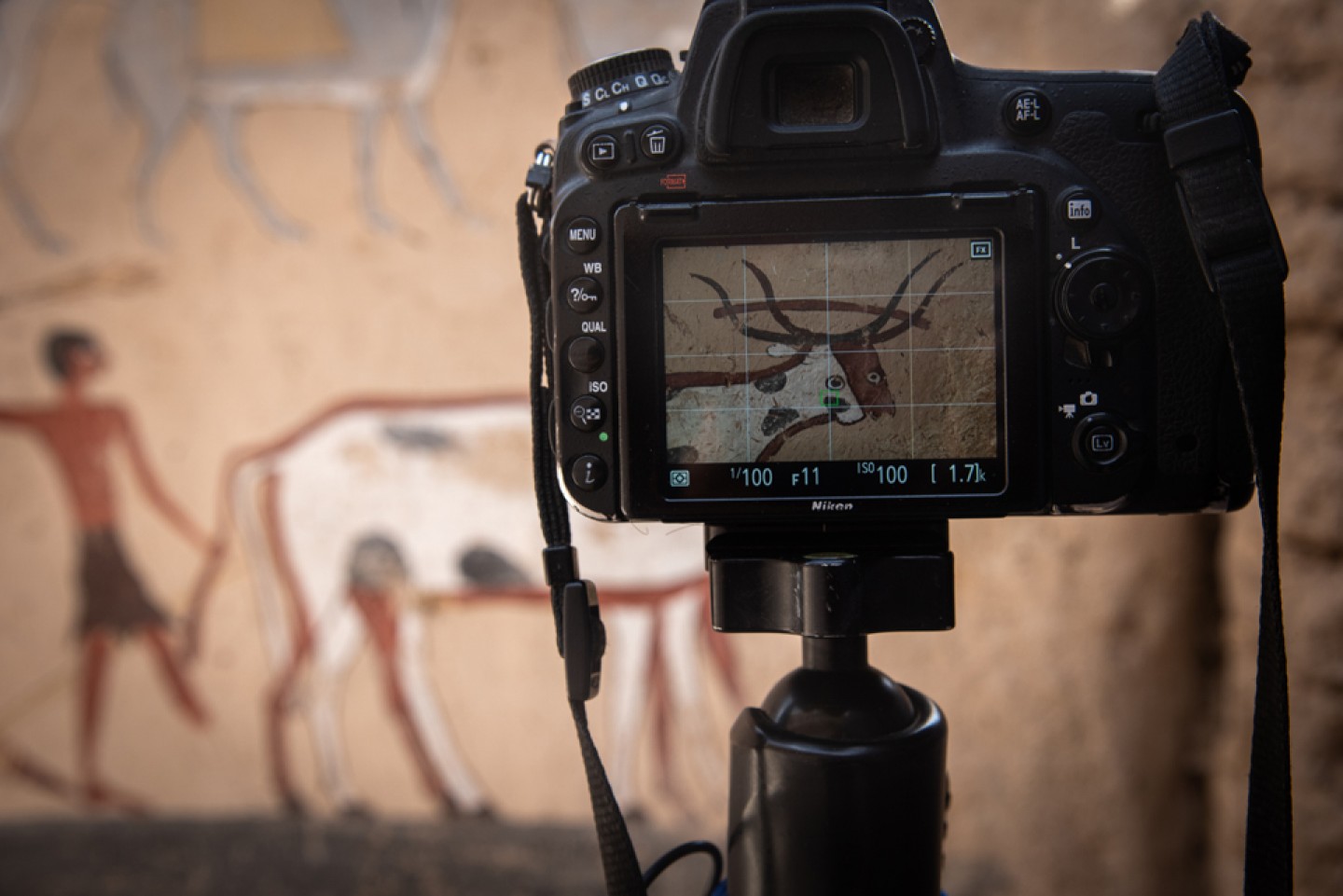
This morning we began reorganizing the tables and work areas, placing our conservators in the northern sector of the transverse corridor, where we have stored the findings from the previous seasons. The assemblage of objects from earlier campaigns is not very large, although the discovery of fragments of wall paintings and mortar is significant. For this reason, this year, restoration activities take on a central role. In addition, to carry out proper restoration, the current condition of the wall paintings must be documented before any intervention, which is why photography has also become a priority for the restoration and conservation work.
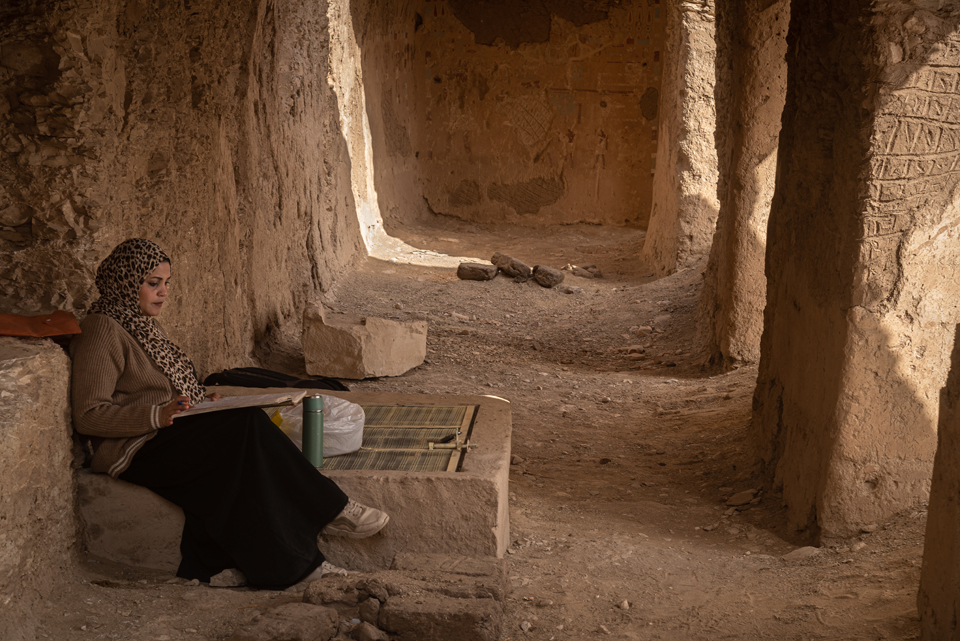
As we noted yesterday, the work of the inspectors is extremely important — not only because they ensure that the activities undertaken comply with the permissions, but also because they contribute with their experience and expertise to the development of the restoration, photography, and drawing works in the project. In the tomb of Djari, our inspector, Aabla Abd al-Hak Ahmed, has been a constant source of support from the very beginning: her diligence, her continual assistance, and her kindness allow us to work with the best colleague we could hope for.
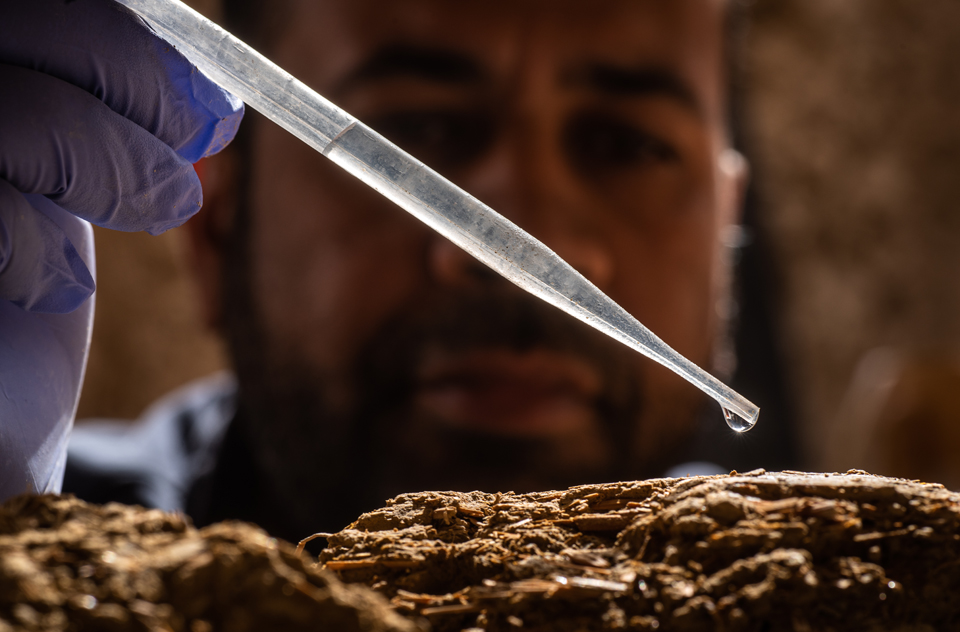
In regard to the restoration works, we must not forget our restoration inspector, Sameh Awad. As mentioned earlier, he has joined us to lend a hand with the restoration of the paintings and with the sarcophagus fragments. His experience in the conservation of wall paintings—both in temples and in tombs—is extensive, and the depth of his expertise becomes clear when one watches him work with the fallen wall fragments that we must now recover.
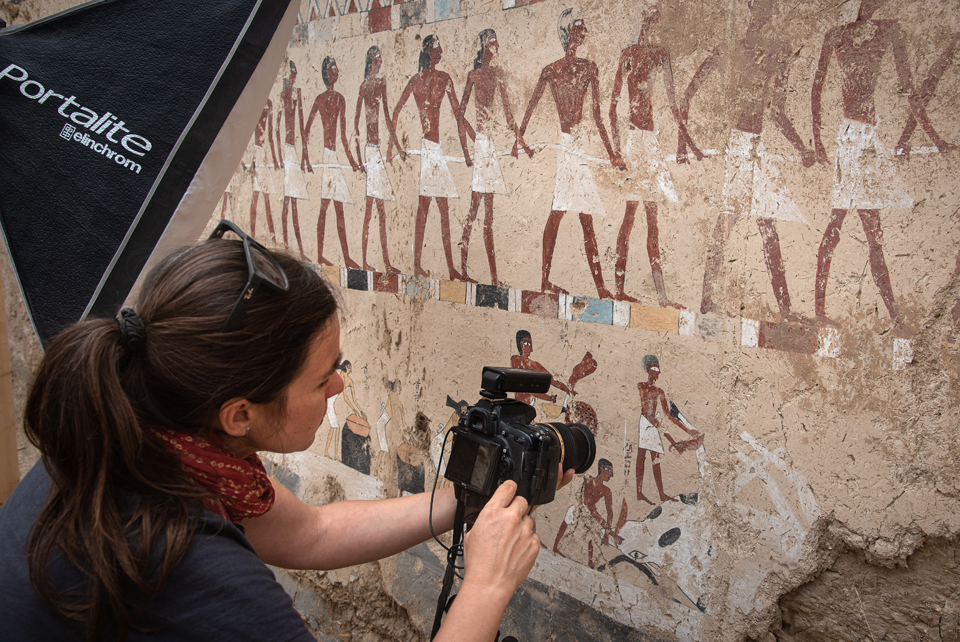
Work on the paintings requires, on the one hand, documenting their current condition. This task is carried out by our photographer, Patricia Mora, who is photographing every wall, pillar, and scene to create a complete and abundant visual record: general views, perspective shots, rectified images, and detailed photographs. We must not forget that, in addition to traditional photography, our photographer uses a multispectral camera to capture images of the paintings, enabling us to interpret the data in terms of colors, pigments, components, and the production techniques of the mortars, plasters, and inks. All this work with the photographic documentation is a reminder of the significant role that our photographer plays in the team.


