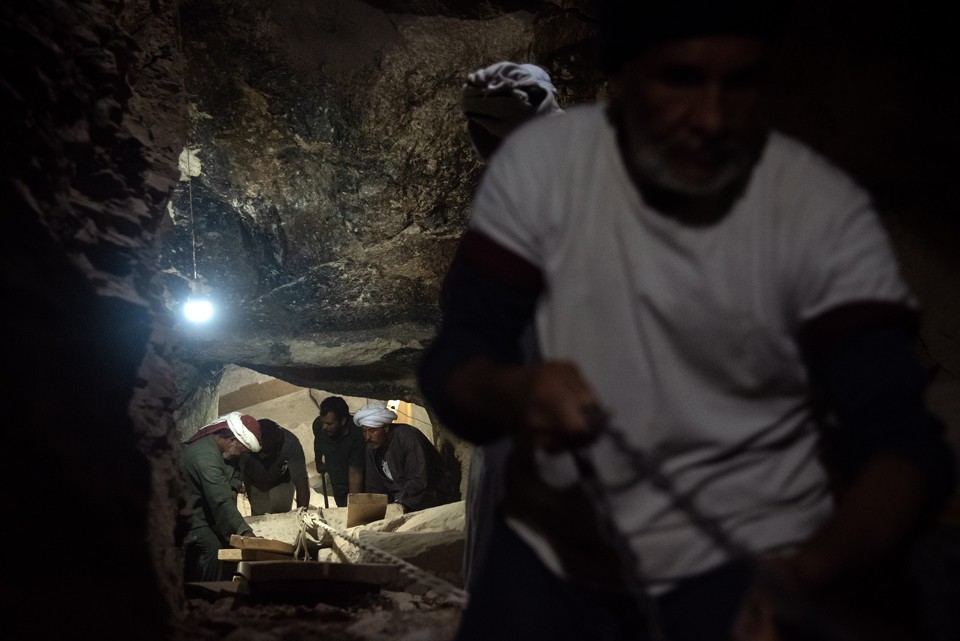
Image: Patricia Mora Photography
The last day of the week is generally marked by the accumulated fatigue that takes its toll on everyone —especially on the workers in charge of moving large blocks in our project— as well as by the joy of being able to enjoy a day and a half with family and friends or, in our case, a day to travel or visit monuments in Luxor and beyond. Every Thursday, our workers show a very special smile at the end of the day, satisfied with the work completed, happy with a well-earned paycheck, and excited for the small break they will be able to enjoy with their loved ones. Still, that does not stop them from working hard, and everyone wants to wrap up the week with a day full of progress and results. Today, once again, we have managed to make headway with the fragments of Ipi’s sarcophagus and with the restoration of the wall paintings in Djari. It has been a very productive week, and we are pleased with the current situation.
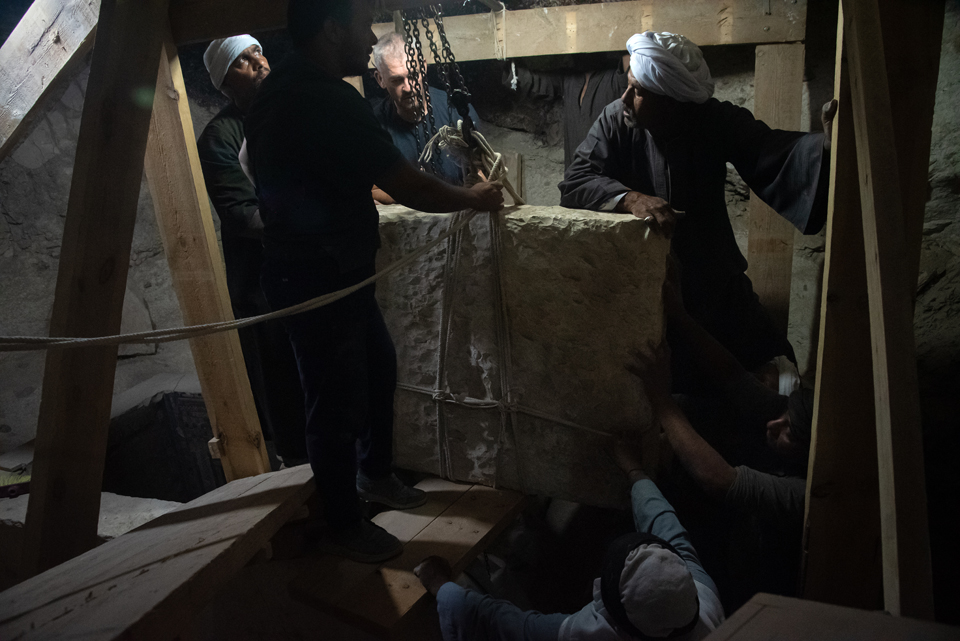
As for the work with the sarcophagus, today we were able to move ahead much faster with the help of our rais. Ali had spent a couple of days recovering from a bad cold, and today was his first day back — which he tackled with great energy and enthusiasm, supervising together with Miguel the transport of another of the blocks from the canopic chest. Little by little, we are dismantling this limestone chest, except for its base piece, which is sandstone and will require less effort. Today another of the blocks of the canopic chest was finally shifted, a task that required considerable planning since it was one of the largest pieces moved so far.
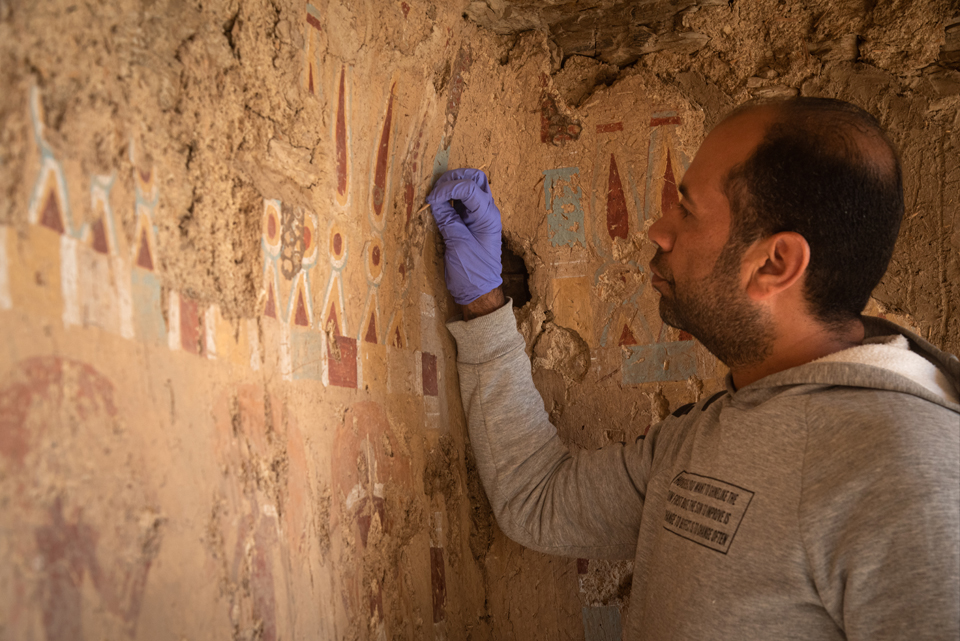
In Djari’s tomb, restoration work has continued, although today we dedicated part of our time to running tests with mortars made with and without lime. The issue is that lime contributes to the mortar’s strength and stability, but it appears to be incompatible with certain aspects of the bedrock—at least in some areas—so possible solutions are being explored. Our restoration and conservation inspector, Sameh, helped assess the possible options by discussing with the team the advantages and challenges of each alternative and the best way to proceed with the restoration.
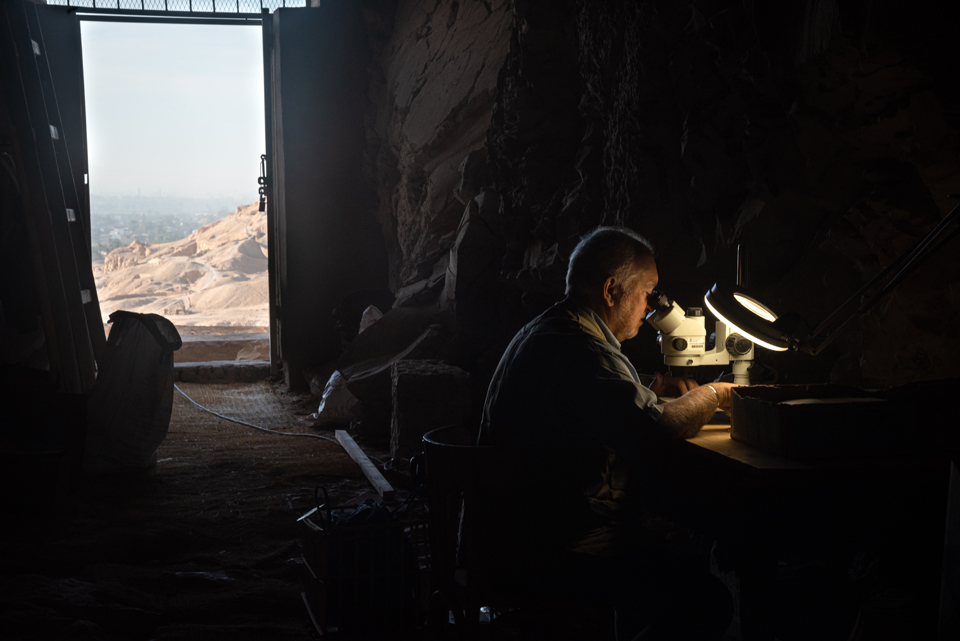
Meanwhile, Daniel has continued his work studying the botanical materials that require identification and conservation. In the coming days, the conservators will discuss options for the preservation, documentation, publication, and storage of a series of finds in need of conservation, such as the small bouquet or the garland, although the full restoration of the sarcophagus fragments will begin once the dismantling is finished, which probably means next year in the campaign XI.


