Imagen
Image: Patricia Mora Photography
Today was the first day when we truly felt the intensity of the end of the campaign. Yesterday we were still working according to a strict plan, with the sense that certain tasks had been successfully completed; today, however, it has become clear that we must begin to wrap up the work we have undertaken in order to ensure, on the one hand, that everything is properly examined and stored, and on the other, that the final results can be included in the report that must be submitted to the Ministry. In addition, with Fernando joining the team, we have been able to begin checking the data from the control-point network created in 2022 and 2023. These points allow each monument to be located with great precision, benefiting the study of the monument itself, the surrounding territory, and its landscape.
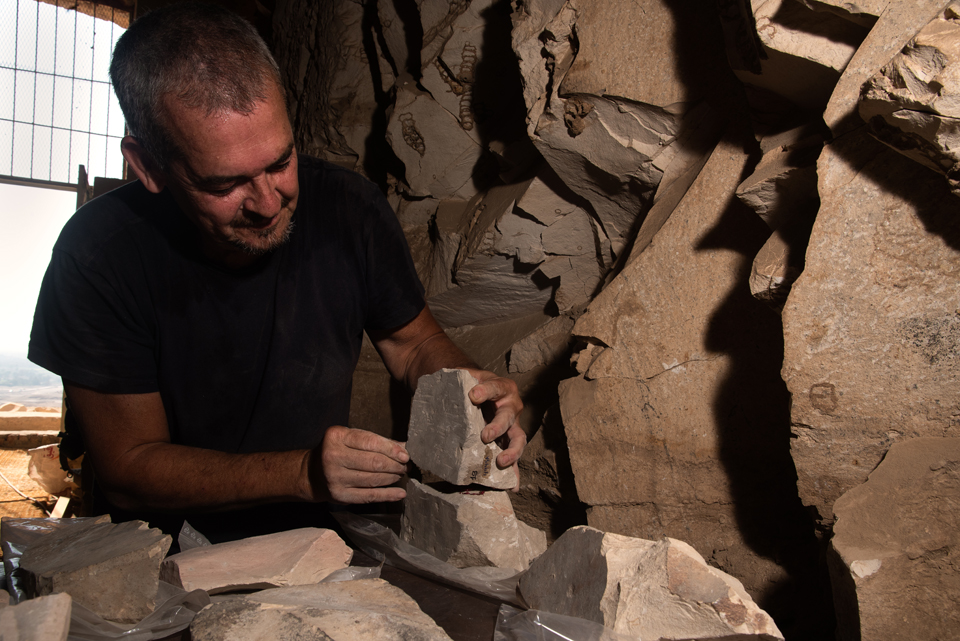
At the complex of Ipi, the dismantling of the sarcophagus is nearing completion. Very little remains to be removed, only small fragments, which we prefer to glue and reassemble before inventorying. This will facilitate the reconstruction of these small pieces, which fit into minor but crucial gaps for the correct placement of the remaining blocks. As a result, the sarcophagus now lies relieved of weight in the chamber, free of the fragments we feared might crumble and of the wall blocks that had collapsed around it. With this task completed, Miguel, Rebekah, and Raúl have just a couple of days left to organize the fragments, complete the inventory, and glue together those pieces that can now be joined, thus advancing work for the next campaign.
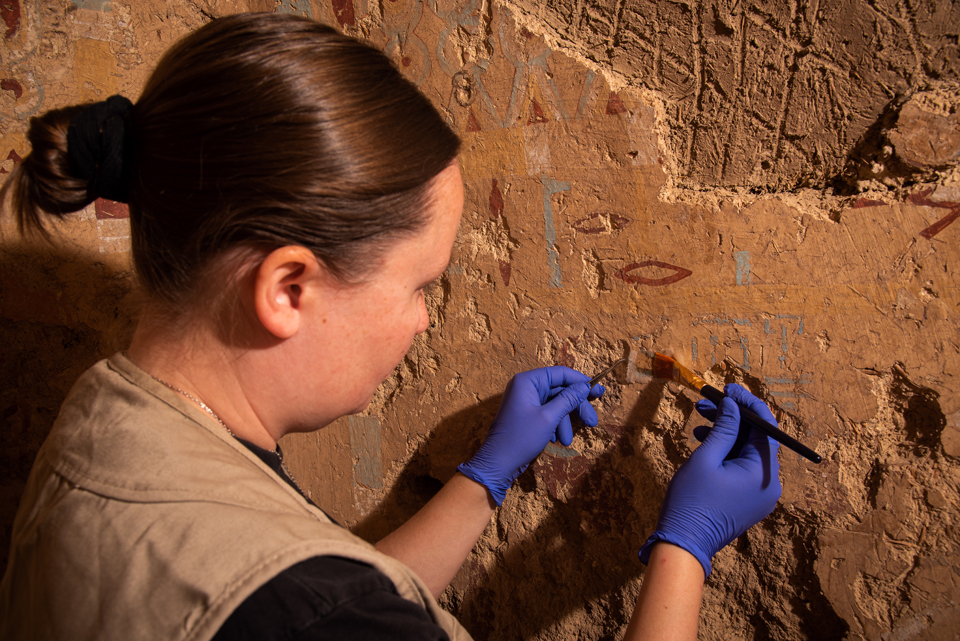
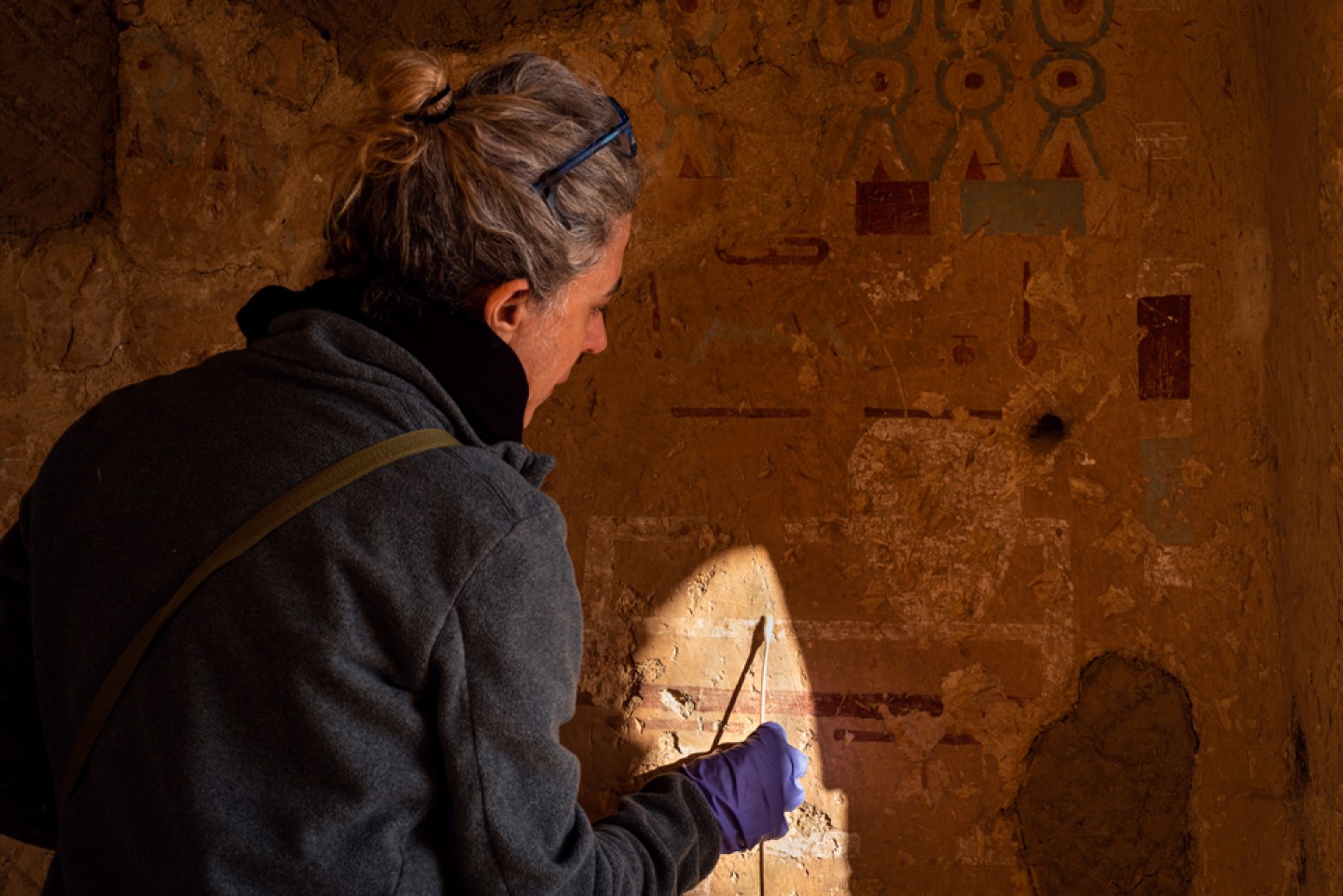
In the case of Djari’s tomb, the growing intensity is also becoming apparent. The conservation team has been divided into three groups working in unison to bring the restoration tasks to completion as quickly as possible. On the one hand, Sameh is attempting to clean, inject, and consolidate a couple of areas where the priority is to save the wall, whose mortar is partially detached from the surface and whose collapse could be imminent. On the other hand, Reed and Jaume are tackling another area where a solution that functions as mortar can be injected, helping to support walls that present small voids. Finally, Ella and Arantxa have been working on cleaning the north wall of the transverse corridor, focusing in particular on the careful removal of insect nests located in areas with paintings bearing inscriptions or scenes of great artistic value. The current situation shows that there is still much work to be done with mortars and paintings, but we have a team that is devoting all its experience and patience to facing this challenge.
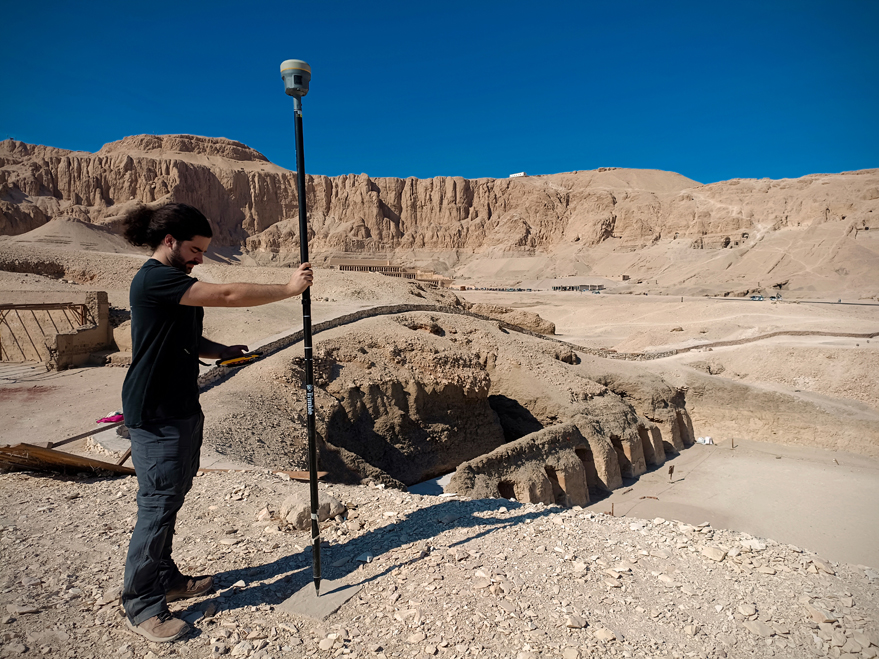
Meanwhile, Fernando has examined the previously recorded points marking the position of Djari’s monument within the necropolis control-point network established some years ago, in order to continue producing detailed plans of this monument and others in the near future. The position of a monument within its territorial context and landscape is one of the aspects of greatest interest to the project, and for this reason each of the tombs within the concession has been examined in detail to allow for precise geolocation at a later stage.


