Image: Patricia Mora Photography
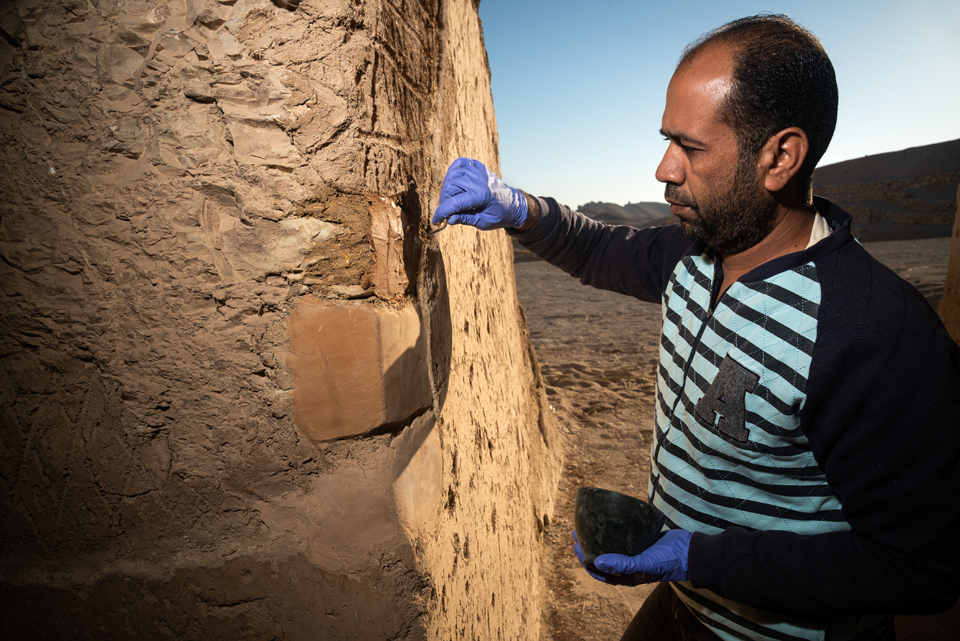
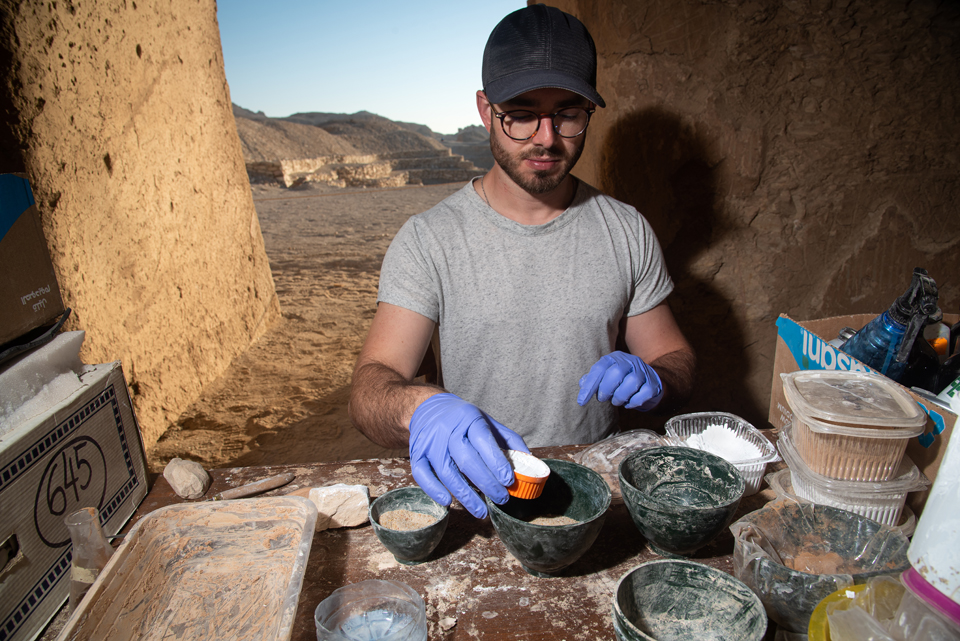
After a Friday devoted to travel, relaxation, and rest, we have begun the final week of work with a clear set of objectives, especially important given the constant pressure of time that affects any mission as a campaign draws to a close. In the tomb of Ipi, we are approaching our final goal, with the dismantling of the last fragments of the sarcophagus and their inventory and study now underway. In the case of the tomb of Djari, restoration work continues steadily, although here we are still far from the final objective, as this is a long-term task. Even so, we are meeting the goals set out at the beginning of the campaign. In addition, today we were joined by Fernando Casamayor, a researcher specializing in landscape archaeology and Islamic architecture from Harvard University, who has come to review our network of survey points.
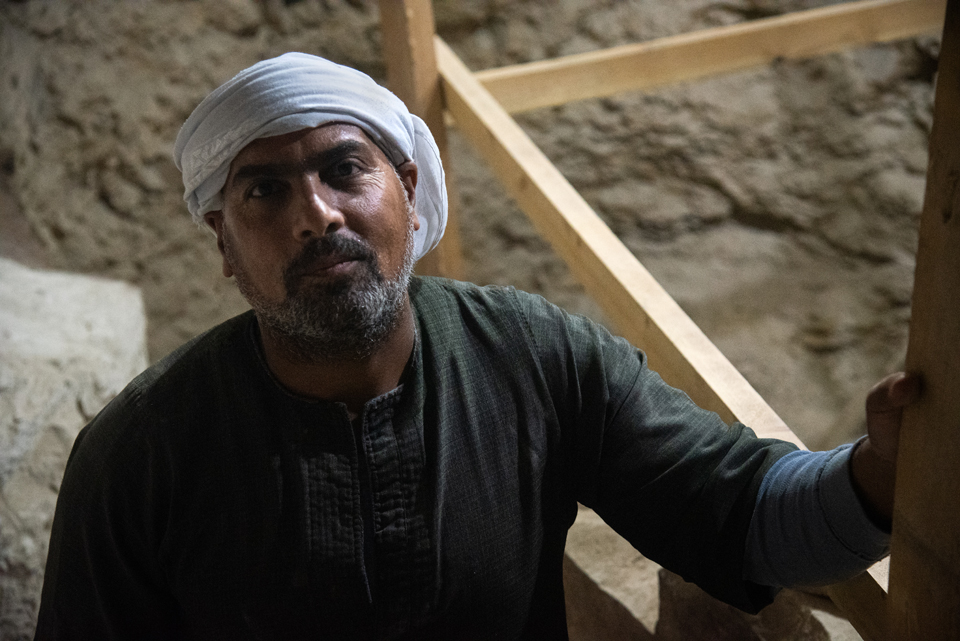
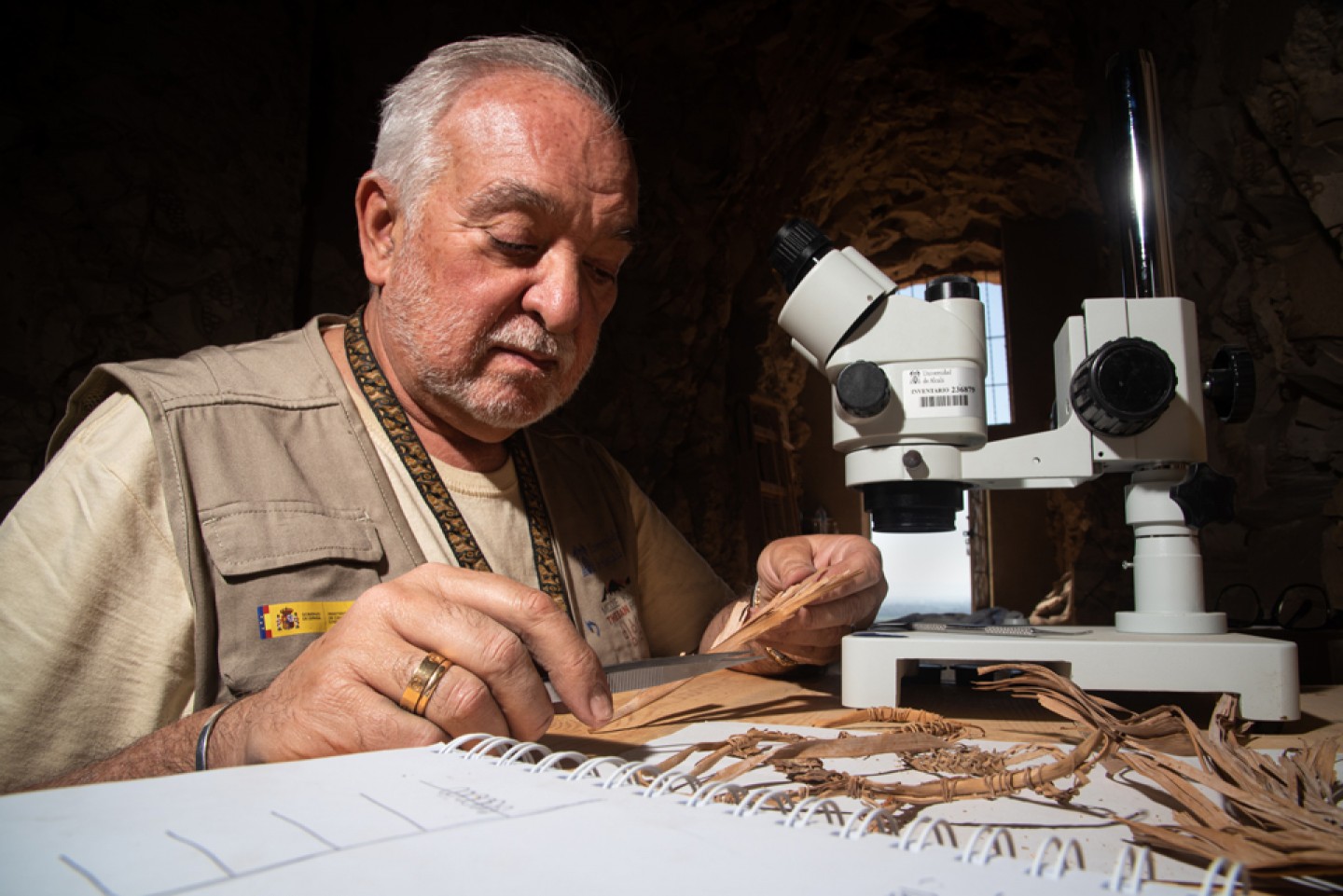
At the funerary complex of Djari, the three researchers working on the dismantling of the sarcophagus fragments continue their efforts on one of the largest pieces, once again originating from Ipi’s canopic chest. This element—partly supported by the eastern side of the sarcophagus—constitutes an exceptional feature within the vizier’s burial; its construction and position should help us better understand the process by which the chamber and sarcophagus were prepared. Miguel has succeeded, using the hoist and with the help of the remarkable workmen involved in the project, in transporting and organizing all the blocks and fragments from the vizier’s burial chamber. In addition, Rebekah and Raúl have managed to bring the inventory of all the pieces and the fragment location map fully up to date. Finally, today marks the end of Daniel Sánchez’s stay with us, following the completion of his analysis of the finds.
In a couple of days, work on the pieces will come to an end, with around 30% of the sarcophagus volume having been removed—specifically those fragmented elements that could be safely extracted. For the next campaign, we plan to raise the sarcophagus using an exoskeleton and larger-capacity hoists, or even pneumatic lifting bags, which will allow us to lift and secure the remaining intact portion of the sarcophagus. For now, work has begun on identifying those fragments that join together and can be bonded using a special adhesive designed for heavy pieces.
In the afternoon, part of the team remained at the hotel to continue working or to recover their strength, while another group visited the Luxor Museum to meet with its director, Alaa Hussein el-Menshawy. As always with our Egyptian colleague, the meeting was highly productive. In fact, it focused on preparing the plans for the exhibition that the team hopes to organize in 2026 on the embalming cache. In the evening, we had the pleasure of visiting the Italian House, where our colleague Francesco Tiradritti invited us to enjoy a wonderful dinner of typical Italian products (pizza, salami, pecorino cheese, wine, etc.), and where we were able to chat in a relaxed atmosphere about current missions and future plans. We had a fantastic time—grazie mille to Francesco and his colleagues.


