Image: Patricia Mora Photography
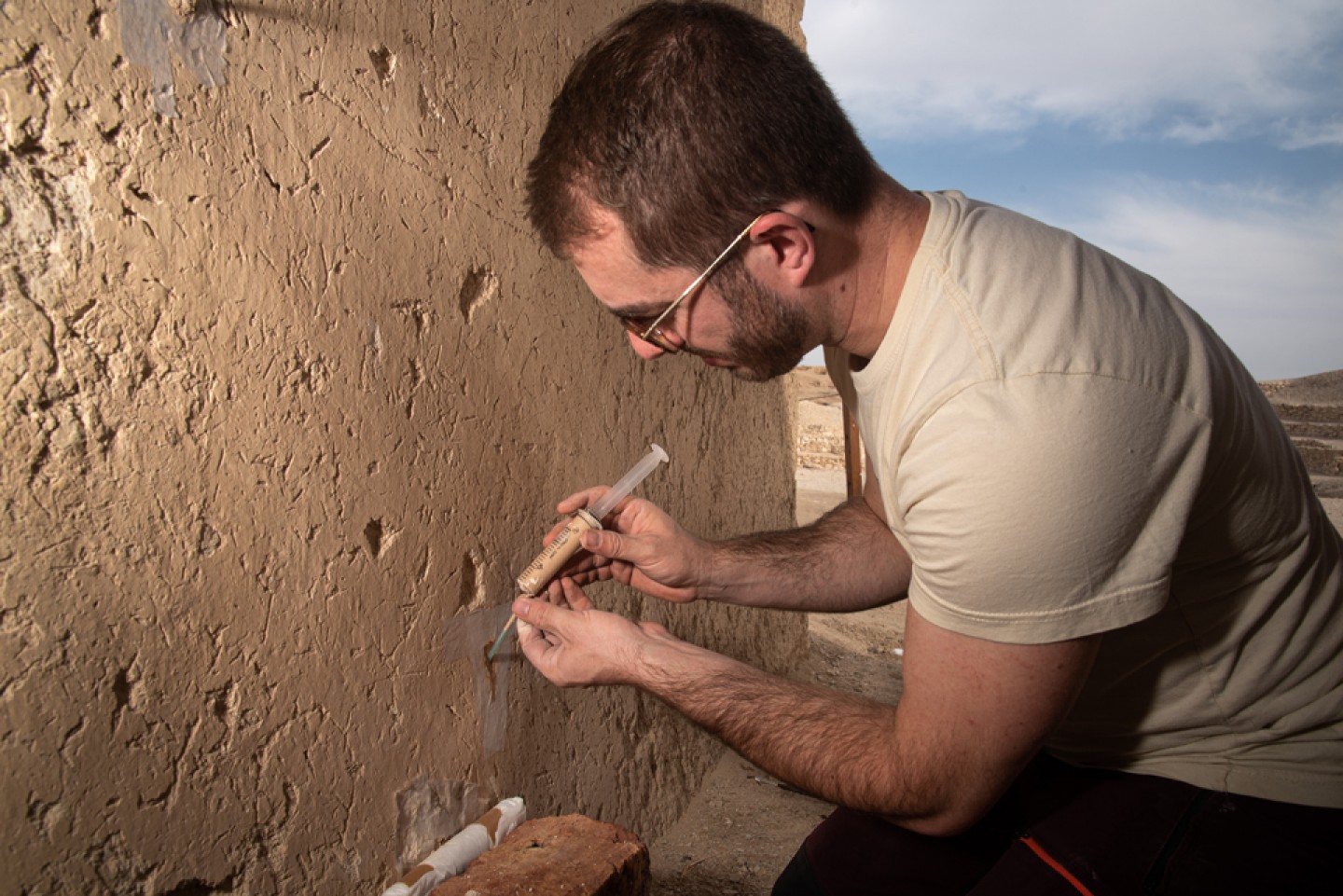
The conservation team was strengthened today with the arrival of Jaume Vilaró, a postdoctoral researcher at the Vatican Museums, who has joined our team to support the restoration of the walls, mortars, and mural paintings of the tomb of Djari. Together with Arantxa, Sameh, and Reed, he will work over the coming days —along with other new arrivals— on the important task of recovering the original appearance of the tomb’s walls, a monument of the First Intermediate Period that preserves an exceptional iconographic program.

On this first day, already with Jaume’s support, we made significant progress in preparing mortars and “fillings” that will help structurally stabilize several walls currently in poor condition. To that end, the team also began using a new filling technique today in key points, so as not to add excessive weight to the binding layer being applied. The method consists of cleaning the cavities within the wall and injecting consolidating materials and mortar directly with a syringe or through a long conductive tube. Arantxa and Reed worked on preparing the mixtures and mortars, while Sameh and Jaume injected these compounds into the walls.
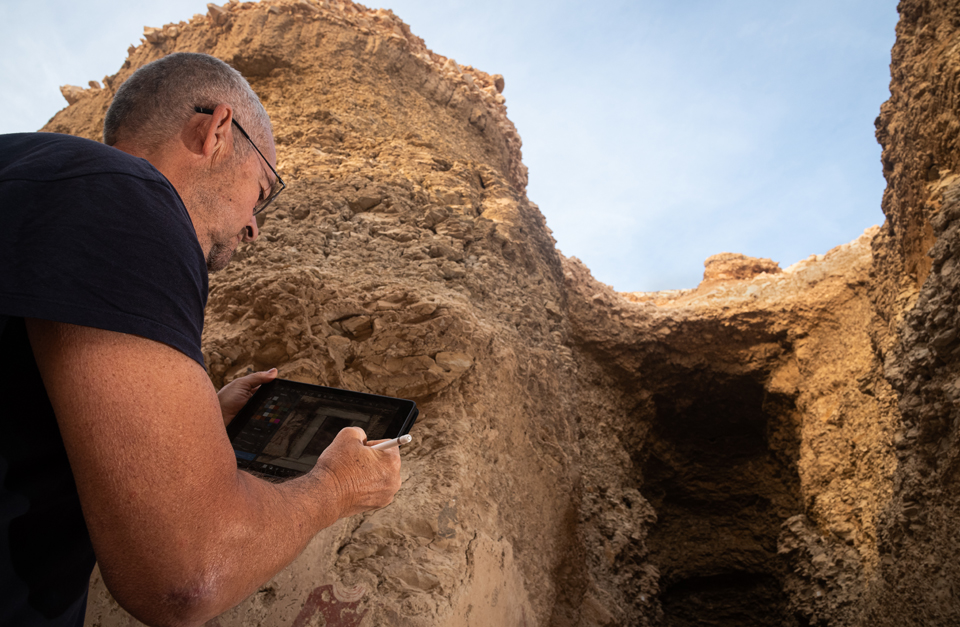
In the tomb of Ipi, we continued transporting large blocks from the burial chamber to the tomb’s corridor. In previous weeks, Miguel had moved several blocks weighing 400 to 600 kg, and now it is the turn of fragments whose dismantling is not as straightforward—such as the blocks of the stone canopic chest—or pieces of even greater size, reaching up to one ton. These blocks are being examined and inventoried by Rebekah and Raúl, who are working to review and record their characteristics in detail for future reassembly work. Among the fragments are sections of the inscribed and decorated registers of the sarcophagus, including one analyzed today that preserves several of Vizier Ipi’s titles.
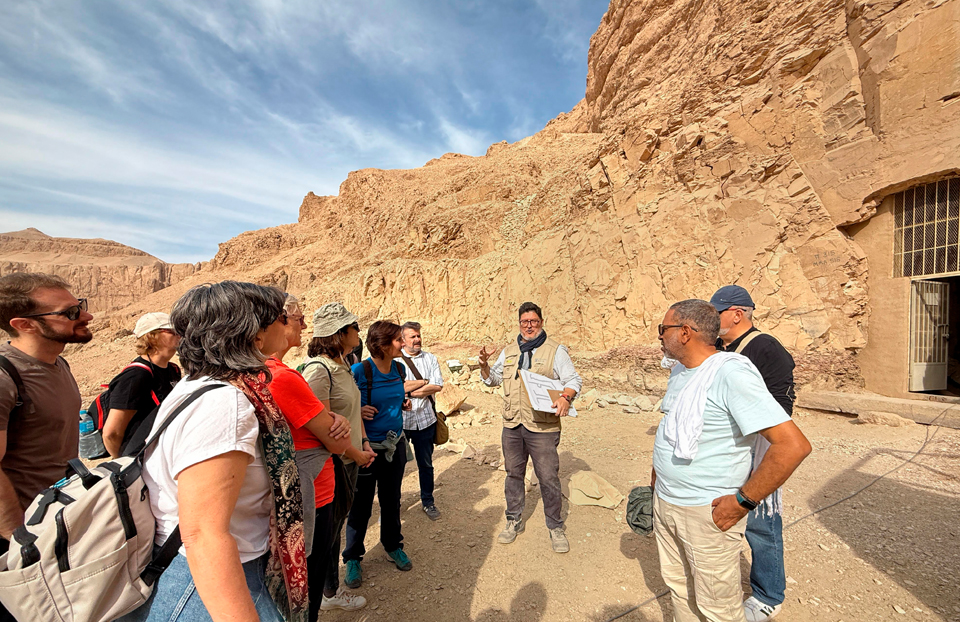
Today we received a visit from a group of Spanish tourists who, through the travel agency Arqueomundo, had obtained official permission from the Egyptian Ministry of Tourism and Antiquities (MoTA) to access the concession of the University of Alcalá (UAH). The experience —just as with previous visits from other research groups— was very positive. Their arrival at this time allowed them to observe the mission’s work at full capacity: the burial chamber of Ipi filled with the pulley and winch structure, and the corridors of Djari lined with newly discovered paintings undergoing restoration. Thanks to the permits arranged by Arqueomundo, the group was able to access materials, spaces, and explanations from our specialists that would otherwise have been out of reach.


