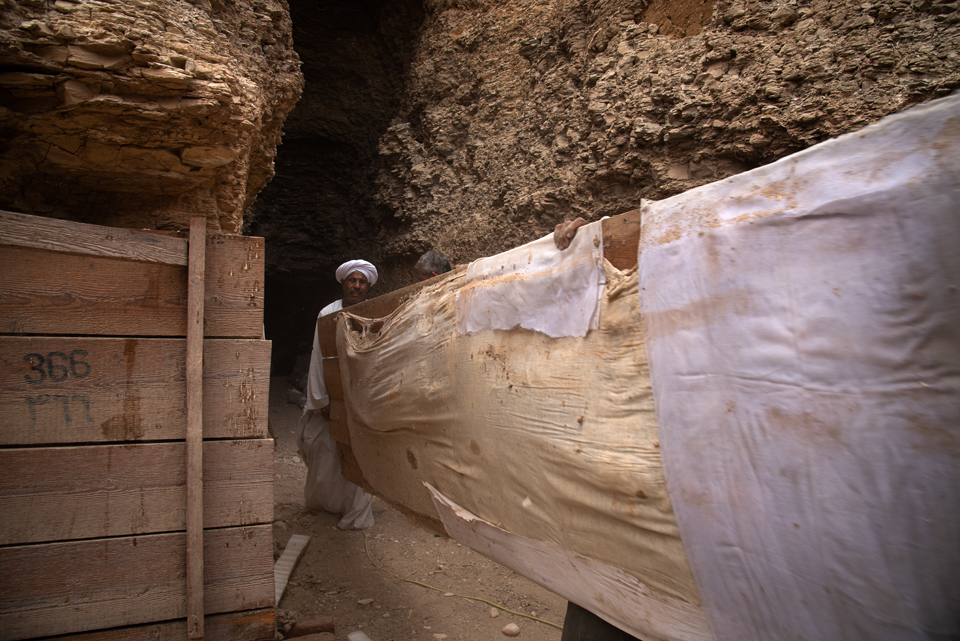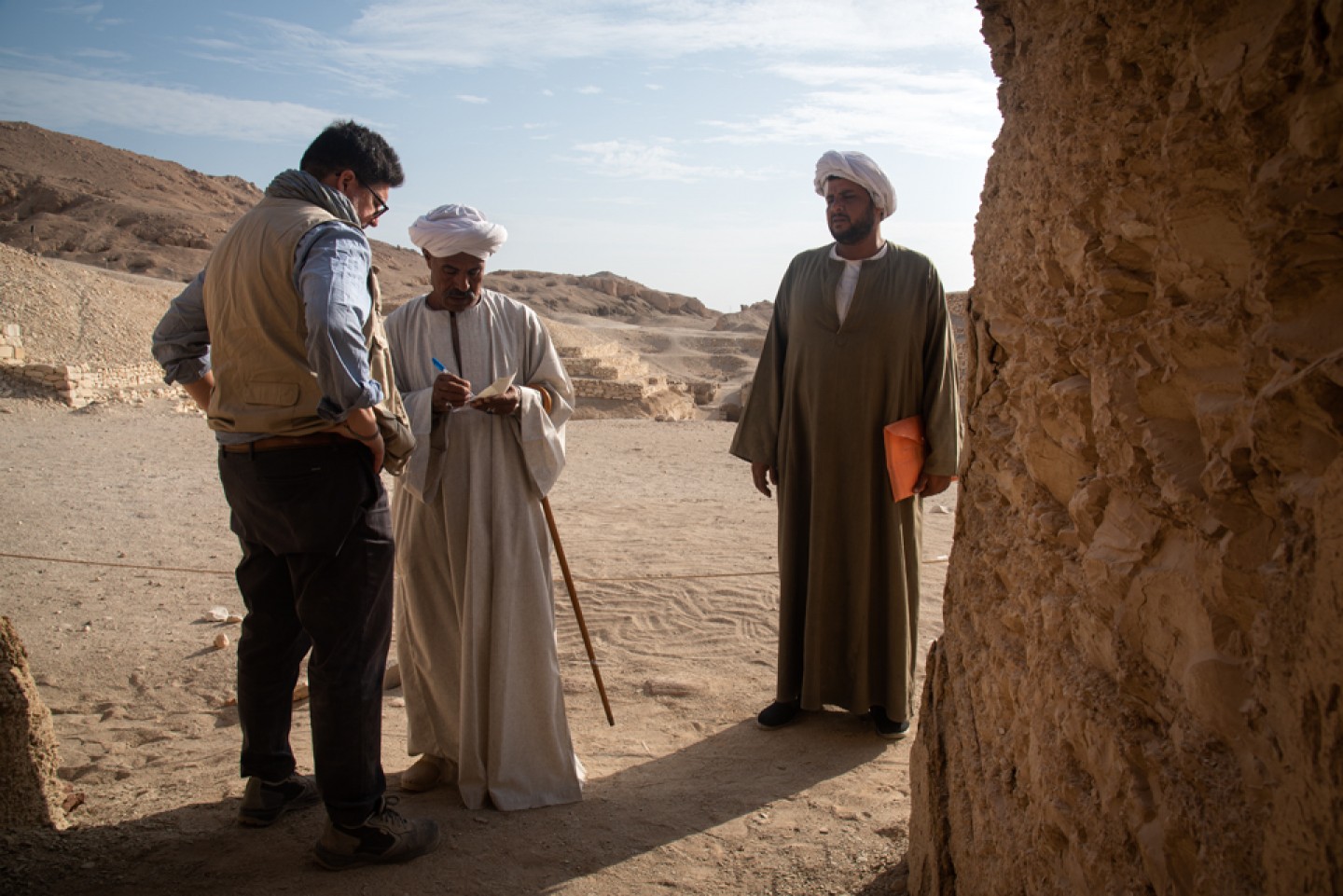
Today we began our work with the wall paintings. After discussing the plans of the day with Antonio, our rais Ali Farouk supervised the careful removal of some panels installed years ago by the Supreme Council of Egyptian Antiquities. The scenes of Djari constitute one of the richest and earliest iconographic programs of the Theban necropolis, and they deserve proper documentation and appropriate restoration. This will allow many to admire the work of the artist (or artists!) who once captured some of the local ideas and traditions of the period preceding the reunification.
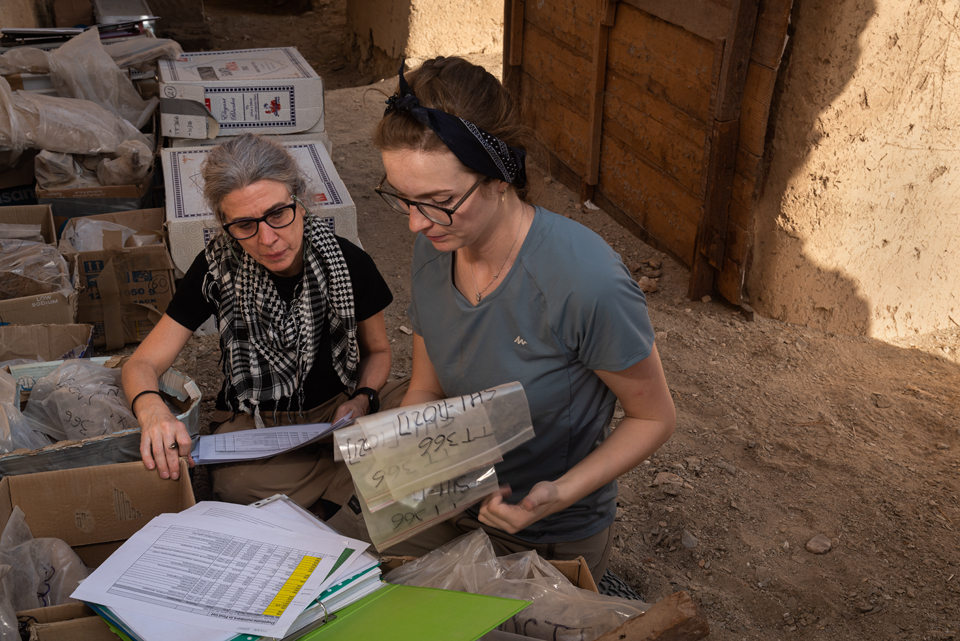
A new incorporation arrived yesterday evening, Aránzazu Vaquero, restorer of the Museum of Pontevedra and recipient of the AEDE-MKTP fellowship. The Spanish Association of Egyptology and the University of Alcalá project have been collaborating since 2019 through this call for AEDE members and we hope to open the 2025 fellowship call soon. The fellowship allows for an AEDE member to participate in the project season of the following year at Deir el-Bahari and Asasif, providing a unique opportunity for the selected candidate. As an expert in restoration, Arantxa will be joining the conservation team to contribute to our work with the restoration of the wall paintings of Djari, the sarcophagus of Ipi, and the findings from both sites.
One of the first tasks for Arantxa and Rebekah has been reorganizing the material boxes and locating specific inventory numbers that need to be studied. In this way, we will be able to move forward much faster in the coming days. In addition, Antonio has discussed with both of them the work plans for the next days and the kinds of tasks they will be assigned within the team, tailored to the types of work in which they are specialized.
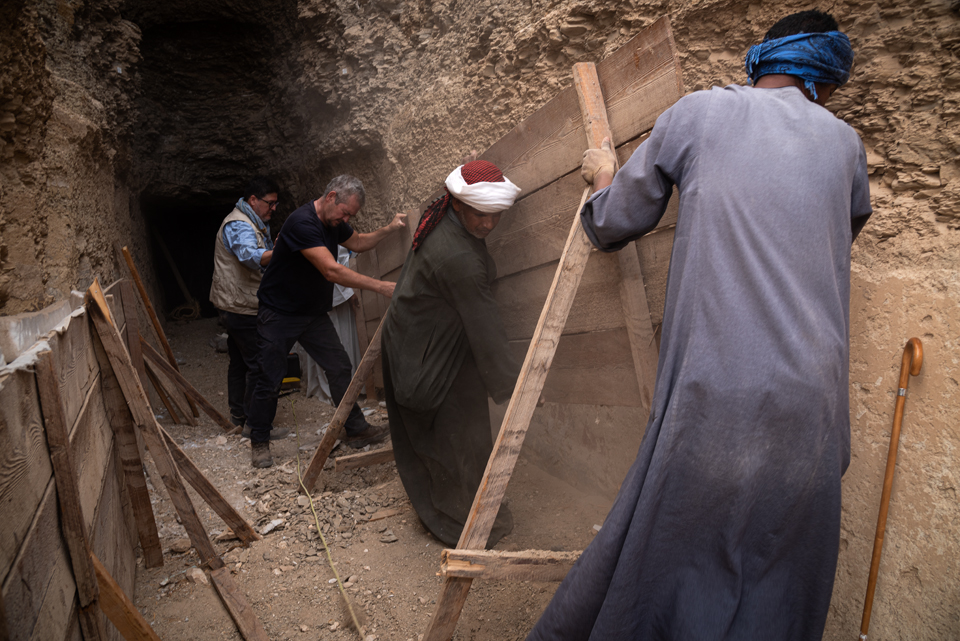
In the second part of the morning, the team focused on two main tasks. On the one hand, Aabla and Miguel visited the tomb of Ipi to assess the condition of the sarcophagus chamber, where we will be working over the next few days. Reconstructing the sarcophagus requires locating, cataloguing, and studying the surrounding fragments, which will need to be restored before being reintegrated into the main piece. On the other hand, the removal of the wooden panels in the tomb of Djari revealed several scenes of great beauty and significance. In the coming days, we will proceed with the documentation and study of these scenes. This will include capturing photographs with the multispectral camera, which makes it possible to reveal details not visible to the naked eye.