In the daily routine of archaeological work in Egypt, the arrival of basic tools, requests or items make it a big difference. Today a new wooden shelf for the tomb of Henenu arrived and all tools were finally stored safely in an organized manner.
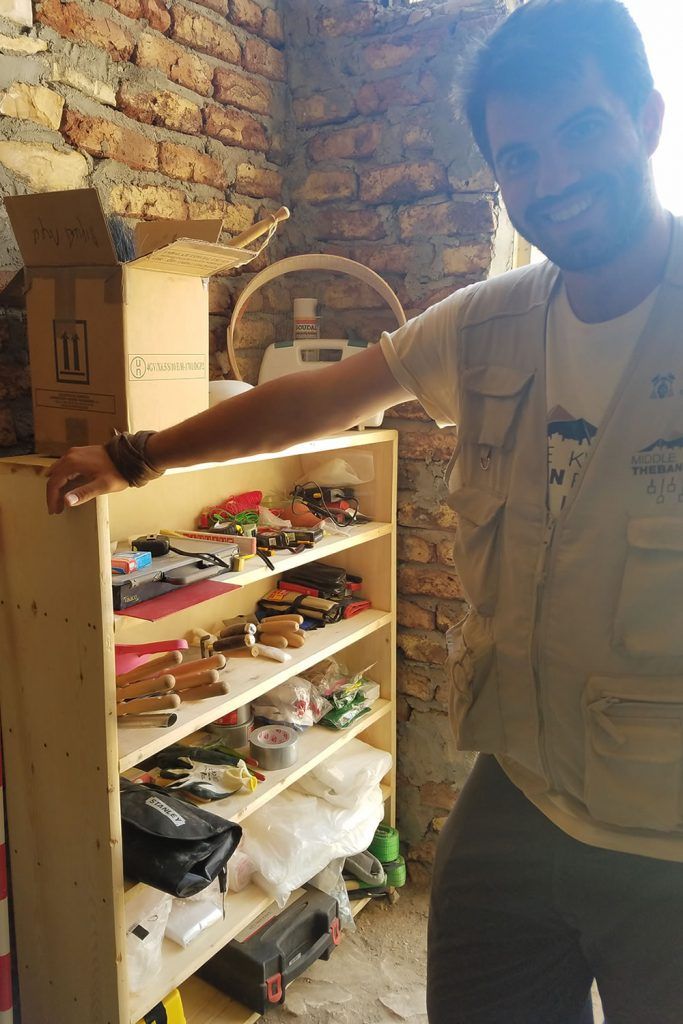
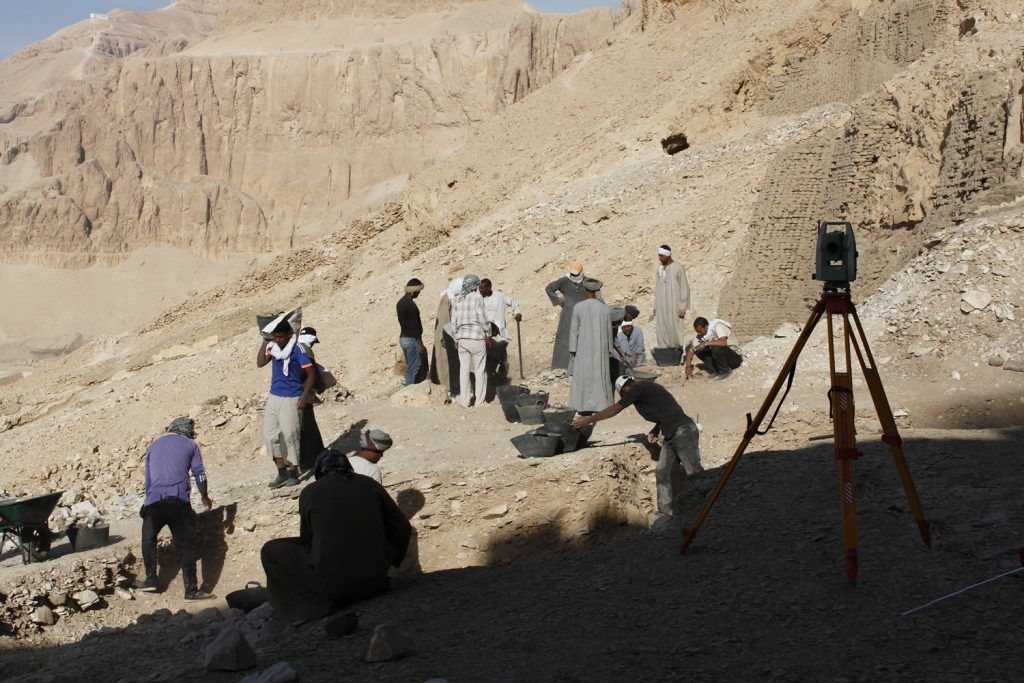
That helped us to remove many utensils, items, objects, bags, boxes, and packages from the corridor. This re-arrangement of materials was especially important since it allowed us the surveying of one of the numerous tomb shafts in the inner section of the tomb of Henenu. As head of the archaeological duties in Henenu´s tomb, it was Kelly’s task to go all the way down the shaft inside tomb chamber 5 and check the condition of it. The shaft has a rectangular shape, measures ca. 5,5 m deep and leads to a small rock cut chamber. The air was stale and the chamber was cold, dark, and dusty. On the floor, Kelly found the pelvis and legs of a body wrapped in textiles and several undecorated stone fragments which will have to be collected, registered, and analysed. Indeed, these finds are very promising for further investigation! Apart from checking the stability of the ceilings in several chambers, the excavation in the northeastern part of the courtyard of Henenu continued. There the natural rock reveals an alabaster vein which surprisingly was never quarried away. Let´s see what types of structures are uncovered in this section of the upper courtyard in the next days!
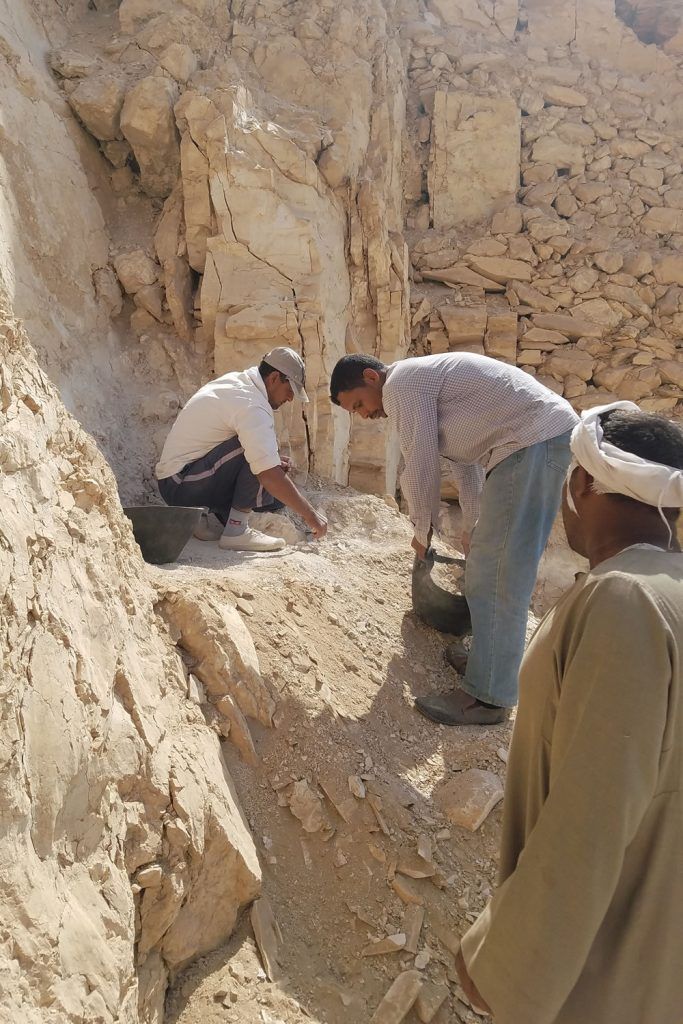
In the meantime, at the tomb of Ipi, our architect Sergio studied the architectural elements, fissures and cracks in the burial chamber containing the stone sarcophagus of the vizier Ipi. Upon her arrival, Teresa Bardají, our geologist, will be able to offer more details on this matter in terms of geomorphology of the area and how it affects the tomb of Ipi. As the burial was already looted in ancient times and its remains partly reolocated during the exploration by Winlock in the 1920s, a lot of debris and loose blocks are lying around without clear explanation. It is evident that before these areas are cleared and excavated, the floor slabs need further stabilisation. Therefore, Sergio decided to set up several gypsum strips on cracks and fissures to find out more about the (possible) movement of slabs or rock sections. Apart from this, the excavation in the western part of the courtyard did continue and new structures, which were documented and analysed by Mohamed, came up in the last part of the day. These structures near the wall of tomb MMA 511 will reveal very interesting questions about the secuence of construction of these two monuments.
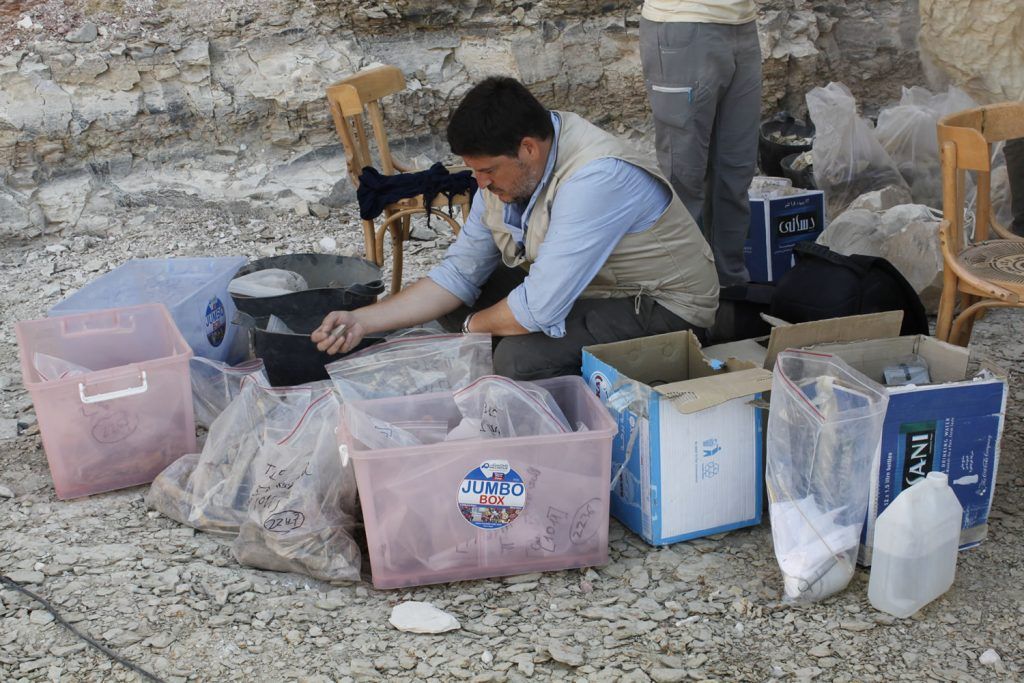
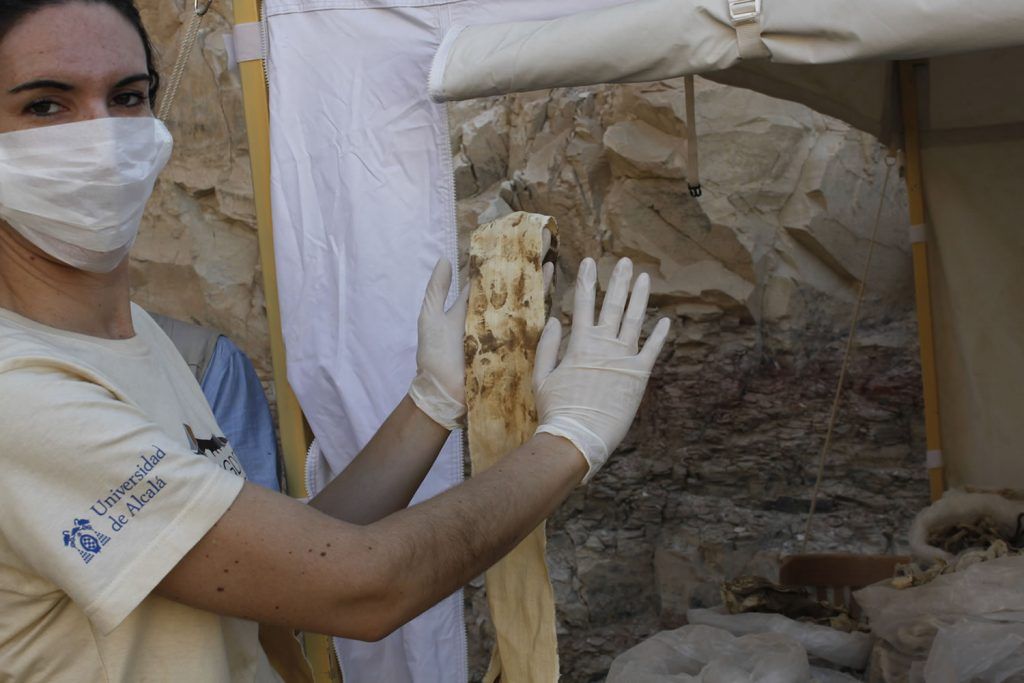
Findings coming from these trenches have been sorted and classified by Antonio, who restrained himself momentarily from his supervising tasks and enjoyed having his hands on the material. Meanwhile, Raúl, Ana and Dina continued the sorting of the important amount of embalming material found during the last field season. They documented several natron bags, which were used by the embalmers for the cleaning, annointment, and mummification of the deceased before his funeral ceremony. One of the textiles, registered by Ana, even shows a couple of fingerprints probably belonging to the embalmer priest who was responsible for the treatment of the dead body of the vizier.
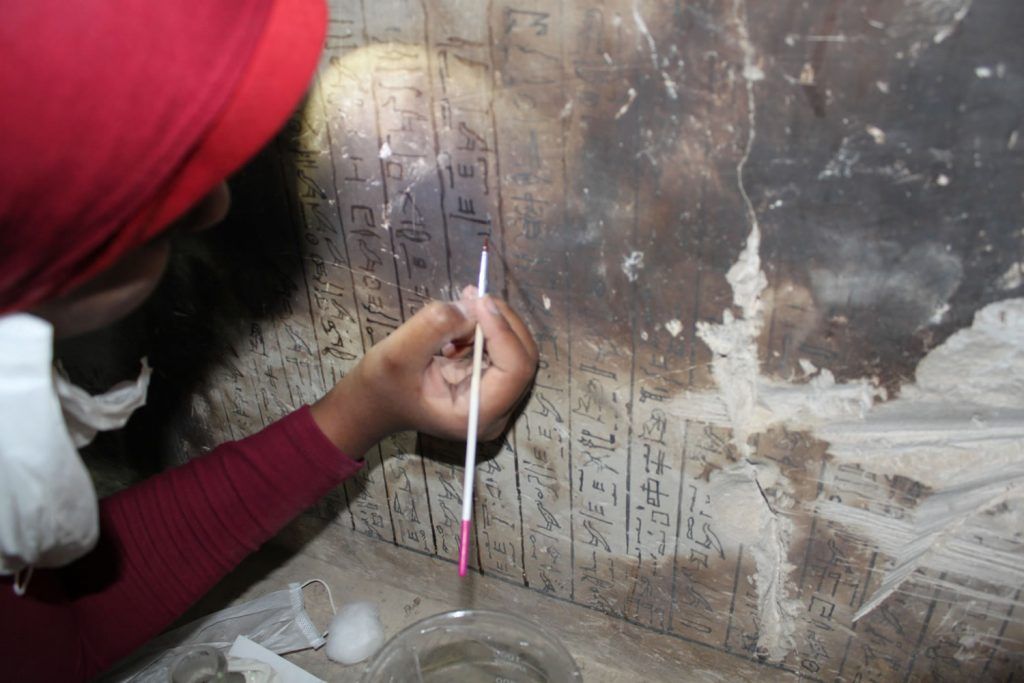
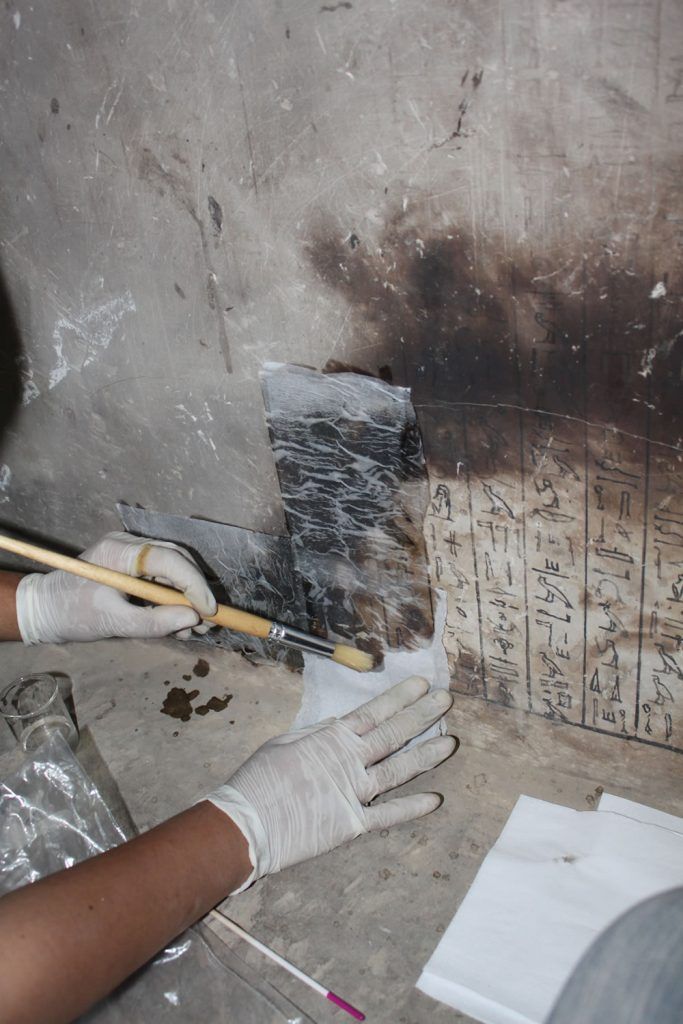
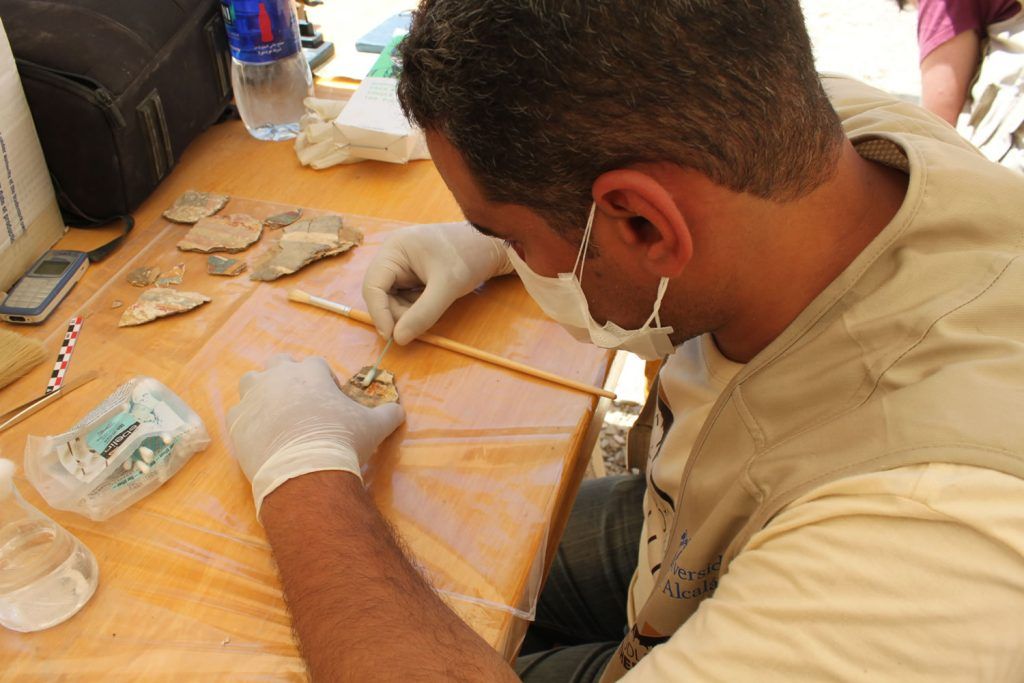
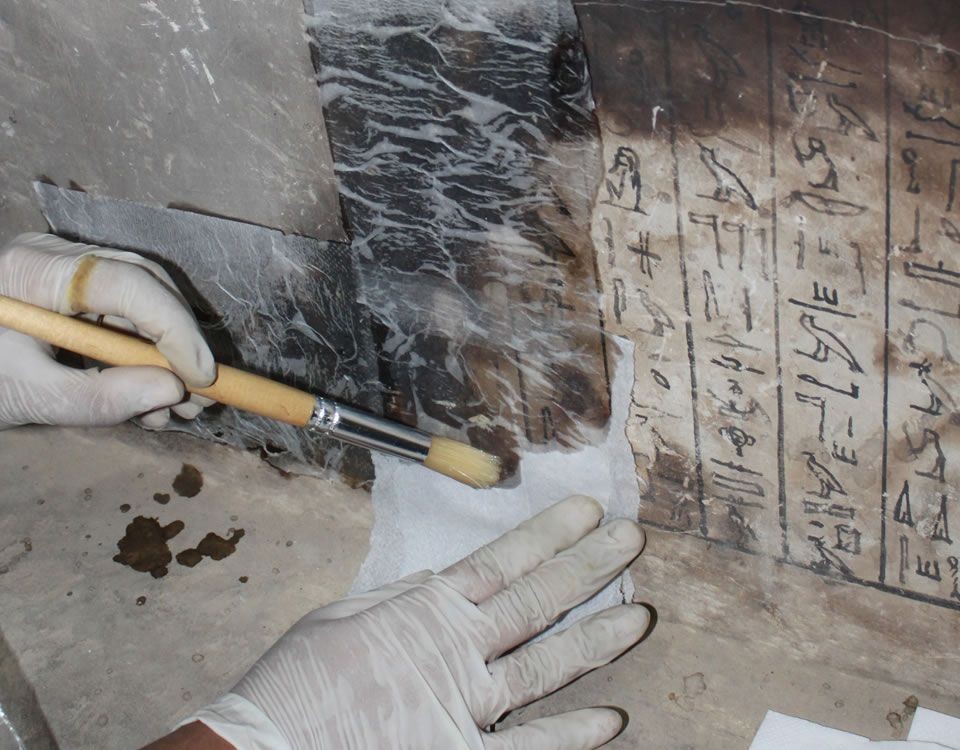
Our conservators Eman, Rawda and Mohamed continued the treatment of the sarcophagus to protect the painted materials (both, texts and iconography) and make the hieroglyphs visible again for our epigrapher, Dina. Here a lot of patience and accuracy was required, as every sign and line had to be retraced using a special chemical solution. Also several pieces proceeding from the tombs of Henenu and Ipi, especially these bearing colourful decoration and inscriptions such as cartonnage, were cleaned and preliminarily treated.