Image: Patricia Mora Photography
As is now customary, Fridays—the team’s day off—are often used to catch up on work, visit some monument in Luxor that one wishes to enjoy, or, as we did today, travel to other parts of the country to continue learning or documenting sites relevant to the project. Today, part of the team preferred to stay at the hotel to recover their strength, while another group travelled to Esna and Mo’alla.
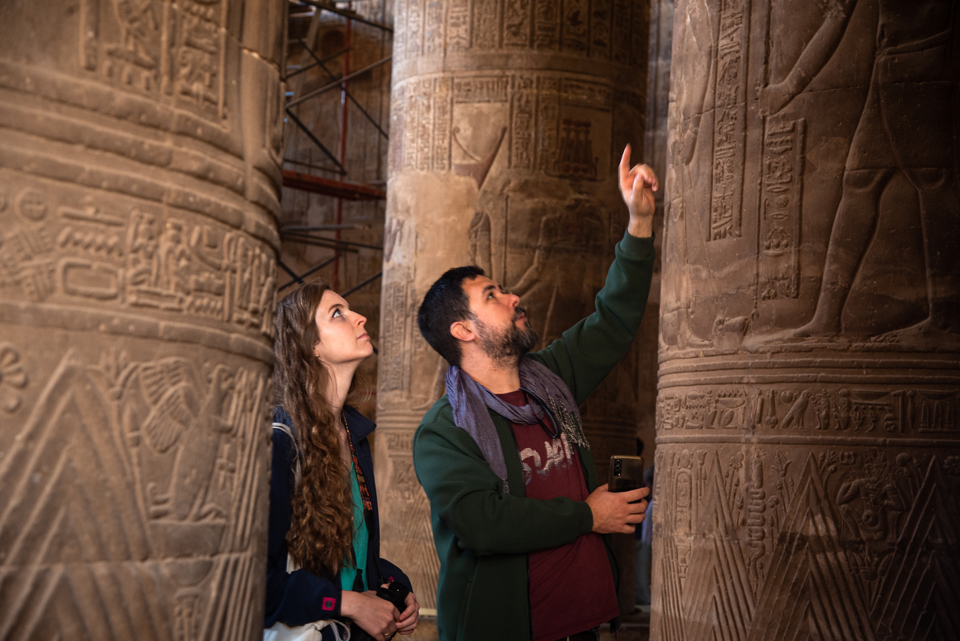
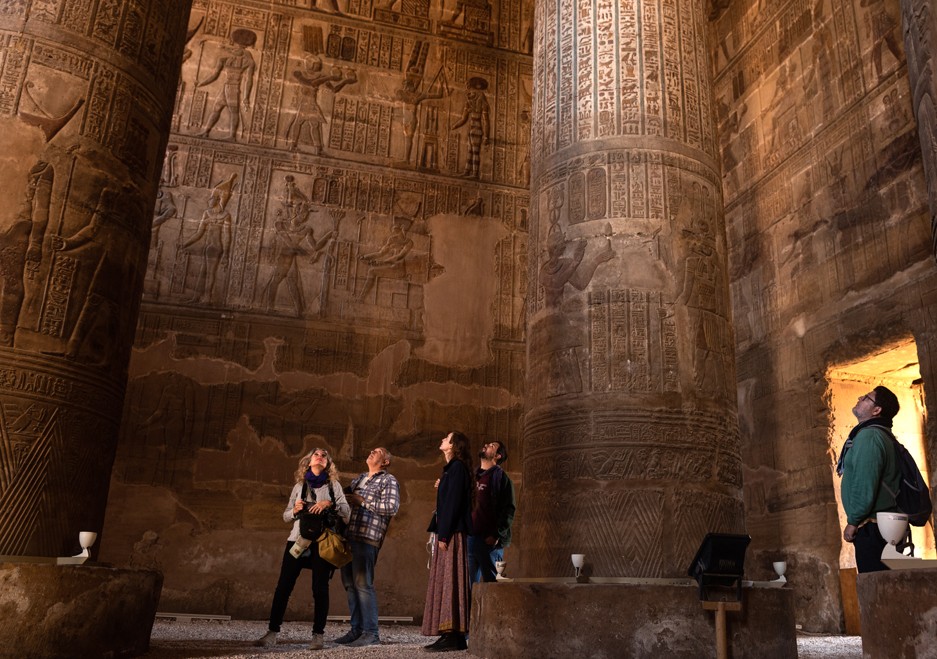
For those who set out on the trip, the morning began at 7:00 a.m. with breakfast, before leaving by minibus at 8:00. Our driver, Hassan, knew perfectly well which route was best to reach Esna, a city located about 70 km south of Luxor, and in just an hour and a half we were already at the entrance to the Ptolemaic-Roman temple. The monument was originally built in the 18th Dynasty, although the current structure dates to the reign of Ptolemy VI (3rd century BCE), and its decoration and inscriptions include emperors such as Claudius, Trajan, and Hadrian (1st–2nd centuries CE). The team enjoyed the beautiful pillars with their floral capitals and the astronomical reliefs whose colours —after an intensive restoration programme— have left everyone astonished. On the side of the temple, moreover, a new two-storey viewing platform stands out, allowing visitors to observe the reliefs and the temple ceiling from the southeast sector of the complex.
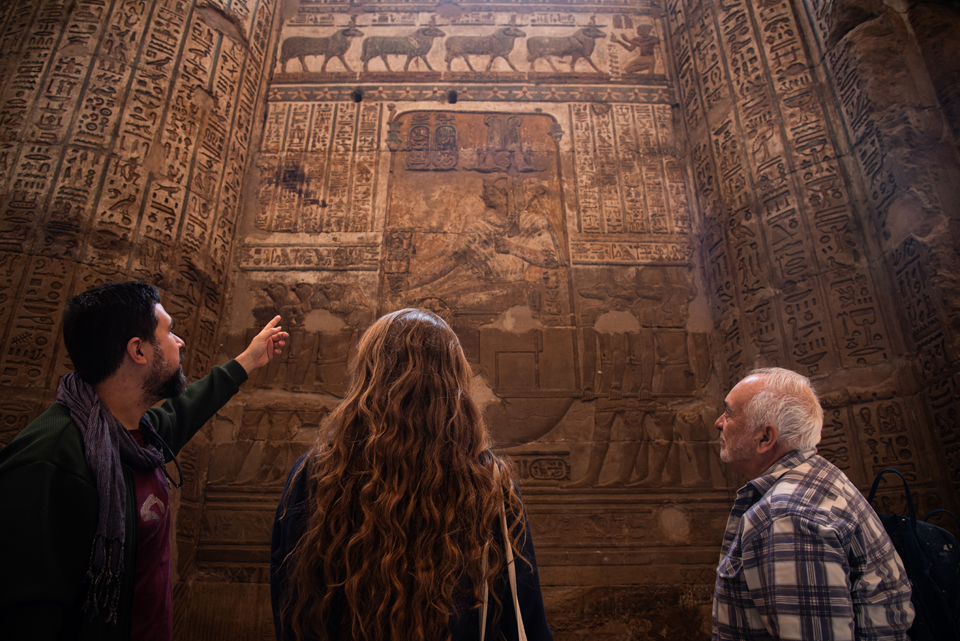
The visit to the temple occupied a good part of the morning, especially because with every step a team member found a new detail worth discussing. The comments ranged from the beauty of the floral capitals to the difficulty of Ptolemaic hieroglyphic writing, or even the presence of emperor names in cartouches and the famous depictions of the phases of the moon associated with the god Thoth. In the end, we climbed the viewing platform to take a look at the temple and discuss some of the reliefs on the façade and side walls, such as the typical representation of the king holding and smiting his enemies. Once finished, we enjoyed a walk through the city’s market and then left Esna, heading toward the village of Mo’alla.
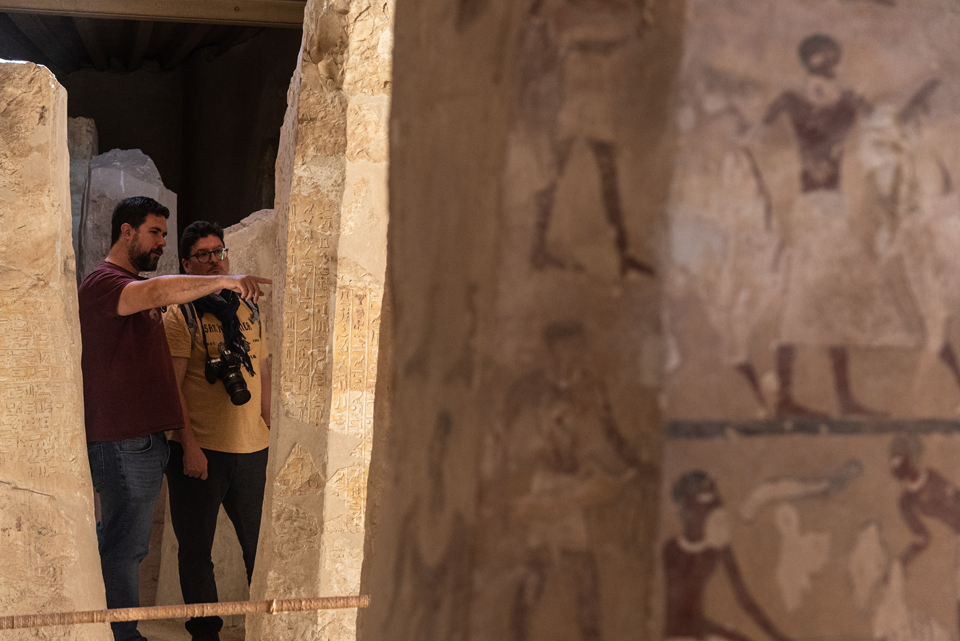
In the village of al-Mialla (known in Egyptological literature as al-Mo’alla) lies the tomb of the famous Ankhtify, the “brave one of Hefat,” who controlled the four southern provinces of Upper Egypt during the conflict between Thebans and Heracleopolitans. His tomb constitutes an important piece of evidence for this period of political and social transformations. The team enjoyed examining this complex, which features a floor plan with a broad transverse hall filled with pillars and a burial located beneath the central axis of the hall. The presence of a single royal cartouche mentioning a certain Neferkare informs us of the dependence of this region—at least provisionally—on the Heracleopolitan authority, and of the confrontation between the forces of this region (known as Hefat) and Thebes.


