As has become tradition, the teams of archaeologists and Egyptologists working in Luxor make the most of Fridays by splitting into groups and engaging in all sorts of plans. Some prefer the comfort of the hotel or house where they are staying, sleeping a little longer and enjoying a relaxed breakfast before dedicating the rest of the day to continuing their work. Others —especially those visiting Egypt for the first time hope to see as many monuments as possible to enjoy and learn during their day off. In any case, a day of rest is good for all the members, allowing us to go for a walk and gather strength for the new week that will begin tomorrow, Saturday.
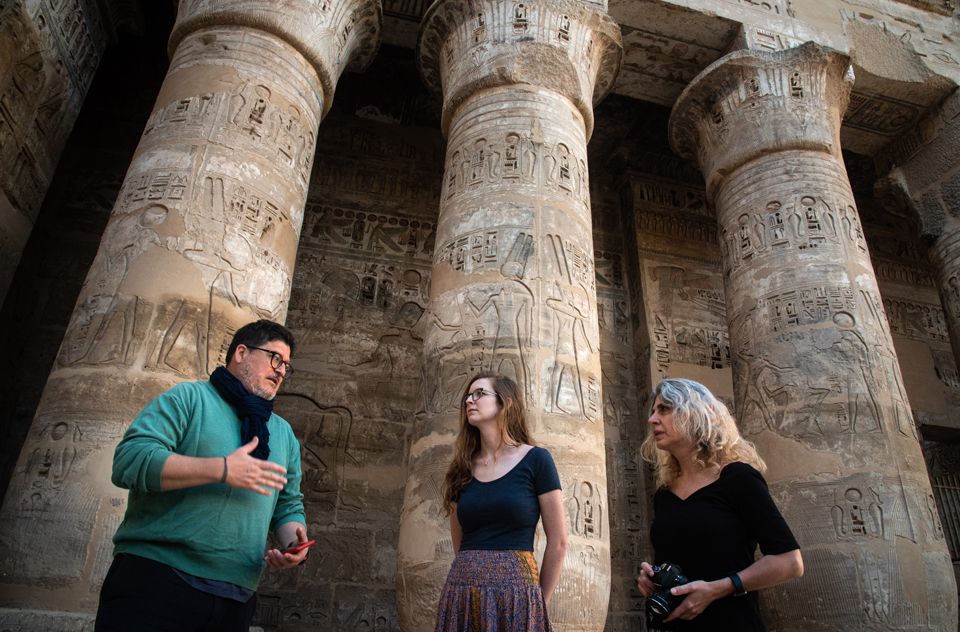
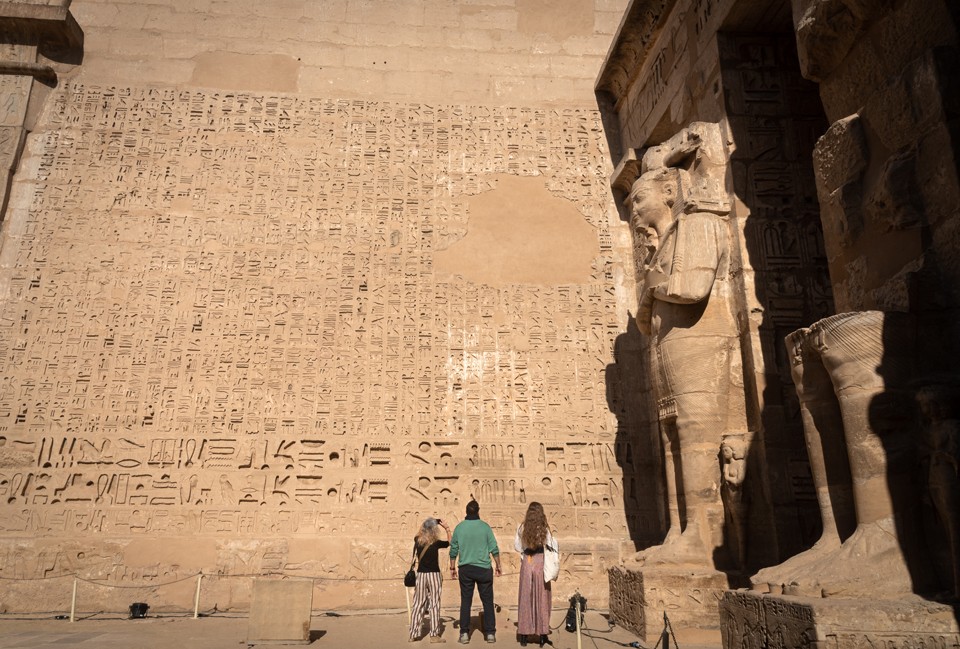
Early in the morning, one of the groups set off at full speed at 7:30 a.m. to enjoy the beautiful light at the mortuary temple of Ramesses III in Medinet Habu. This building is well known for its monumentality, the high-gate integrated into an oriental-style structure known as “migdol,” the majestic courtyards with statues of the king represented in his Osirian nature, and its sophisticated decorative program. Among the scenes, we may highlight religious celebrations (e.g., the procession of Amun-Ra), offerings to the gods (e.g., the king before Amun and Mut), or military events (e.g., the Sea Peoples, the recounting of hands and phalli of the enemies, prisoners from Nubia and Asia, etc.). On this occasion, Antonio accompanied the two students who received the UAH and AEDE grants to get to know this building, well documented in Ramesside texts. These sources mention the economic importance of its treasury and some events such as the first strike in history, an organised protest by the workers of Deir el-Medina distressed by not having received their wages in rations.
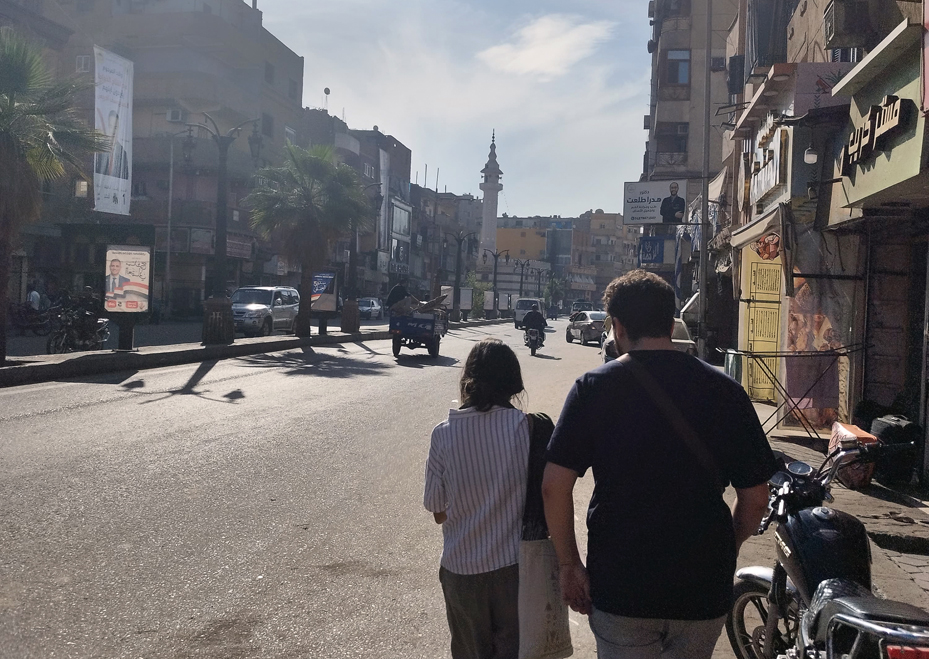
Meanwhile, others headed to the city of Luxor, where they took the opportunity to make small personal purchases and take care of some errands for the team. Simple purchases such as bottles of distilled water or alcohol, or the search for brushes of a specific size, are not as straightforward as one might think on an Egyptian weekend. These trips, in any case, are also used to visit bookshops, enter the temples of Karnak and Luxor, or look for typical gifts (scarves, pottery, glassware, textiles) to bring back home for the family at the end of the season.


