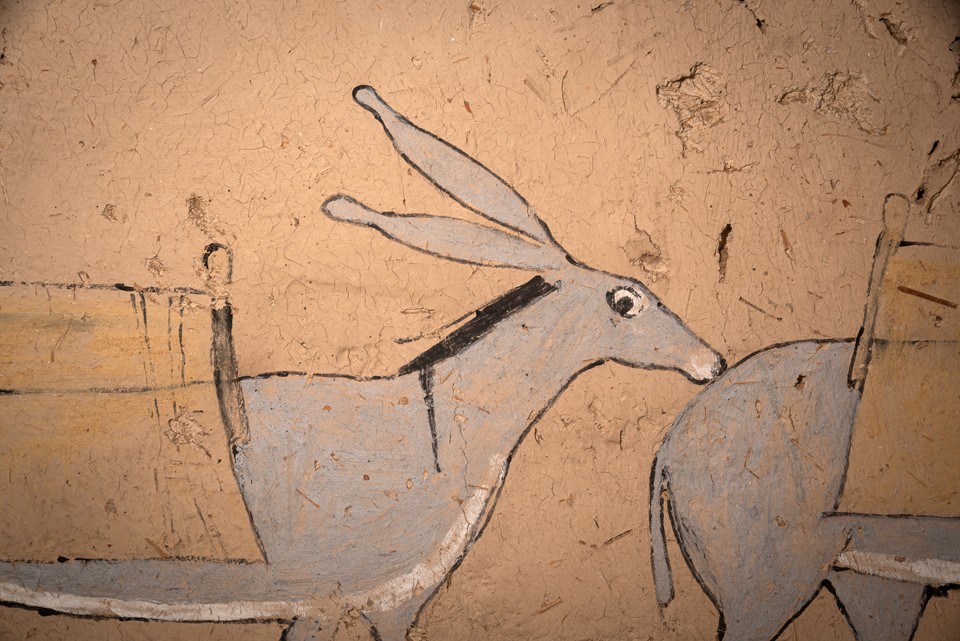
Early in the morning our rais, Ali Farouk, was already waiting eagerly to closely monitor some of the more complex tasks at the Ipi complex (TT 315). On the previous day, the team had devoted considerable effort to preparing the work chain that would take part in the dismantling of Ipi’s sarcophagus, one of the artistic jewels of early Twelfth dynasty funerary art in Thebes. Fully aware of the importance of these first steps —especially in launching and verifying that the entire procedure (i.e., fragment removal, transportation to the main corridor, cataloguing, initial restoration) would run smoothly— Ali hoped to set a pace that would allow the fragments to be removed quickly and in total safety. In our work inside Ipi’s sarcophagus chamber, the absolute priority is the safety of our workers and researchers, and we take every necessary precaution for this kind of tasks.
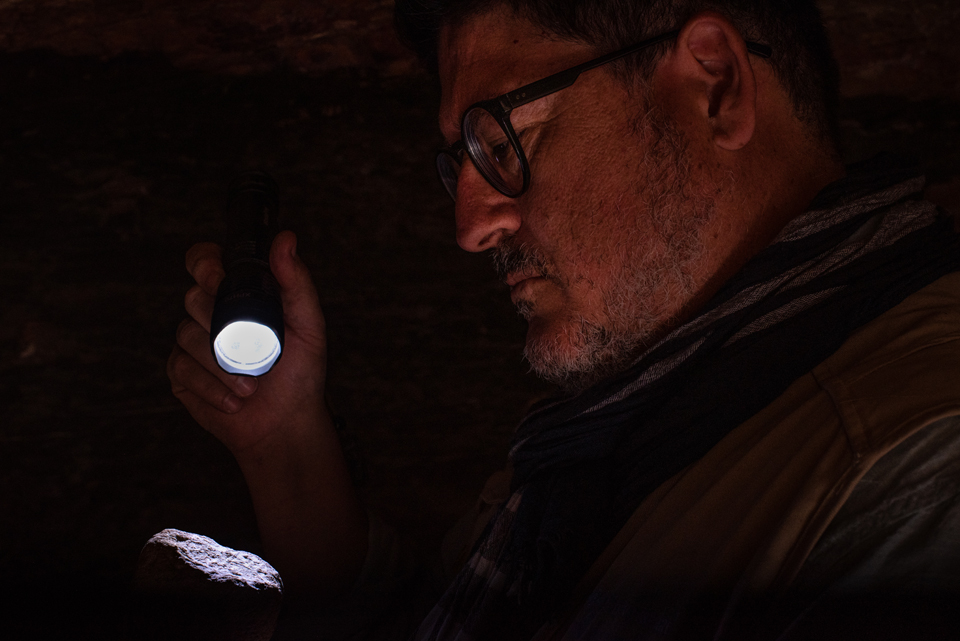
At the complex of Djari (TT 366), we continued analysing the structural conditions, which are greatly affected by the soft limestone (tafla) and by the natural tendency of the hill to exert pressure on the façade. Among other tasks, we examined where new plaster markers should be placed to monitor additional fractures, and we assessed which areas require priority intervention so that we can address those spots where the paint, mortar, or plaster demand immediate attention. In addition, together with our photographer, we discussed the action plan for detailed photographic documentation and the use of the multispectral camera in those scenes that require deeper analysis. Besides, Antonio took the opportunity to review the collection of funerary cones unearthed in previous seasons, which he prepares for publication.
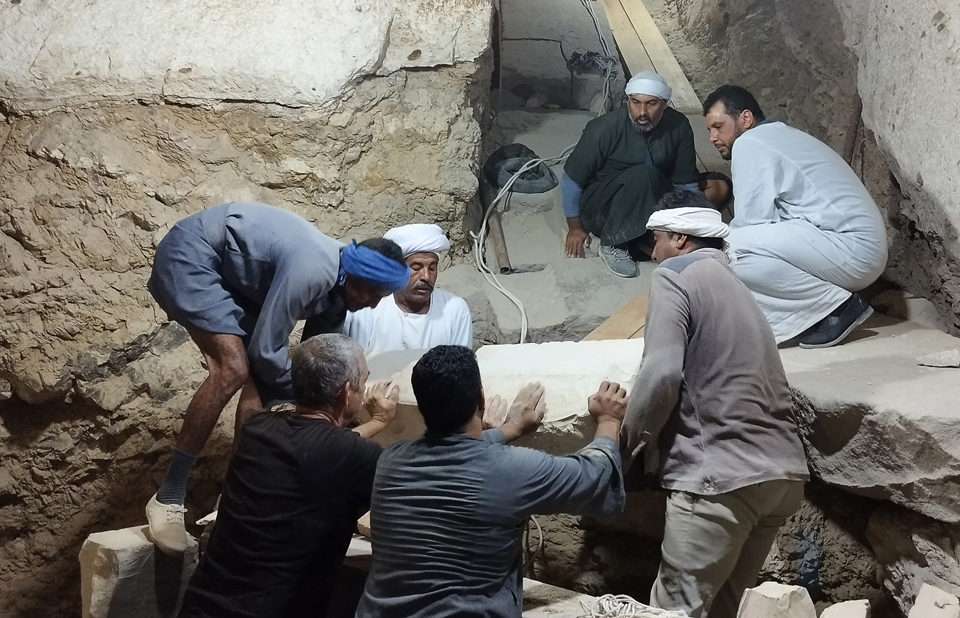
At TT 315, the team was eager to begin removing some of the sarcophagus fragments and thus start its reconstruction. This work will unfold in two phases: a first phase, involving the removal of loose fragments—which will take the entire season—and a second phase, involving the displacement of the sarcophagus box (once the loose fragments have been removed) so that the rest of the chamber can be cleaned and documented for a better interpretation of this space. Under the attentive eyes of our rais Ali and of Miguel, our stone and block specialist, the first fragments were carried out of the burial chamber. Whether manually by the workmen or using a sledge with slings and ratchet straps, each fragment was carefully removed, documented, and prepared for its subsequent manual restoration session, allowing for a first, direct, and straightforward treatment of the block. Arantxa and Sameh, our restoration inspector, examined each fragment and considered the various challenges involved in this task.
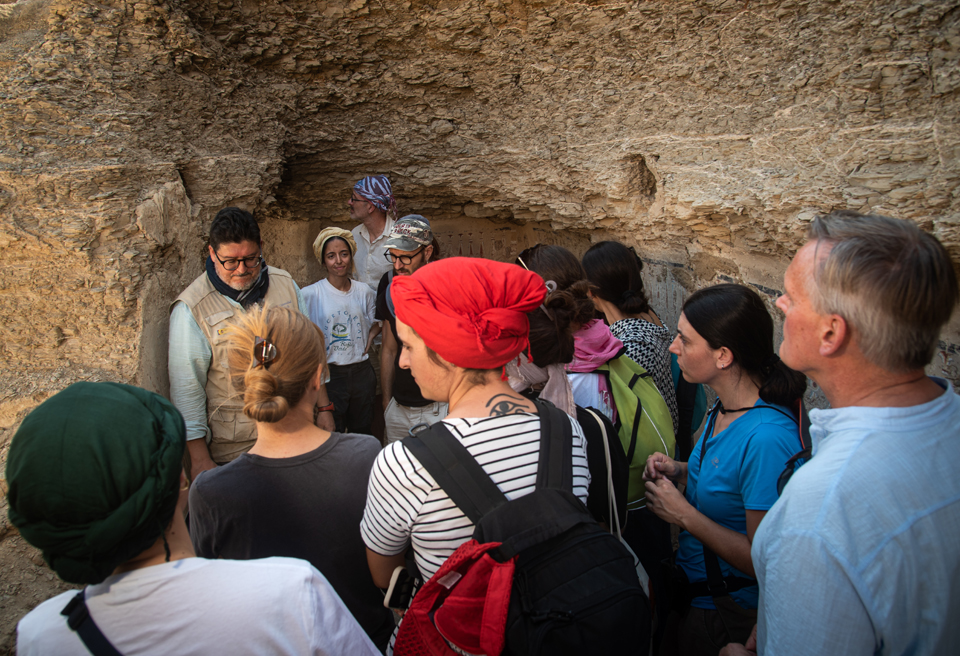
Late in the morning we welcomed our colleagues from the Italian mission of the University of Pisa in Dra Abu el-Naga (MIDAN), who are currently excavating tombs TT 14 and MIDAN 05 in this necropolis. The mission, directed by Prof. Gianluca Miniaci, visited the funerary complex of Djari and took a look at the newly uncovered paintings, prompting some interesting questions and discussions about the decoration of Theban tombs of this period and in the Middle Kingdom.


