
This morning we have enjoyed a very intensive day of much activity with multiple tasks and very good feelings. With the support of one of our inspectors, Mohamed, the GIS team has explored the site of El-Tarif, where they have taken points for the composition of our Digital Elevation Model (or DEM in abbreviated form). This will allow us to understand the Theban landscape in a better way.

Jesús and Kate (to whom José Pérez will join soon!) have developed a complete plan of work including not only El-Tarif but also Dra Abu el-Naga, Sheikh Abd el-Qurna, Asasif South and even some parts of Karnak in the East Bank. They are using a GNSS receiver Trimble R12 that connects with a satellite network of data correction in real time and allows us to take points in a quick fashion.

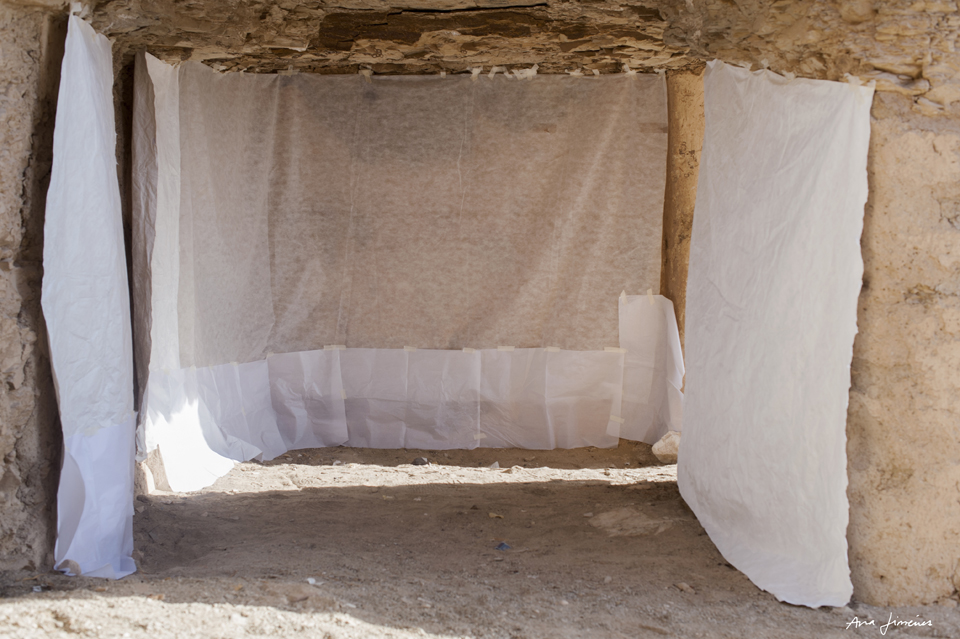
On the other hand, our archaeologists have faced their initial problems with the cleaning work in the transversal hall. While José Alba and Laura aimed at finding the bedrock (i.e., original floor of the tomb of Djari) surrounded by the especial fabrics installed here to cover the paintings, other workmen led by rais Alí continued cleaning the pile of debris at the southern slope in the complex. The removal of these remains (most of them modern!) will allow us to recover the complete plan of the saff façade and examine the southernmost pillar, which has been covered for many years. In fact, the publication of the tomb by Herbert Winlock and the Porter & Moss topogaphical bibliography do not include that area in their plans. At the end of the day, the cleaning of the transversal corridor has led us to the white limestone bedrock, which shows a fragile aspect and requires more work for its preservation (and to avoid stepping on it).

Regarding the tomb of Dagi, the cleaning of the easternmost section of the transversall hall has been initiated with the removal of the most superficial strata (mainly mud brought by heavy rains and fragments fallen from the tomb ceiling or its walls) and the search of the bedrock, which we hope to find tomorrow Thursday.

This morning members of the conservation team visited Djari to hang the protective coverings that they had tested yesterday in preparation for cleaning and excavating of the ground. Regarding Dagi’s tomb, the conservation team continued documentation of special finds, mainly consisting of decorated wall painting fragments, and have begun discussing the iconographic features they are seeing. So far, they have found multiple pieces that seem to belong to a geometric frieze and a Kheker relief that would have framed some of the scenes. This has allowed them to compare the fragments with the wall paintings that remain in Dagi, and it seems that certain areas were painted by different artists, as there are variations in their stylistics techniques. It is amazing to imagine how many different hands may have contributed to the decoration of this tomb. Some fragments also include hieroglyphs and Jaume has been tutoring the other team members about their meaning.
In discussion with Raúl and Antonio, they have begun recording the different layers of plaster that remain on the wall. Interestingly, in some sections there are up to four layers of preparatory mud plaster. This likely would have been done to smooth and make even the surface of the wall in preparation for painting. As they are now considering how they might reattach fragments to the wall once they have identified their original position, the conservation team will be learning from the craftspeople of the past in order to develop similar methods.


