portada_DSC2088-2

Days of dust, nights of fire

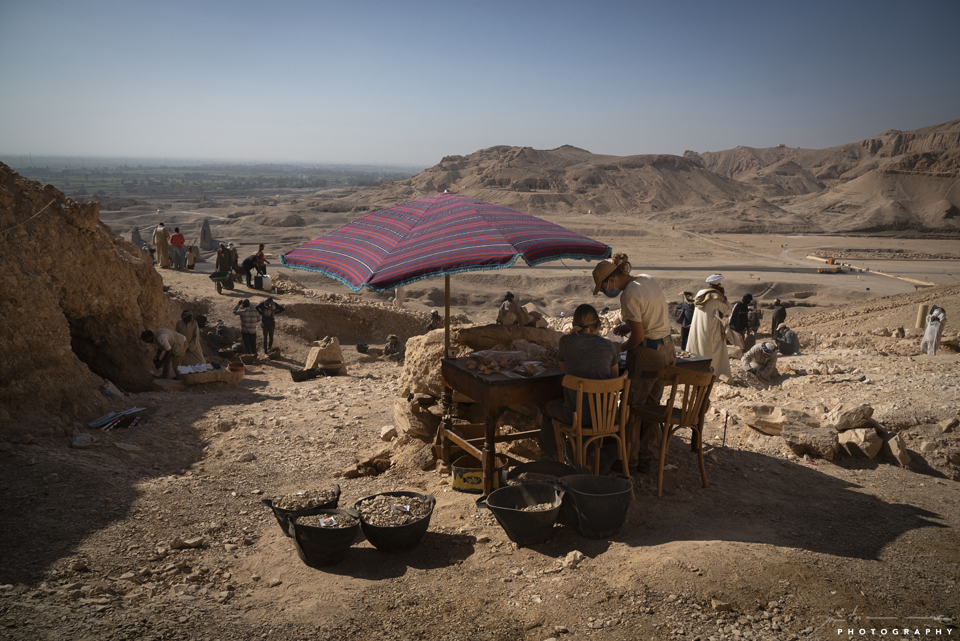
The work on the site seems to be doubling at times. It is often the case that, when the end of the campaign is in sight, the number of tasks only increases.
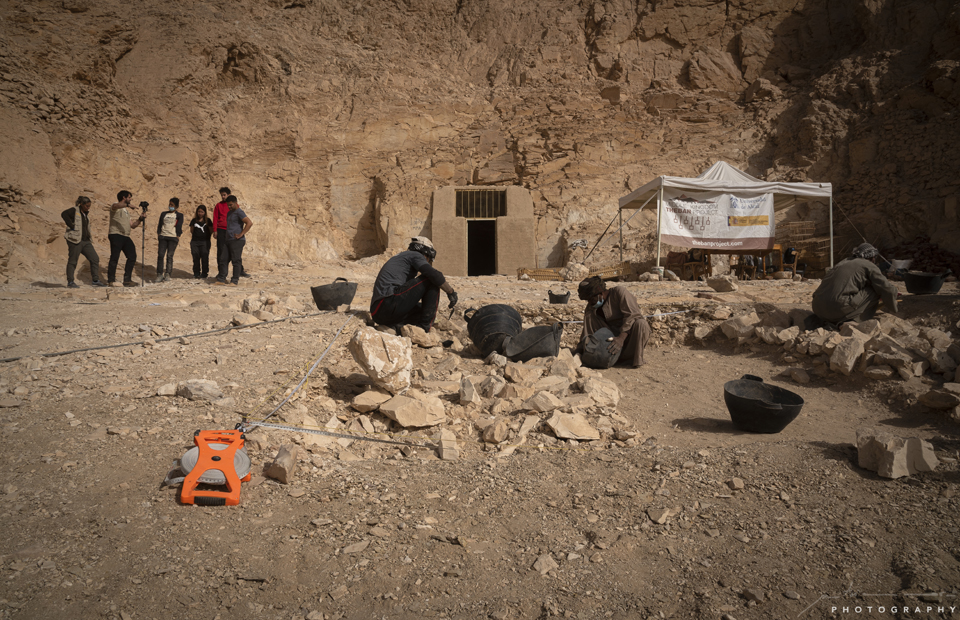
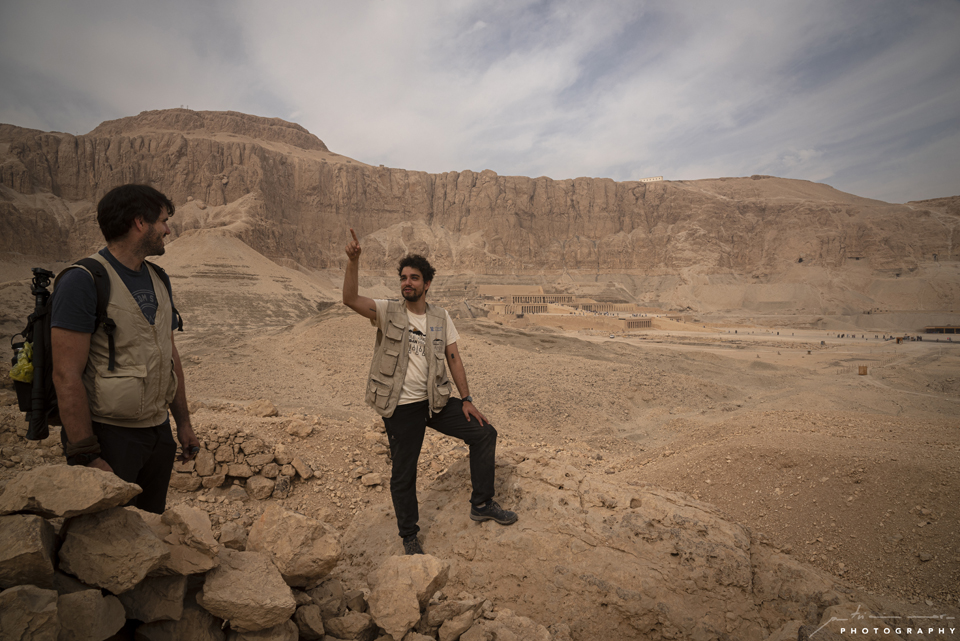
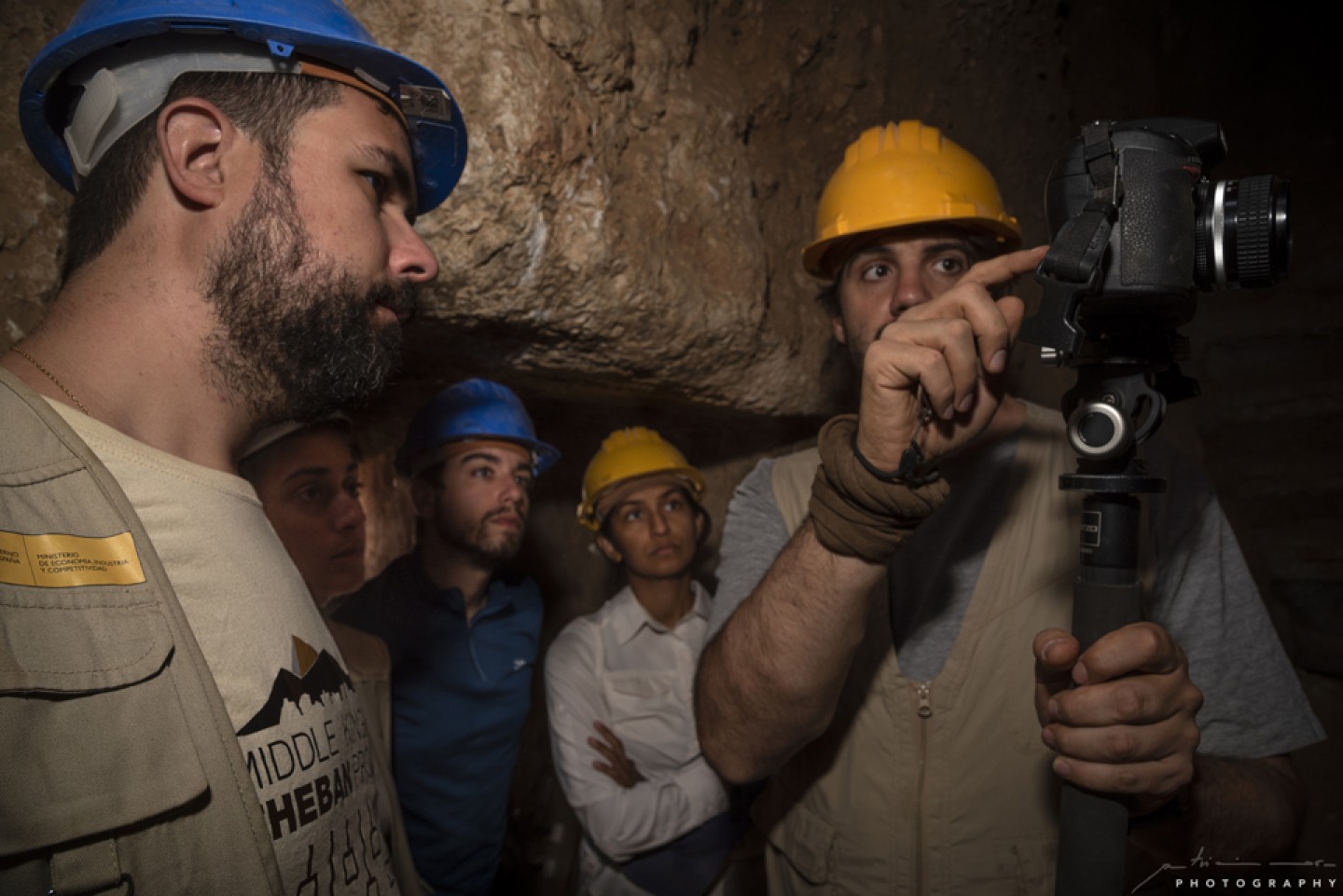
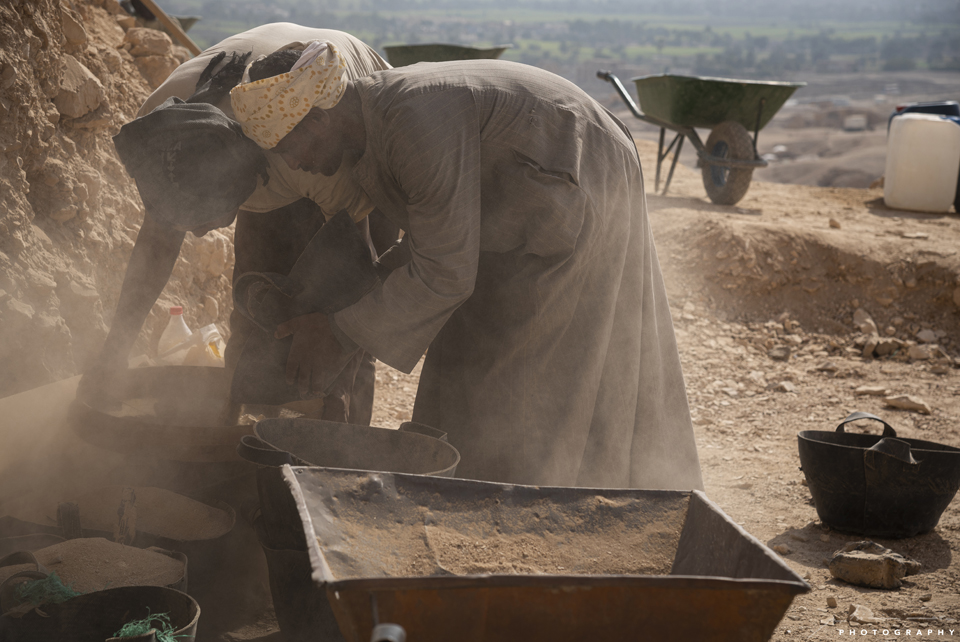
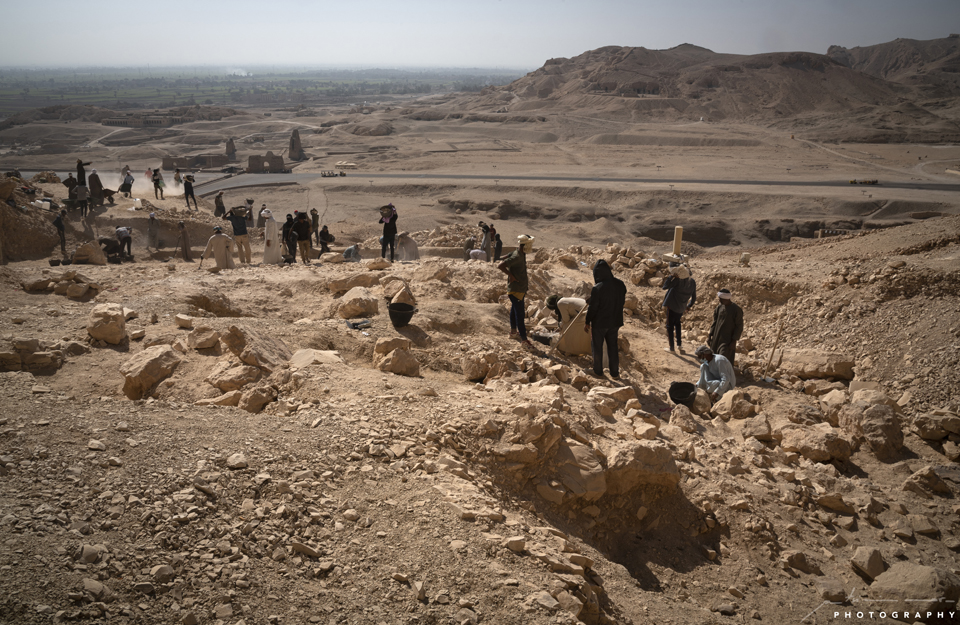
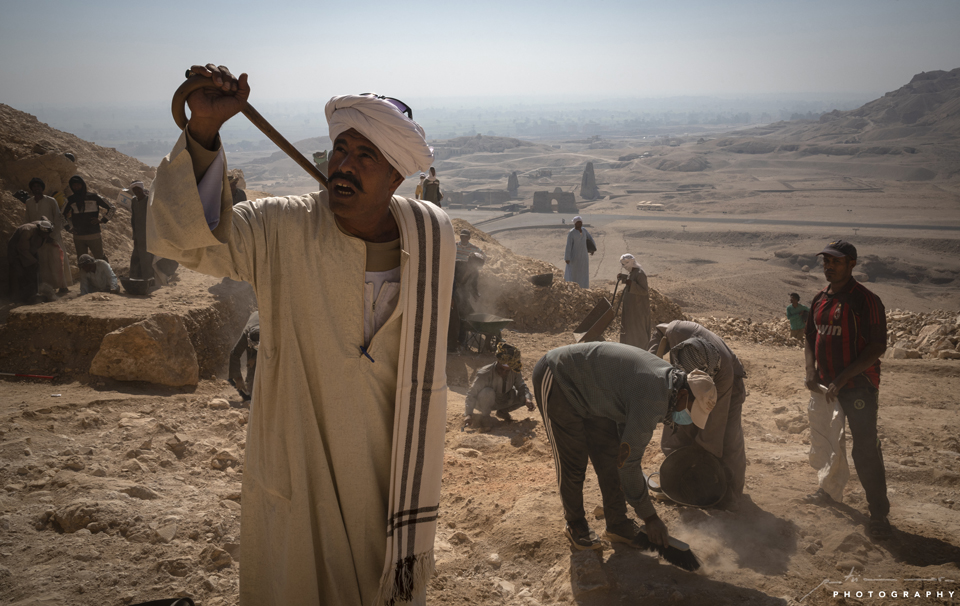
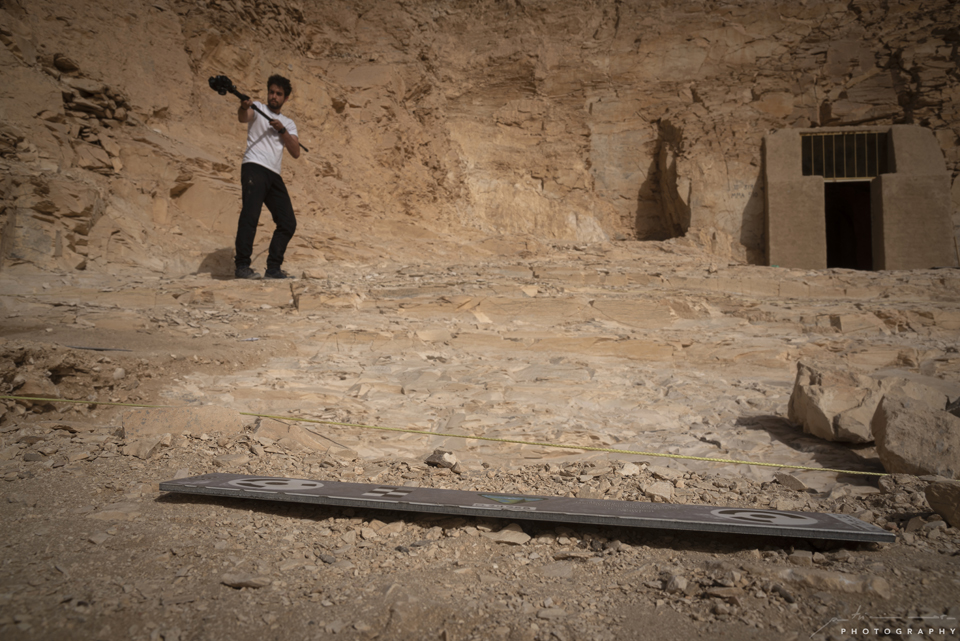
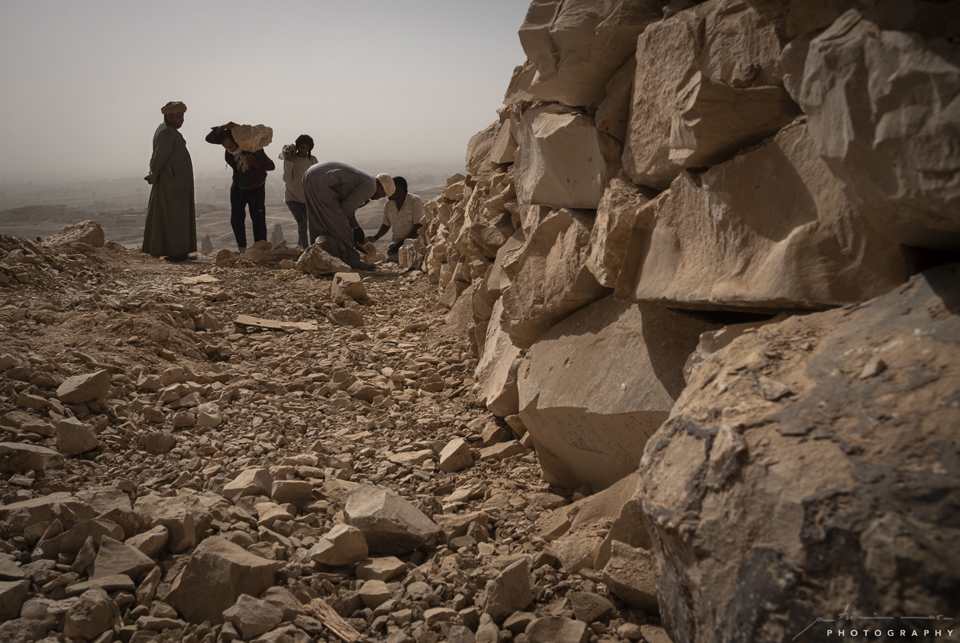
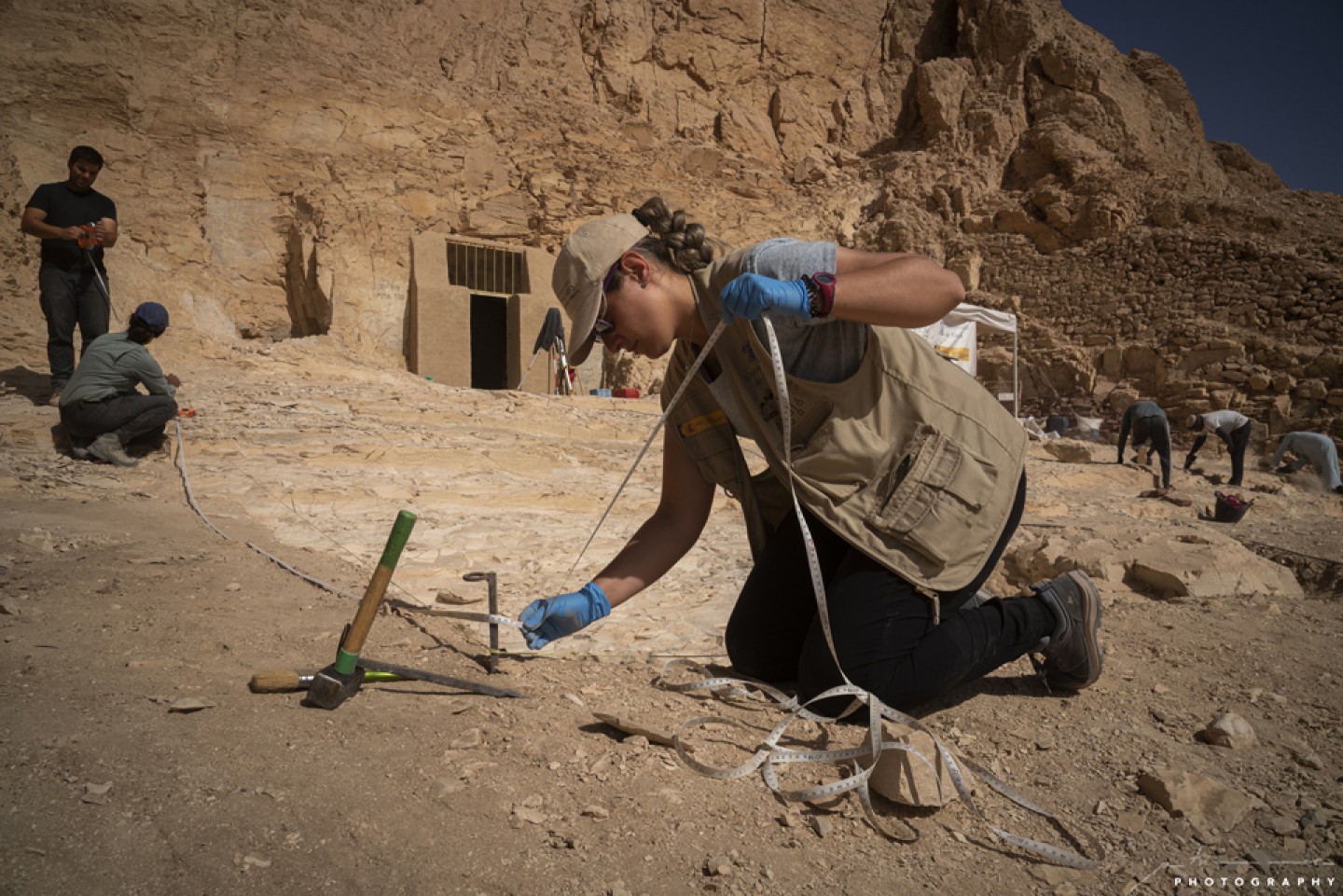
This morning at the tomb of Henenu, Sergio explained some basic notions of photogrammetry to part of the team. Daniel demonstrated the technique in the part of the courtyard that we began to excavate yesterday. Meanwhile, once the first grids to be excavated had been defined, the workers have begun to remove the first layers of soil.
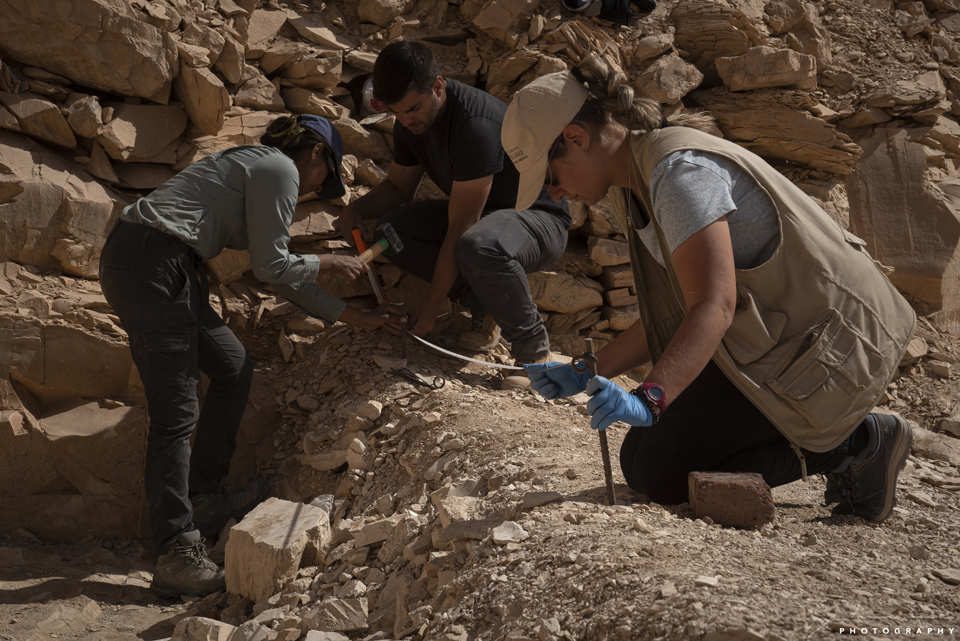
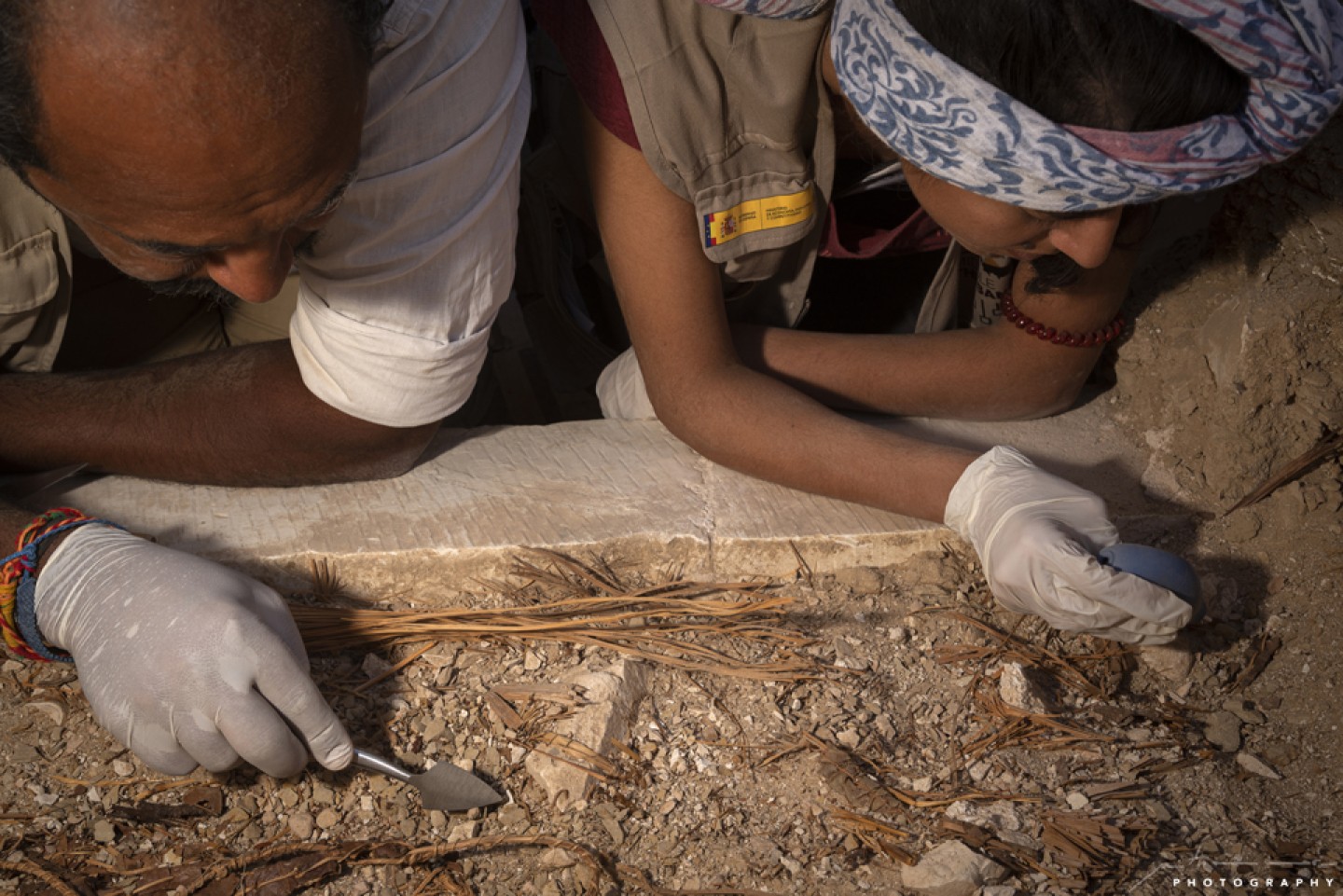
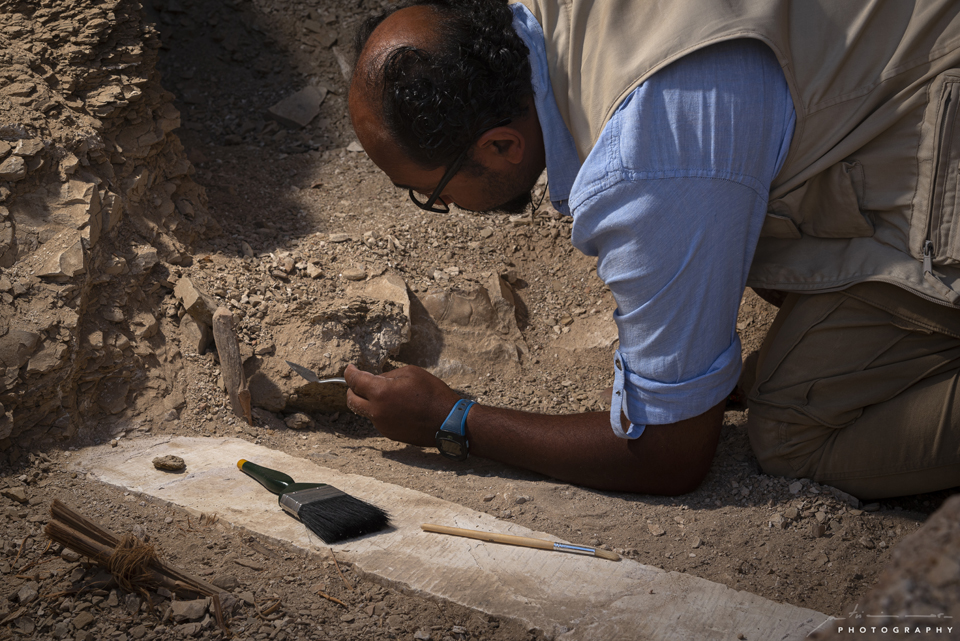
At Ipi’s tomb, excavation of the subsidiary chamber has continued. We can now confirm that the chamber was divided into two distinct spaces and that it is much larger than we thought. We have the remains of a funerary shaft that was started but never finished, and very close by we have found more human remains and ceramic fragments.
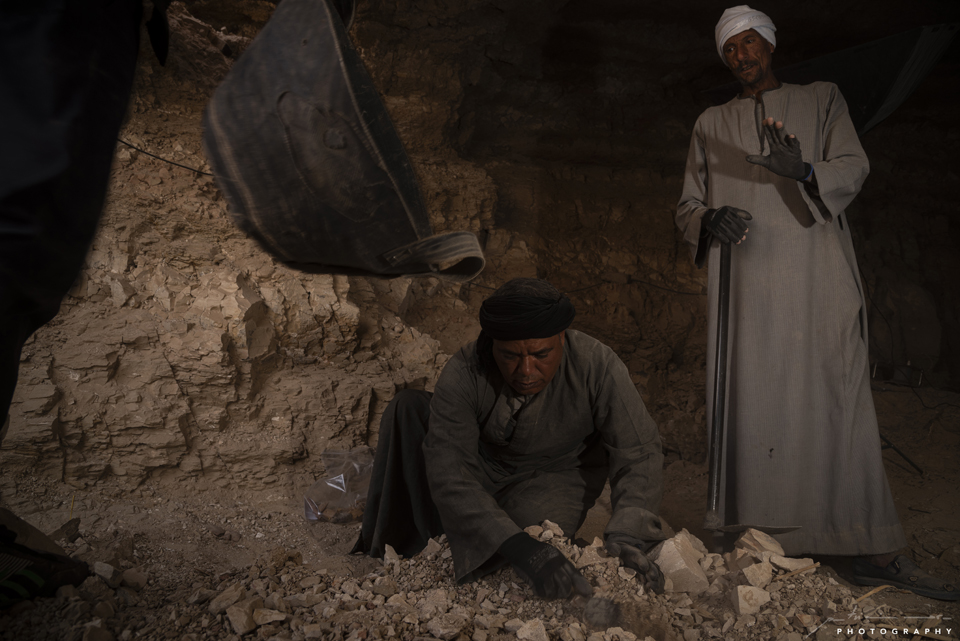
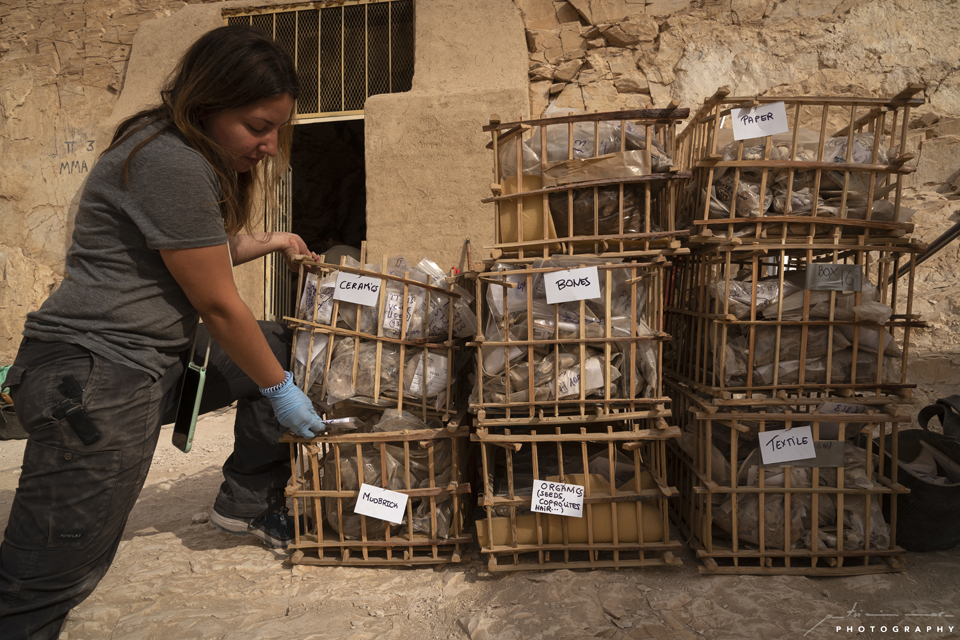
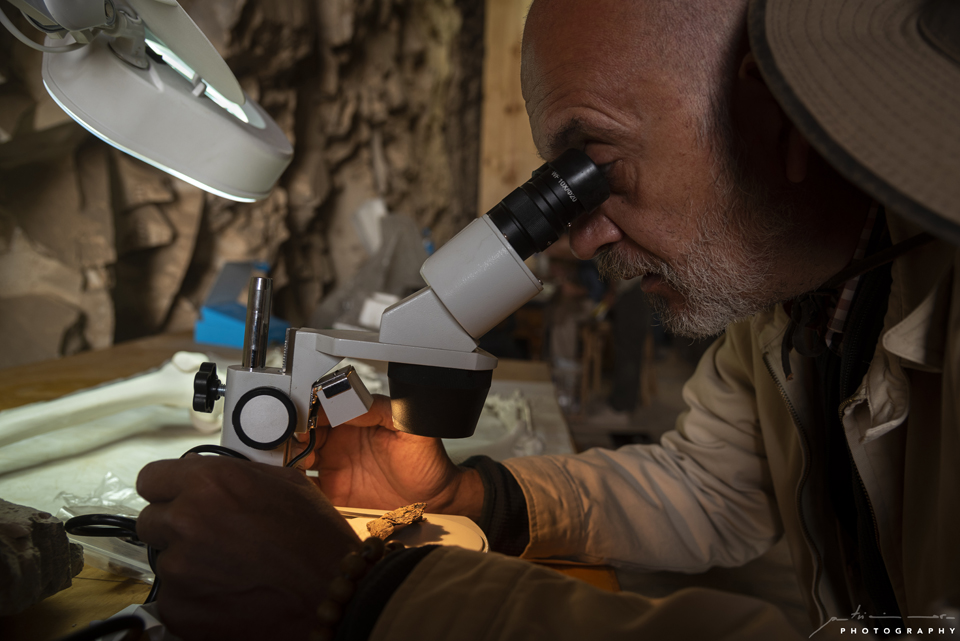
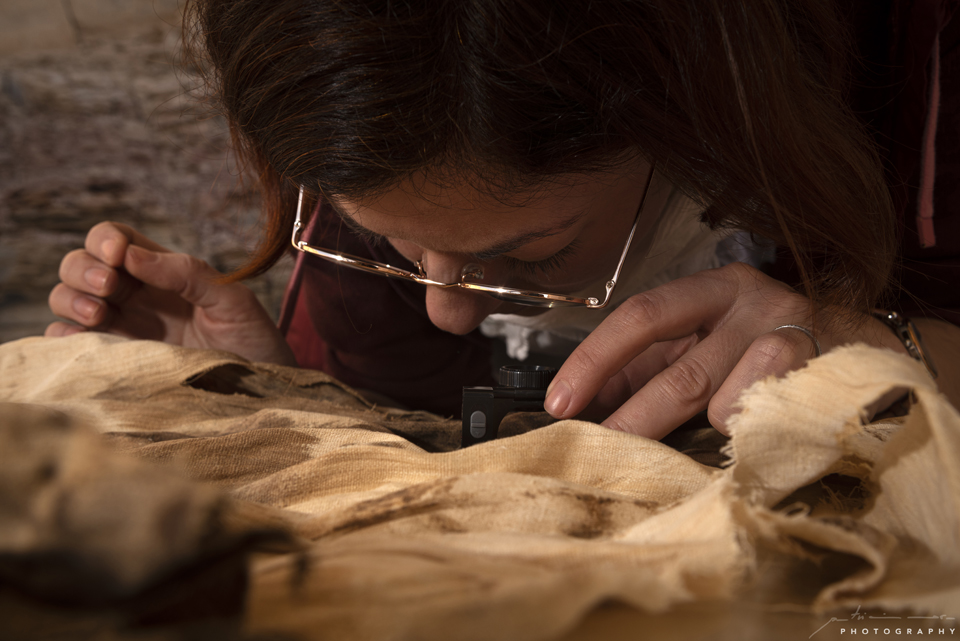
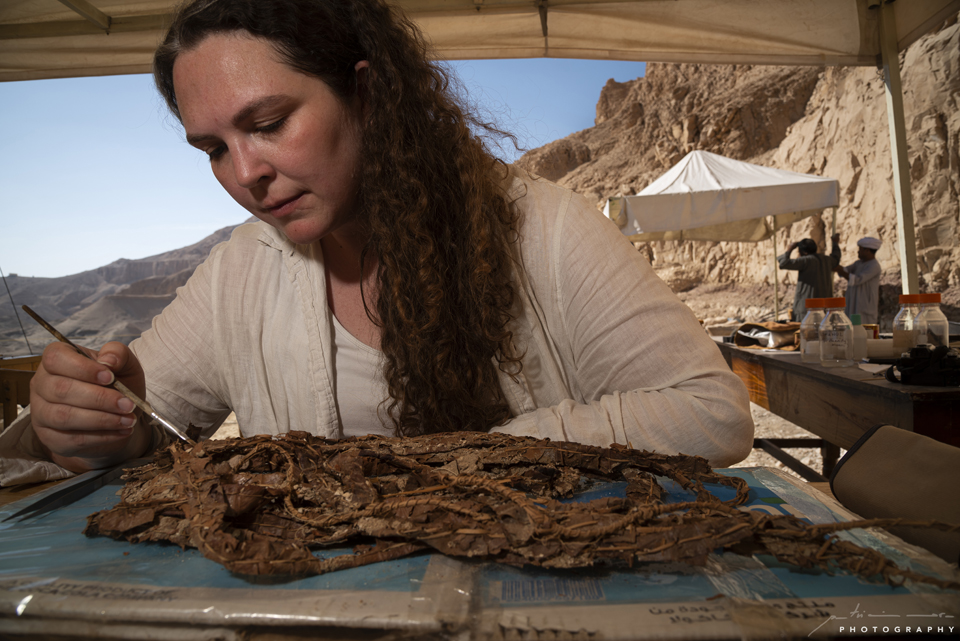
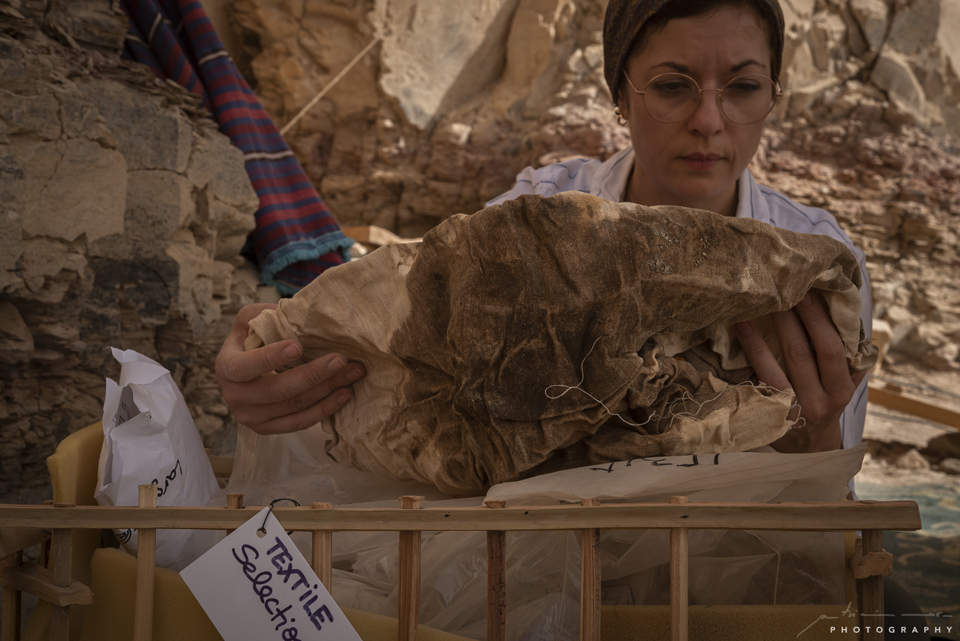
Elsa has already finished analysing the most important textiles that we extracted from the mummification deposit and has started with others found in very close contexts. For their part, Manuel and Enrique have focused today on the analysis of several bags of human bones that were found in the 2018 season.
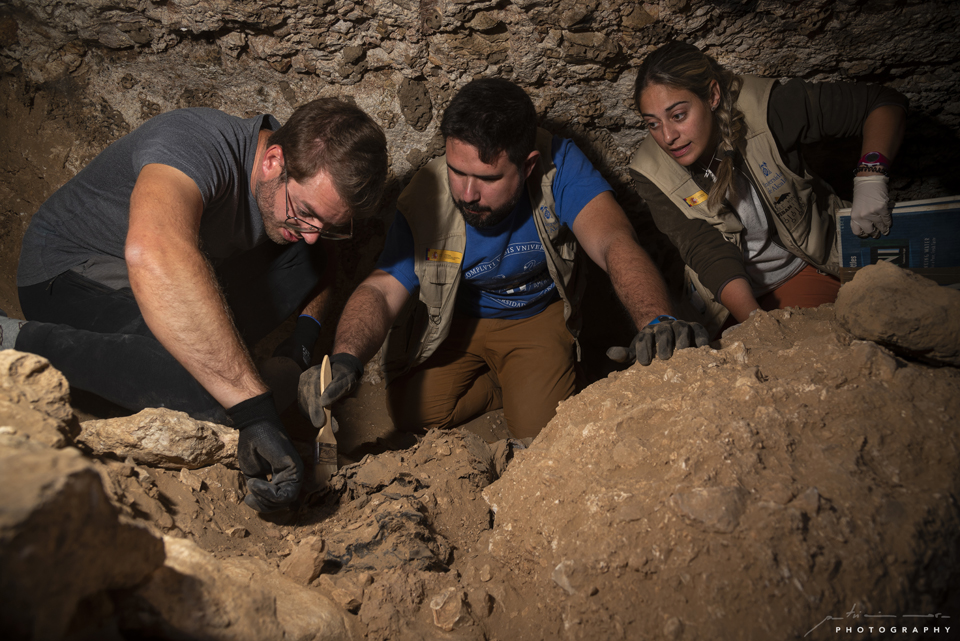
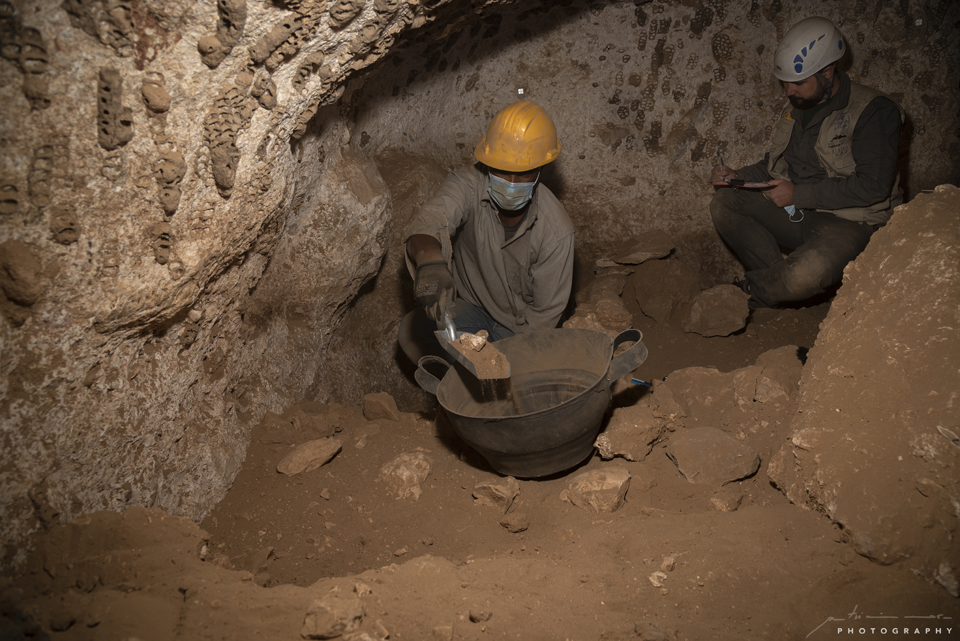
In E1, Raúl continues to document the stratigraphy of the tomb. The amount of sand and stones which have filled the chamber slows down the work. However, the excavation is progressing at a good pace despite the fact that a large rock, which we have christened “Marisa”, hinders the process.
In the afternoon, some members of the team went to Luxor on a very different plan than usual. David and Jaume went to get their hair cut, but in the “Egyptian” way. There were not only scissors and clippers involved, but also thread and fire. This country never ceases to surprise us and offer us all kinds of experiences.
portada_DSC1740

Henenu enters the scene!

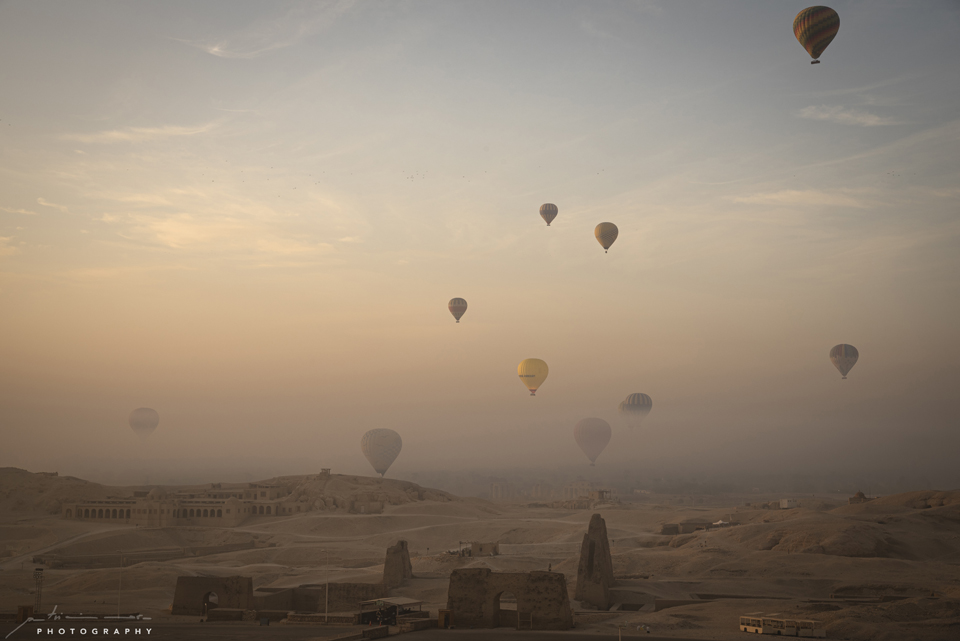
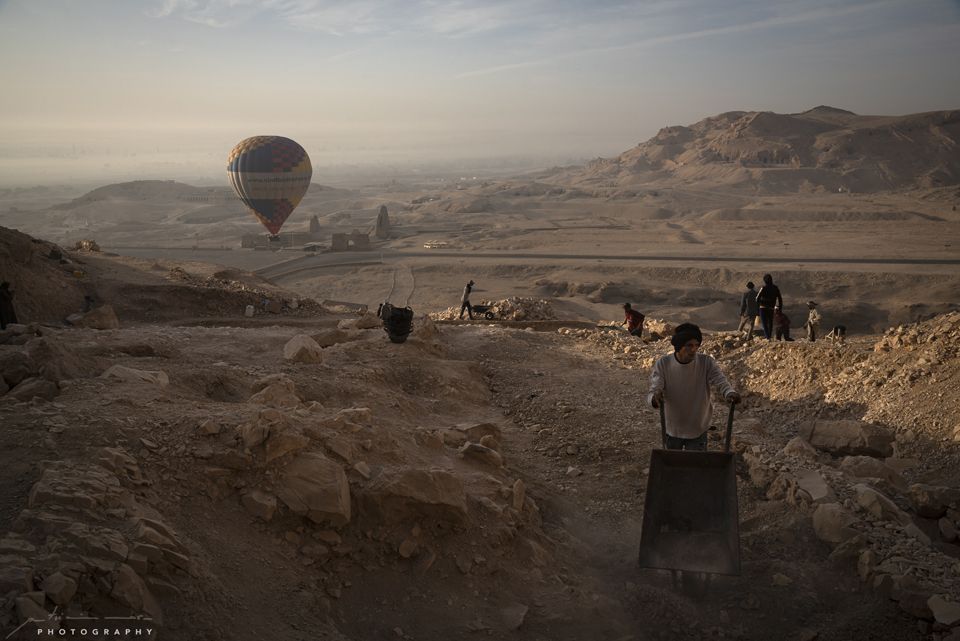
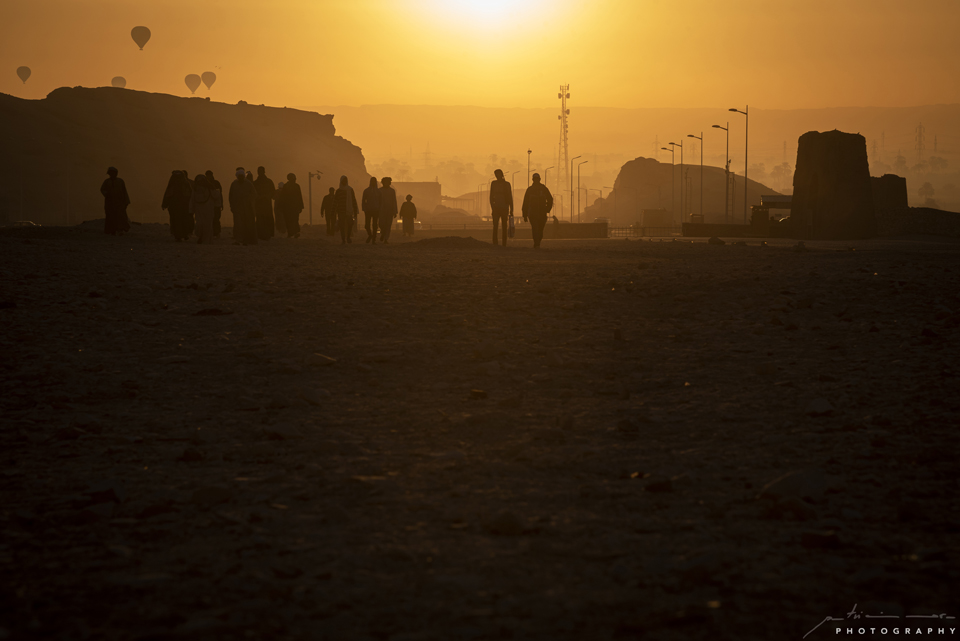
The day dawned with hardly any wind, unlike the last few days. This allowed the hot air balloons to fly over Deir el-Bahari and gave us a break from the heat, making work more comfortable.

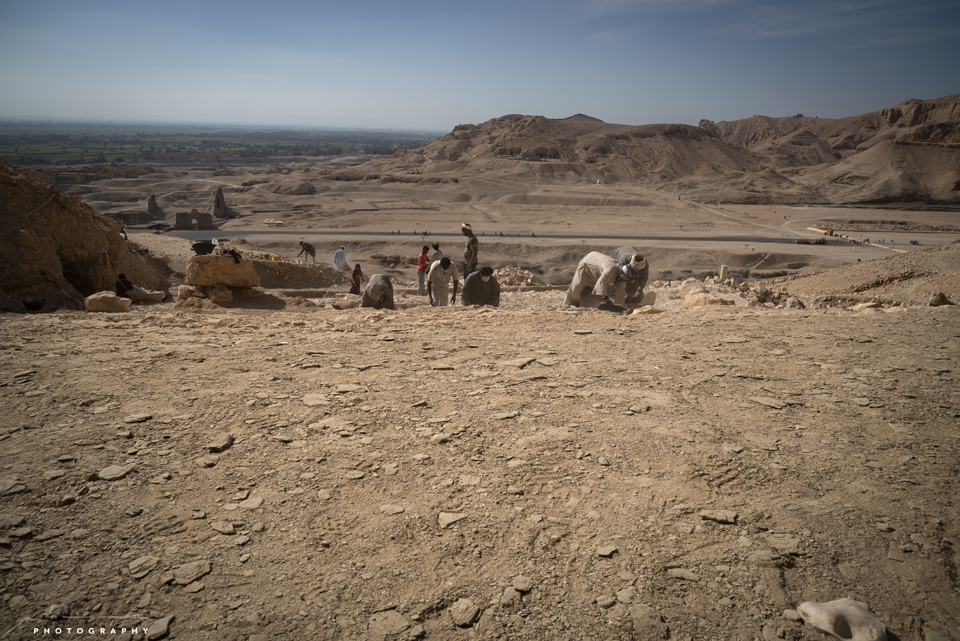
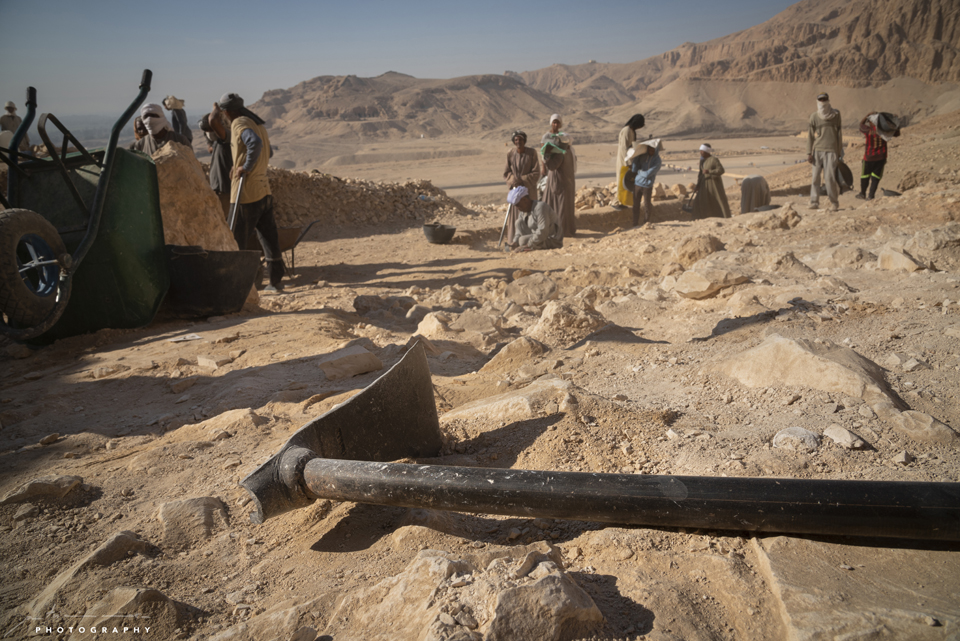
The excavation of the courtyard of Henenu began today. Nisha has moved to this tomb to lead the excavation with David. Carmen also continues to work at Henenu’s tomb, recording materials together with Iria and drawing shabtis and other significant pieces. The main objective of this season is to excavate the upper and middle part of the courtyard, in order to better understand the different phases of occupation of the complex.
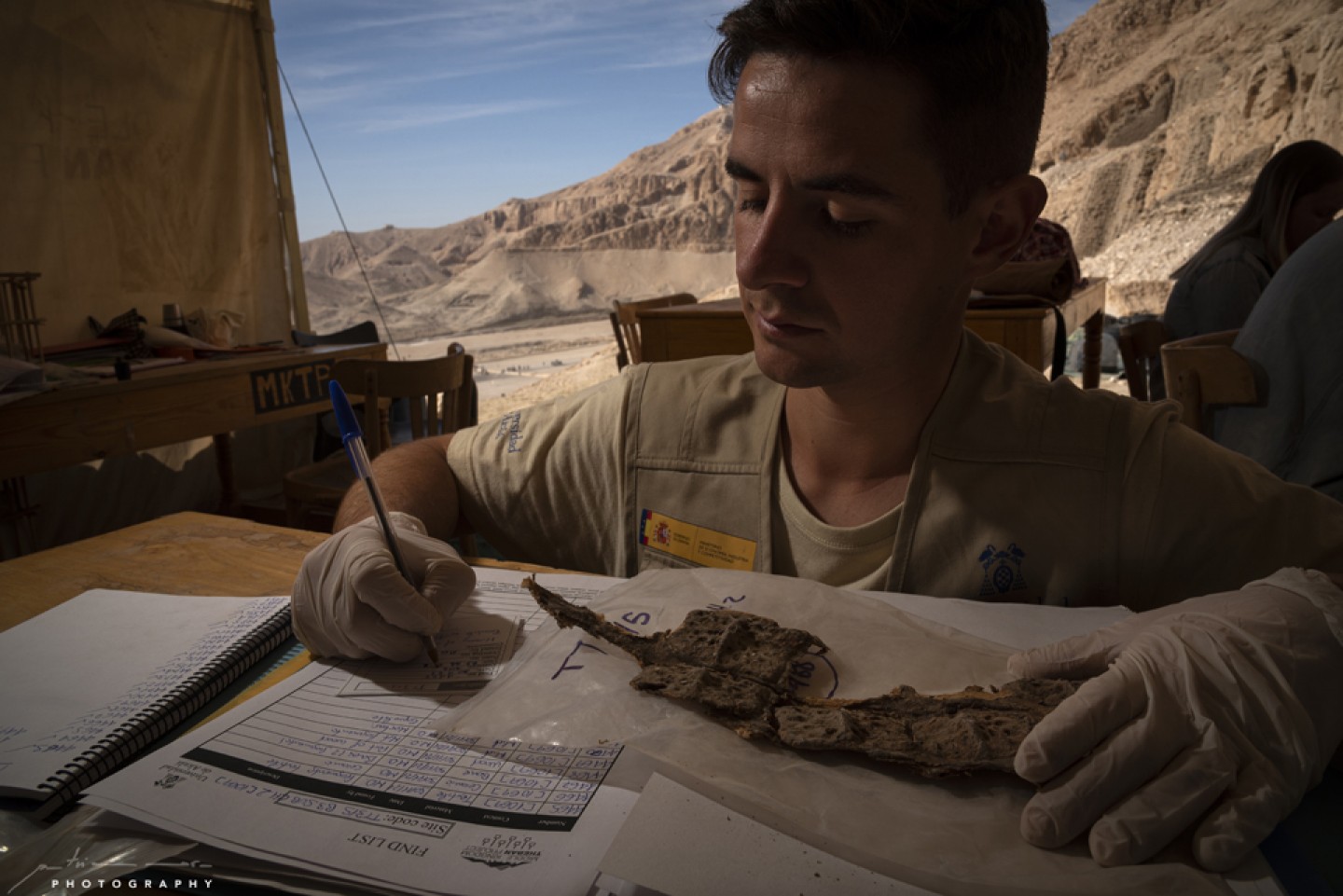
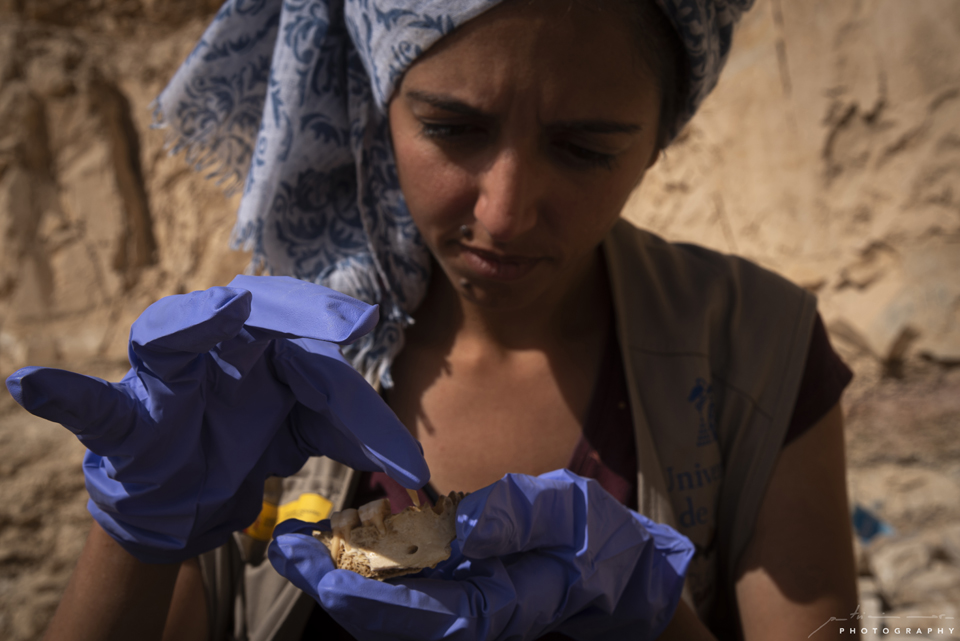
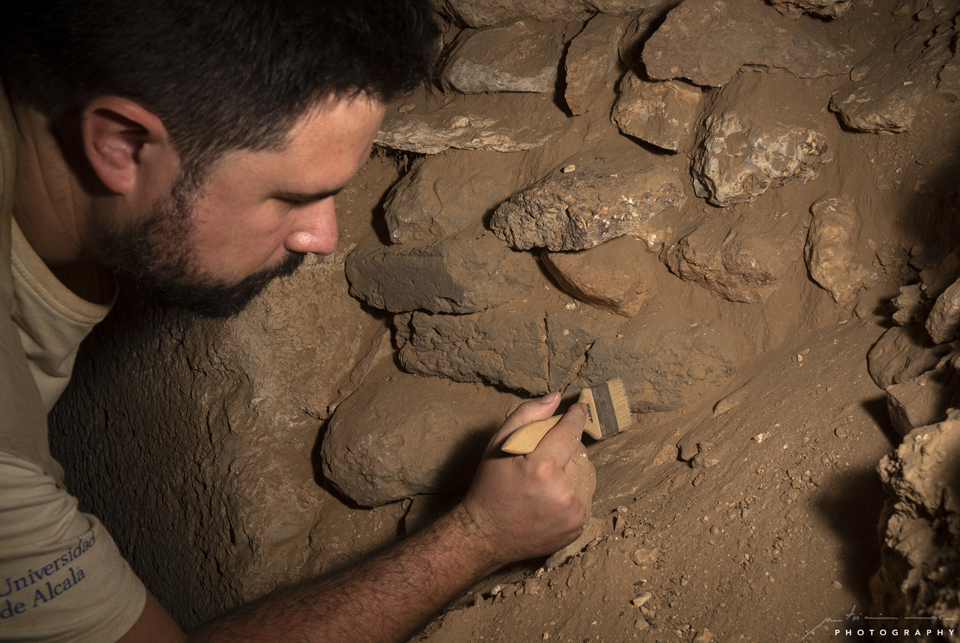
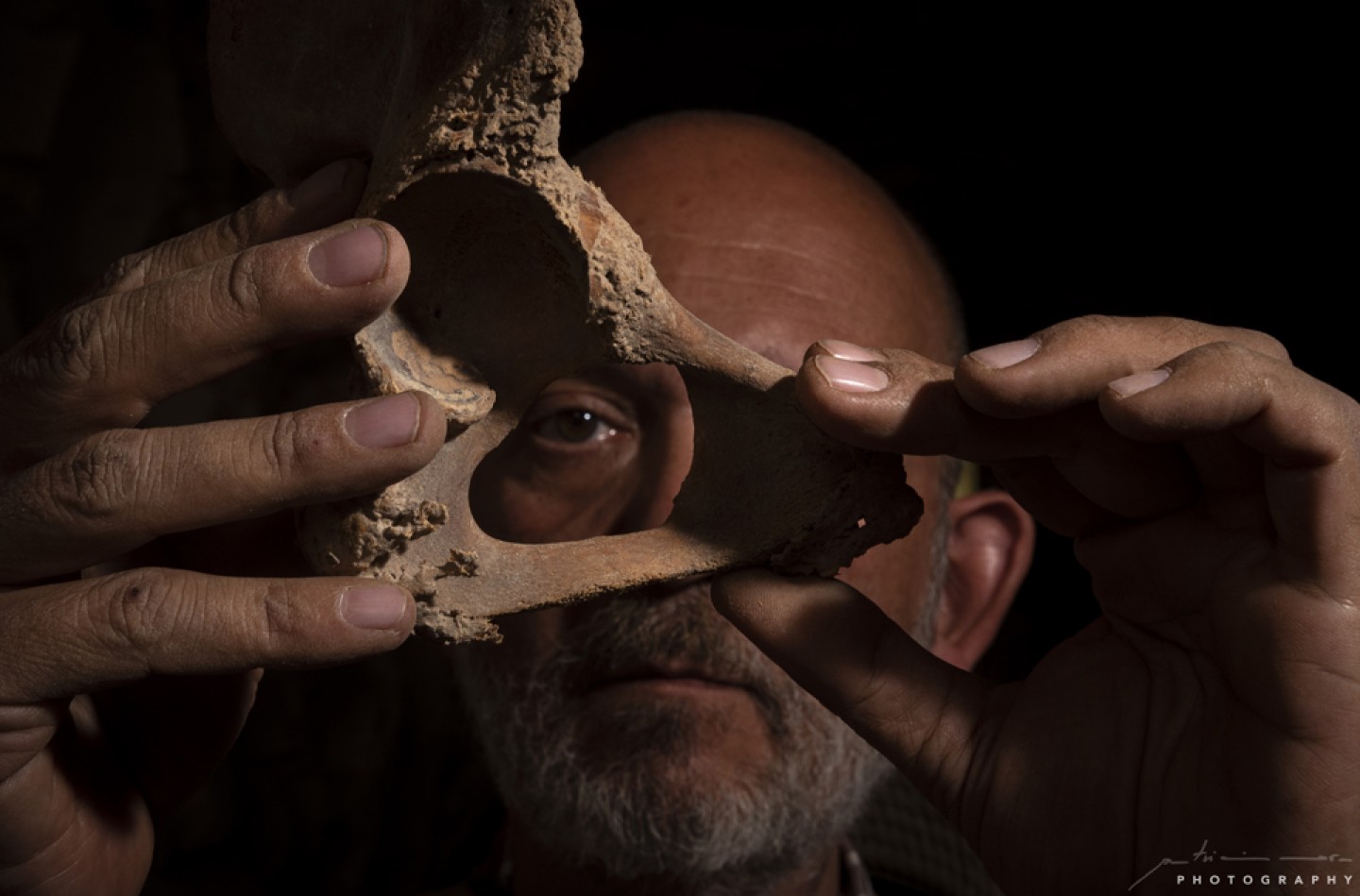
At Ipi’s tomb the excavation of the subsidiary chamber has continued. More human remains were found today, including a femur that seems to fit with the coxal bone found the day before and a mandible that also fits with a premolar tooth found yesterday.

At E1 the excavation of the chamber has continued. Today we have finished removing a whole layer of sand, so Raúl and Sergio have been documenting the stratigraphy of the area. The aim is to understand the relationship between the different contexts of the tomb.

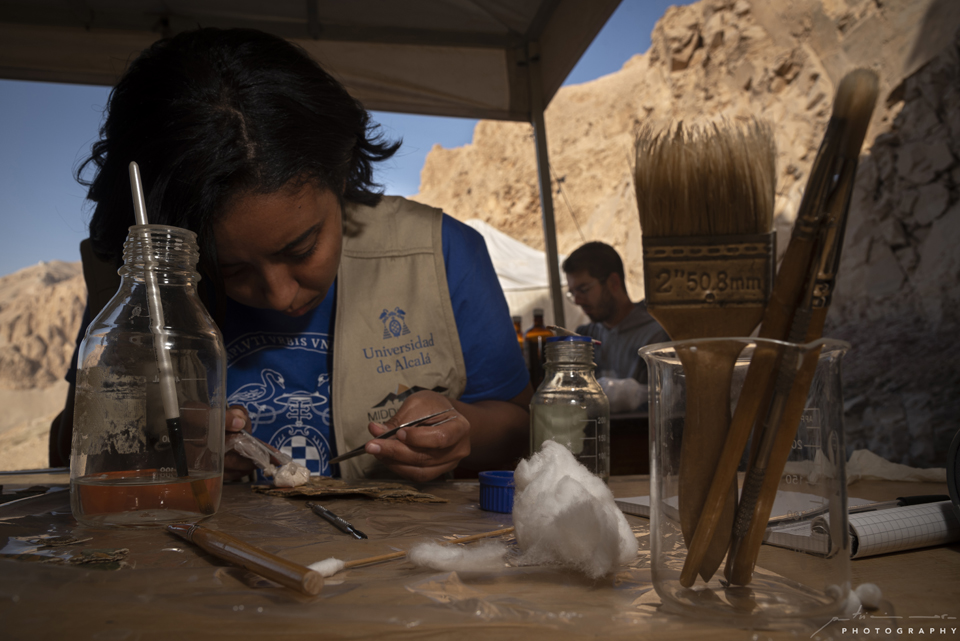
The conservation team has been working with cartonnage from the tomb of Henenu and Ipi. In the morning, Reed visited E1 to talk to Sergio and Raul about the state of the tomb and the best way to conserve it. After breakfast, the whole team returned to Dagi where they began to examine and document each of the wall fragments that have become detached over time. Reed also assisted Daniel in putting up targets in and around the tomb for photogrammetry.

The evening at the Marsam has been quiet. Inma left last night and the dinner table is noticeably emptier. There are just two weeks left until the end of the campaign so the work in the office is multiplying in the evenings. Nevertheless, we are very happy with what we are doing and that joy far outweighs the fatigue of more than a month of digging.

portada_DSC1326

Night at the Museum

The days are passing quickly at the site. There are only two weeks left until the end of the campaign and we still have a lot of work ahead of us. But as we always say, archaeology requires patience in order to document every step we take.

The tomb of Henenu has been completely cleaned today. Iria has recorded the last materials that have appeared, and if all goes well, tomorrow the excavation of the courtyard will begin.

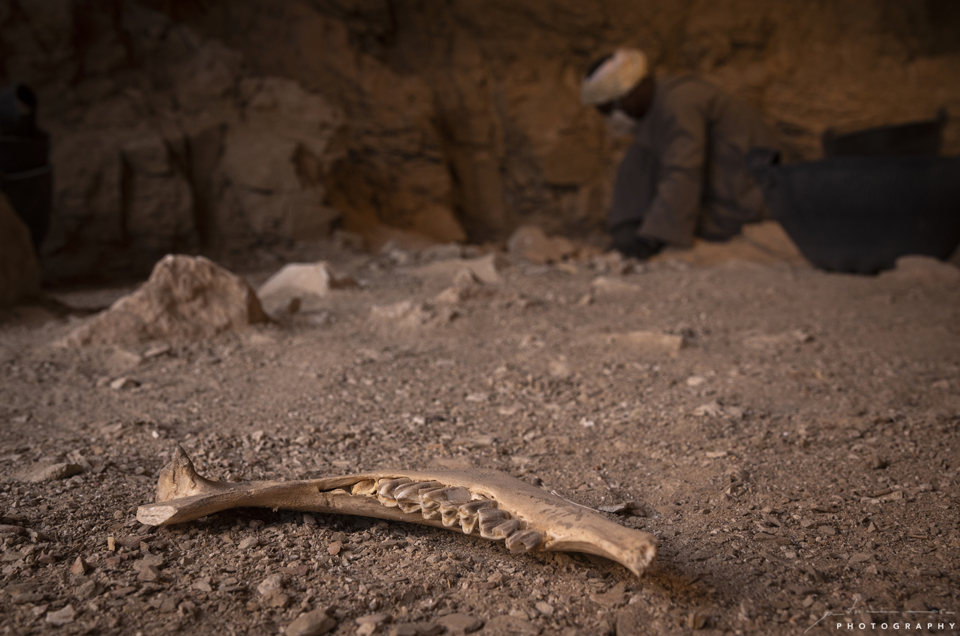
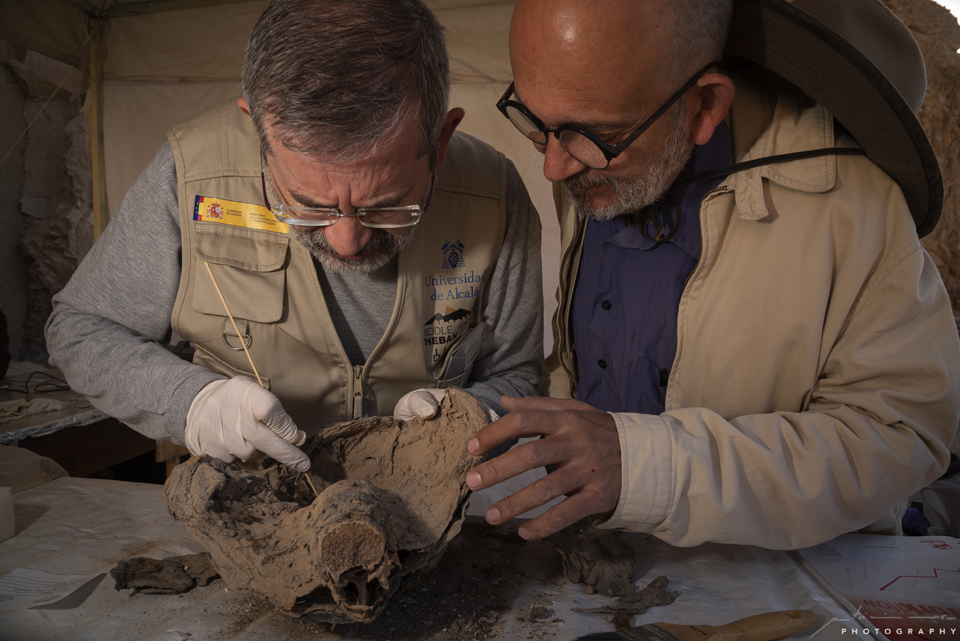
At the tomb of Ipi all efforts are now focused on the excavation of the subsidiary chamber. Several objects of interest have been found today, including a fragment of painted wood, ceramics, a ruminant head and a large fragment of what appears to be mummified skin with the remains of the coxal bone attached. Forensic anthropologists have identified the individual as an adult male and have continued with the analysis of the mummies found in previous campaigns.

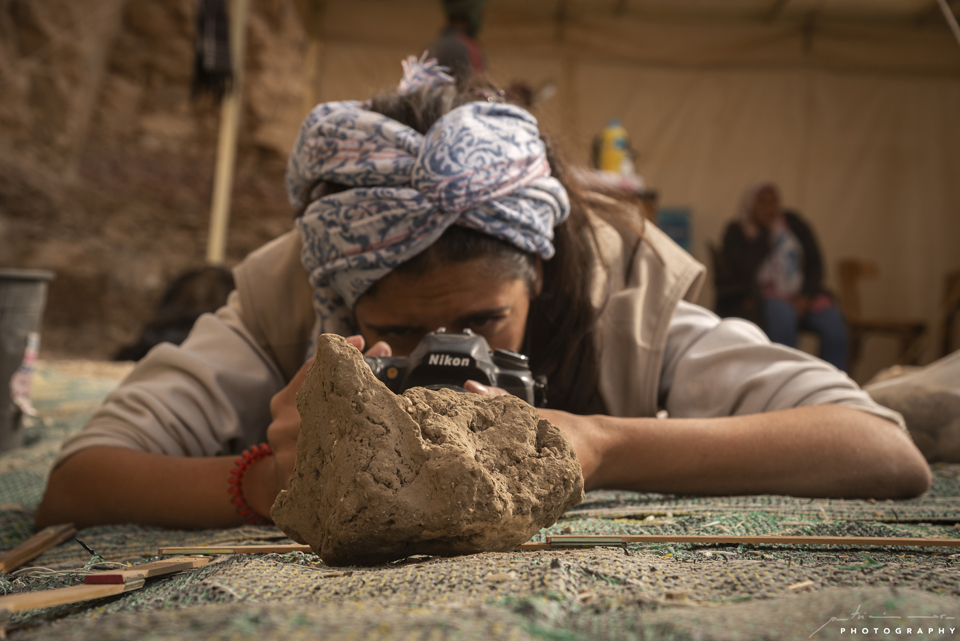
Bea continues to record the materials and today spent part of the morning analysing, photographing and taking notes on the adobe pieces that are appearing in the chamber

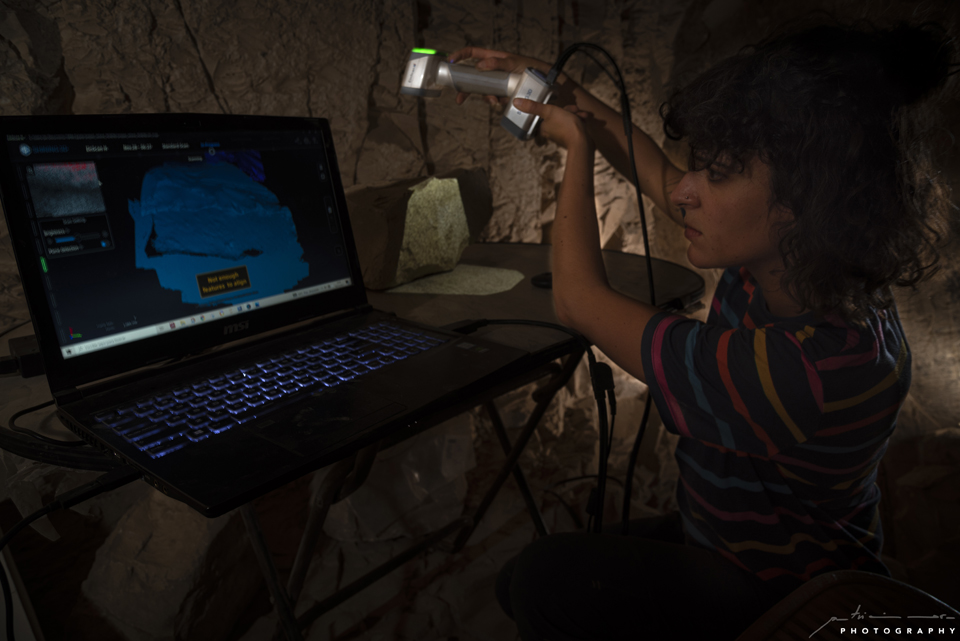
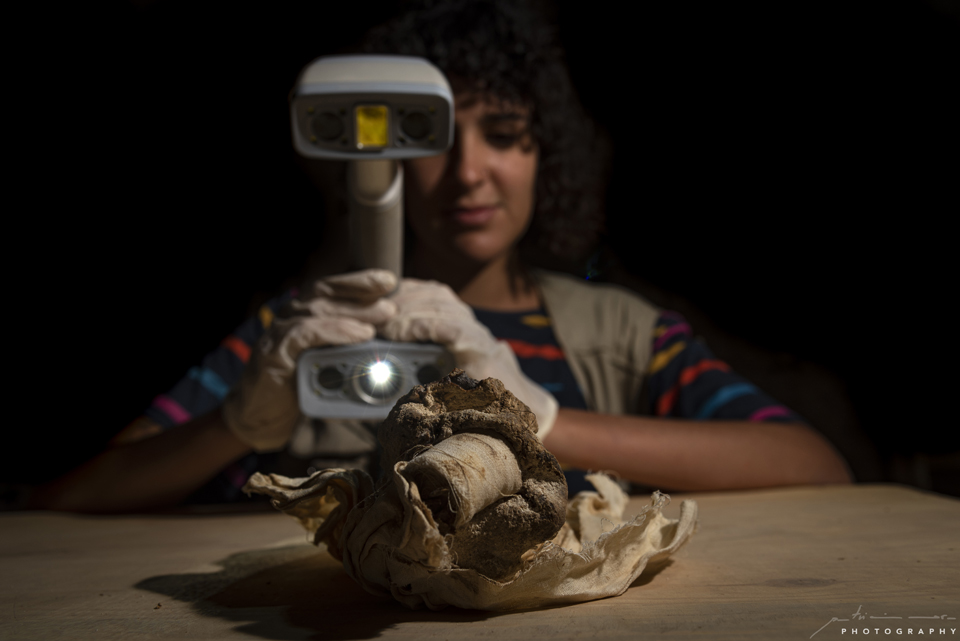
On the other hand, Inma has spent her last day at the site carrying out colour and 3D scans of some of the most significant jars in the mummification deposit, such as those with traces of charcoal or other notable stains. She also had time to visit Henenu’s tomb and scan more inscribed fragments.

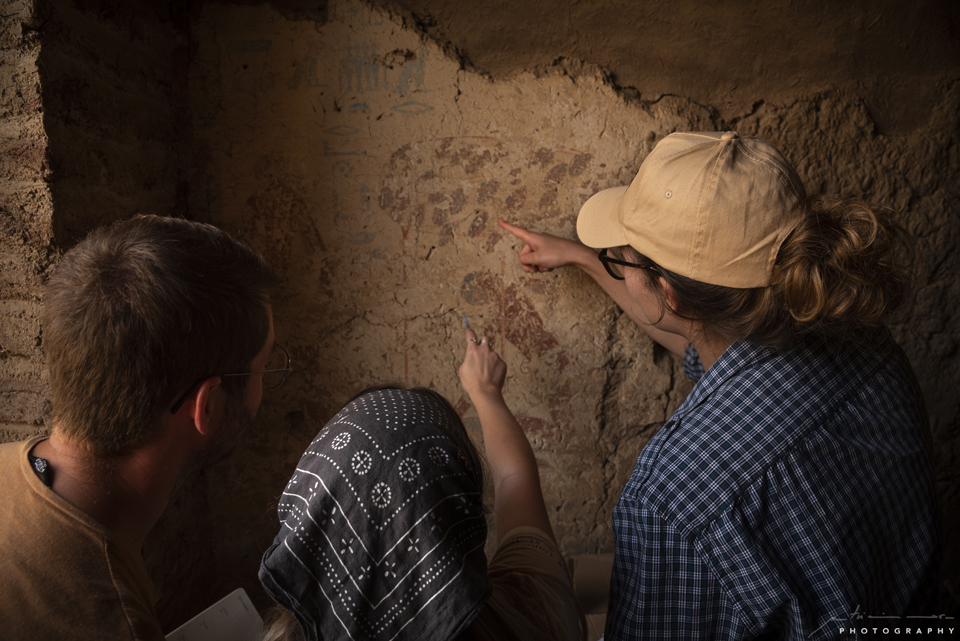
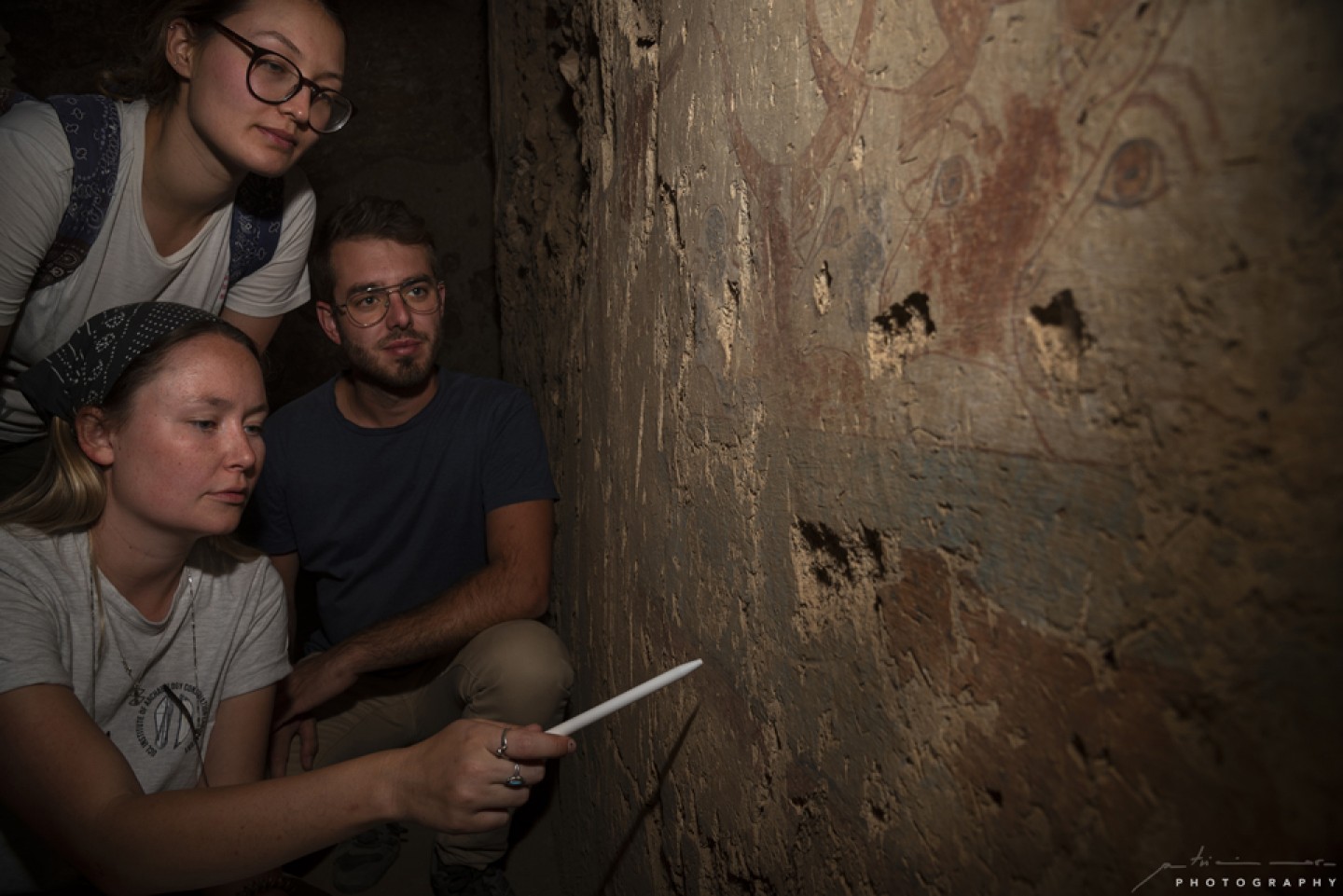
Today, Sergio and Dani joined the conservation team on their visit to Dagi to begin the photogrammetry of the tomb. In order to develop a good epigraphic work it is necessary to produce photogrammetric models of the walls with preserved paintings, especially the west section of the cross wall. This is our second major objective in this tomb during the 2021 season.

At E1, Raúl and Sergio have continued with the documentation of the tomb thanks to the total station, giving it absolute coordinates. The excavation is progressing at a good pace and today we have been able to confirm that the wall that was found at the beginning of the chamber continues to the end, dividing it into two halves.
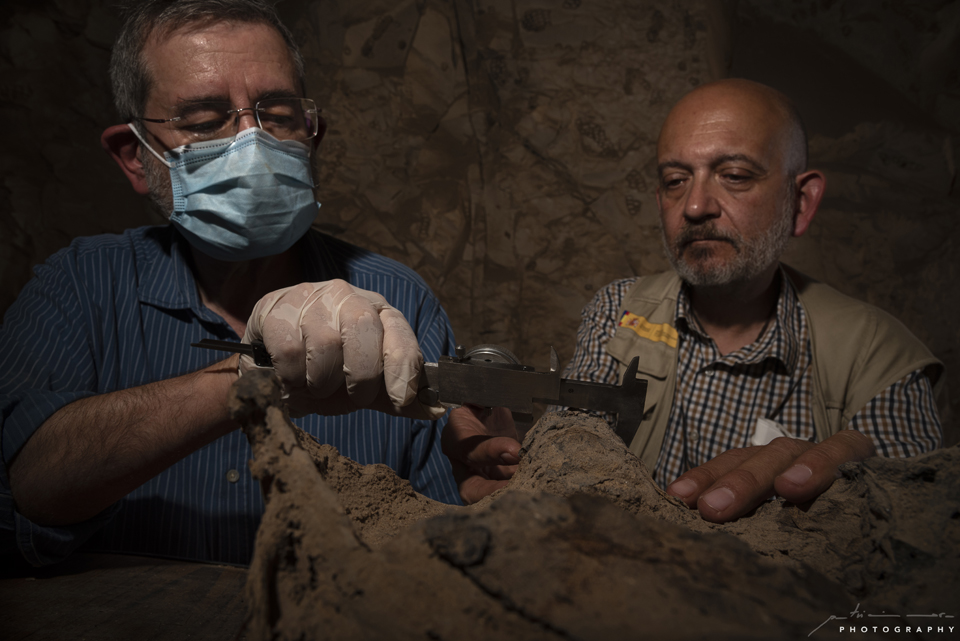
In the afternoon, the conservation team together with Patri, Sergio, Daniel and Antonio went to the Luxor Museum to meet with its director. The MKTP has received funding from the Ministry of Science and Innovation to install an exhibit replicating the embalming cachette at the museum. This first meeting served to begin discussing the methods of transport and packaging of the different objects. Daniel and Sergio have been taking measurements of the spaces where the exhibit will be set up and Patri has taken all the necessary photographs. One of our main objectives is to bring all our work to the general public and although lectures, journals and articles are all well and good, we believe there is no better way to bring the mummification deposit closer to the general public than by displaying the objects. We will keep you updated about the development of the exhibit and hope you will like the final result. We are committed to working very hard to make the exhibition as rigorous and educational as possible, and are excited for this oportunity!
portada_DSC1109

The vizier Dagi

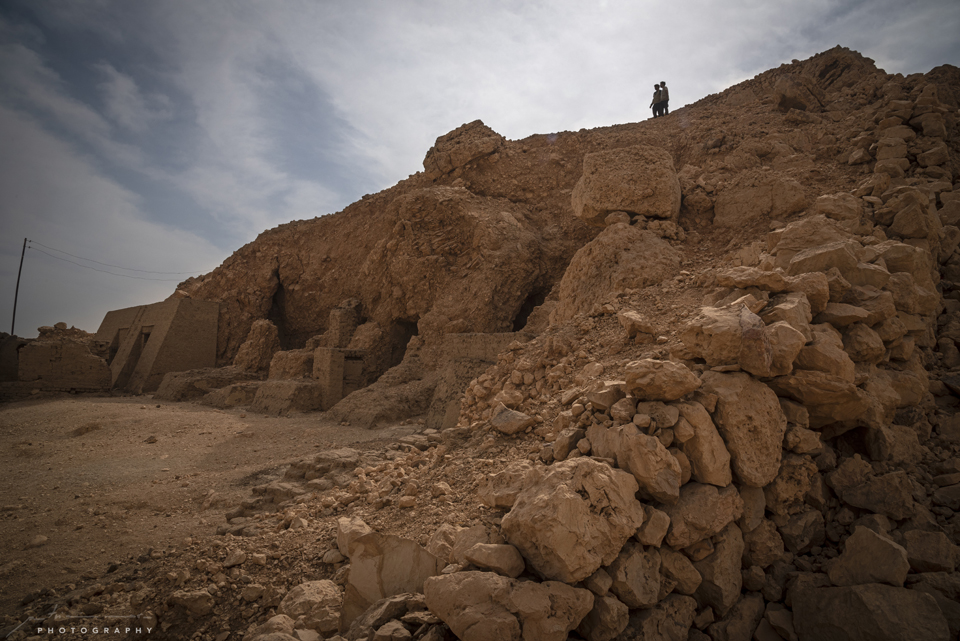
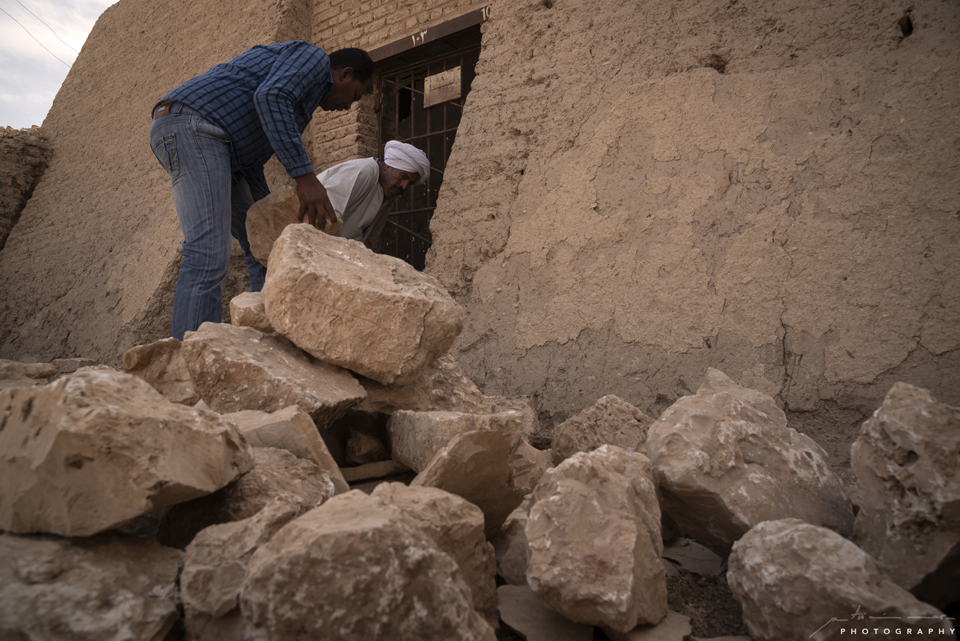
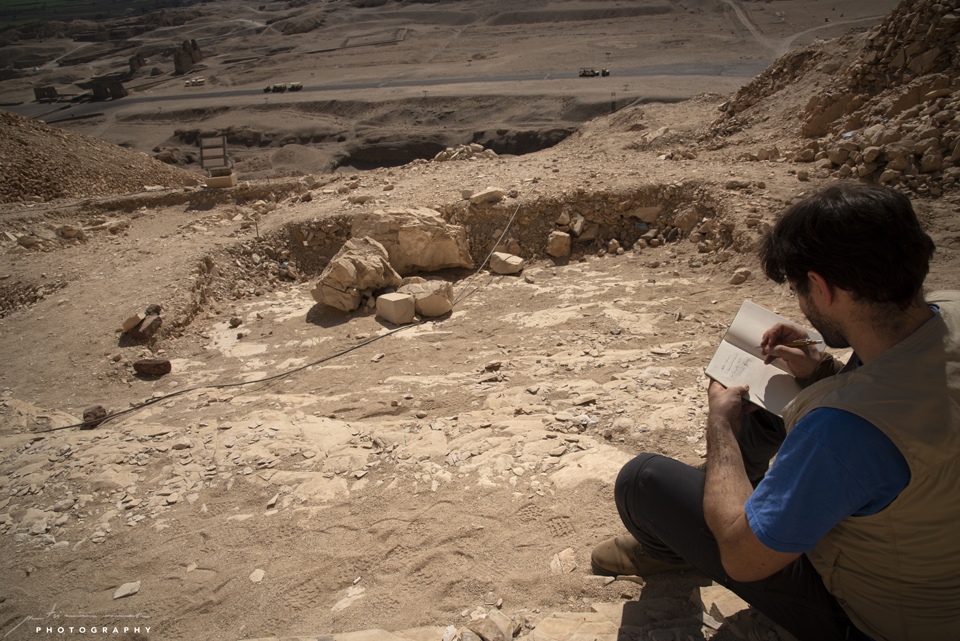
Dagi was a high official of Mentuhotep II who lived in the late 11th and early 12th Dynasties. He is believed to have accumulated numerous administrative posts during his lifetime, including that of vizier. His tomb at Asasif is one of the few tombs in the Middle Kingdom to retain decorations in the corridor passages. Today, we have opened his tomb.

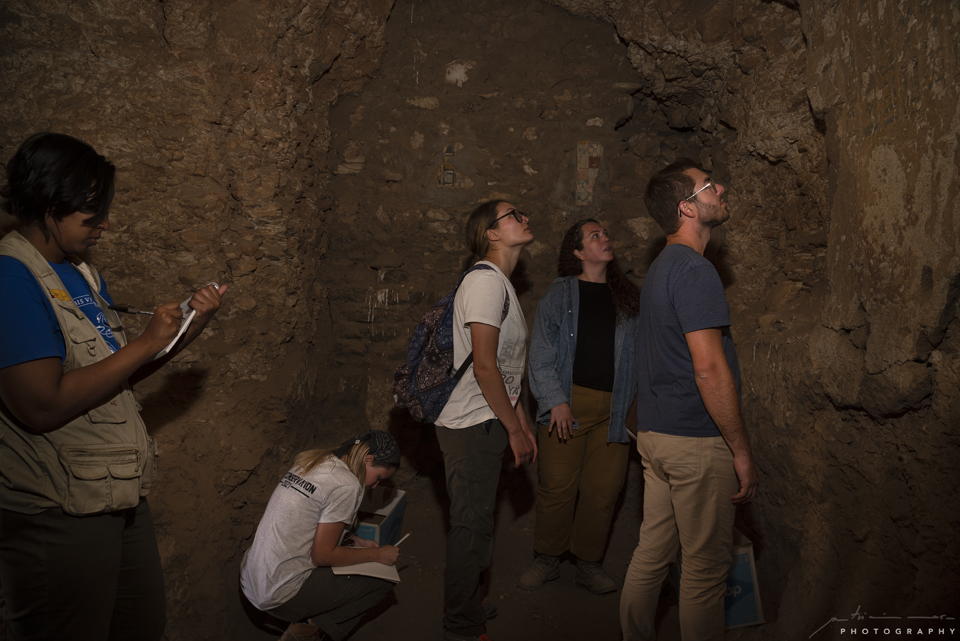
During this season we will not be excavating in Dagi’s tomb, but instead the conservation team will focus on planning for the restoration of the wall paintings. To this end, the entire team has visited the tomb to initiate documentation and to discuss any necessary tests.

Just opposite Dagi at Henenu’s tomb, David finished cleaning the annexes and Iria continued recording some small finds. In two days, we hope to be able to start excavating the courtyard.

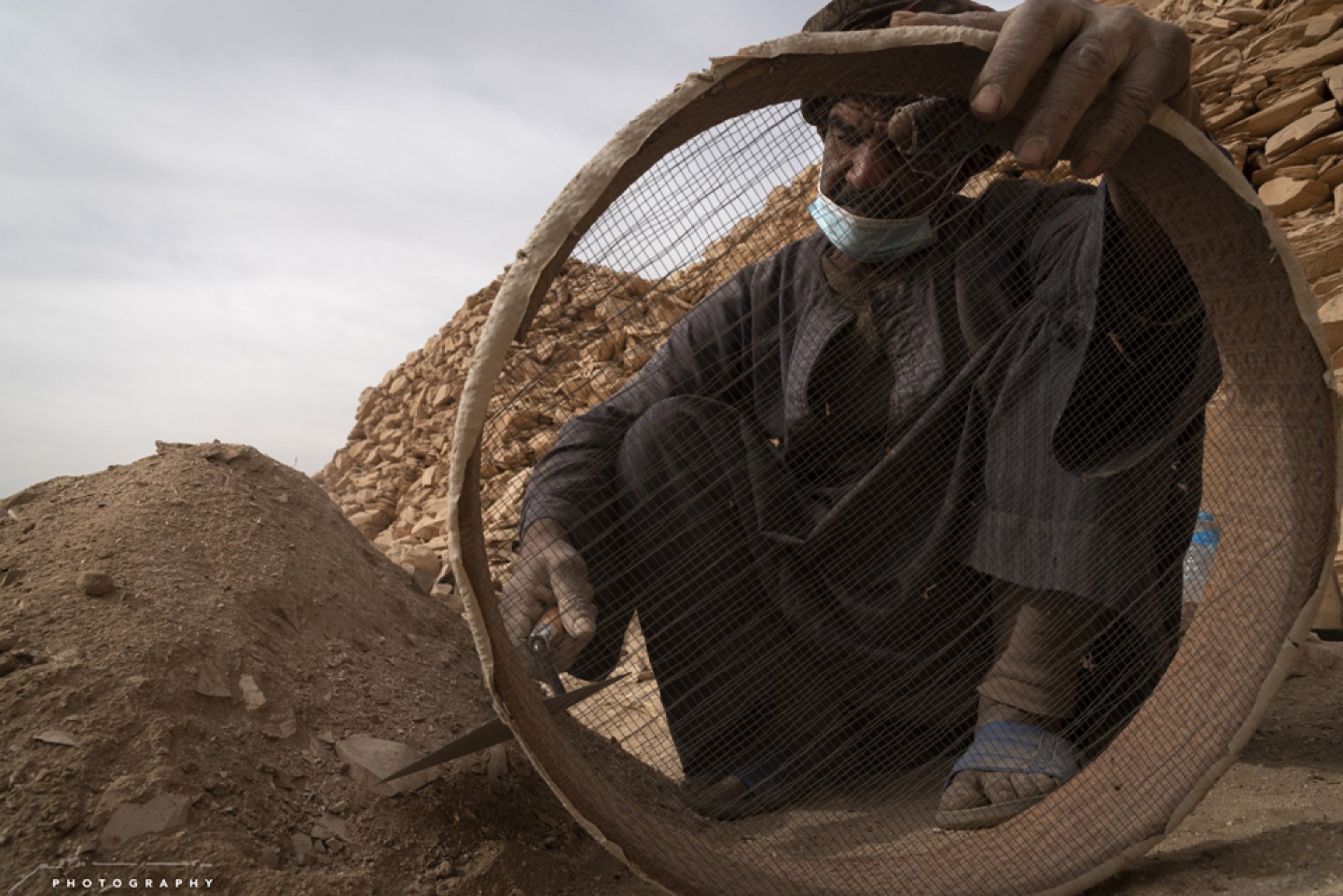
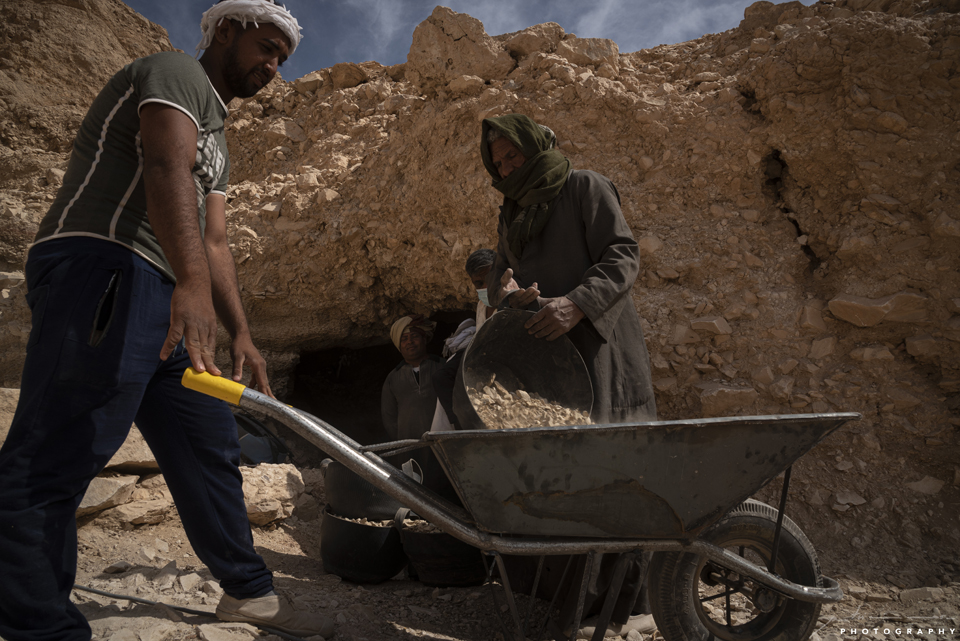
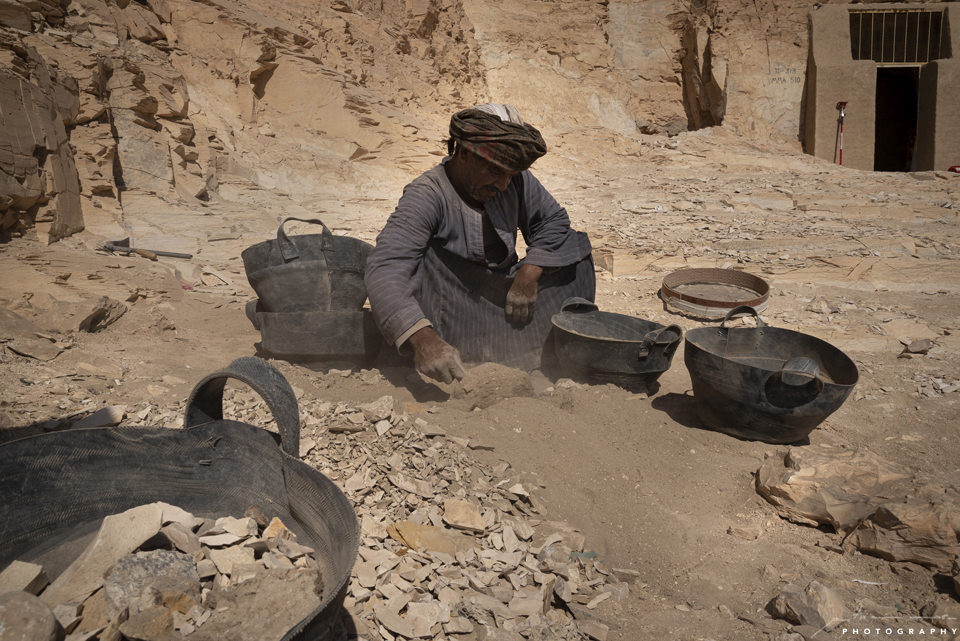
At Ipi’s tomb, the morning started with Antonio, Carmen and Bea finishing the sieving of all the organic remains that appeared at the entrance of the subsidiary chamber. Mohamed has begun to excavate the interior of the chamber. Although it is too early to say for sure, it seems that two distinct spaces can be observed.

Elsa continues to work with the textiles from the mummification deposit. She has been able to distinguish different manufactures in several textiles and identify some fragments that seem to all belong to the same piece.

At the E1 sector, Nisha, Sergio and Raúl continue with the excavation of the inner chamber of the tomb. The excavation is very complex due to the amount of sand and rock fragments, so it is progressing slowly, maintaining all safety measures.

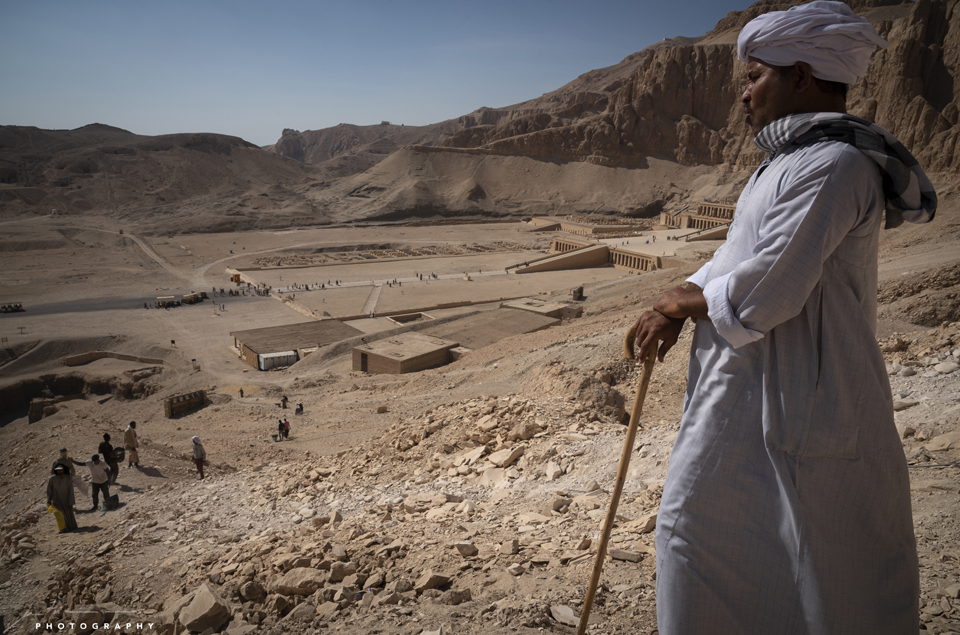
At the end of the day several team members chose to walk to the Temple of Hatshepsut from the site in order to spend some time in this amazing space. Working so close by means that we get to see it every day, but no one had visited the temple yet this season. The team members were astonished by the famous depictions of the Punt expedition and were able to explore the 2nd terrace of the temple, which they hadn’t seen before. Although there is always a lot of work to do, it is important to remember how lucky we are to be here and take time to appreciate the cultural heritage that is all around us!

portada_DSC0764

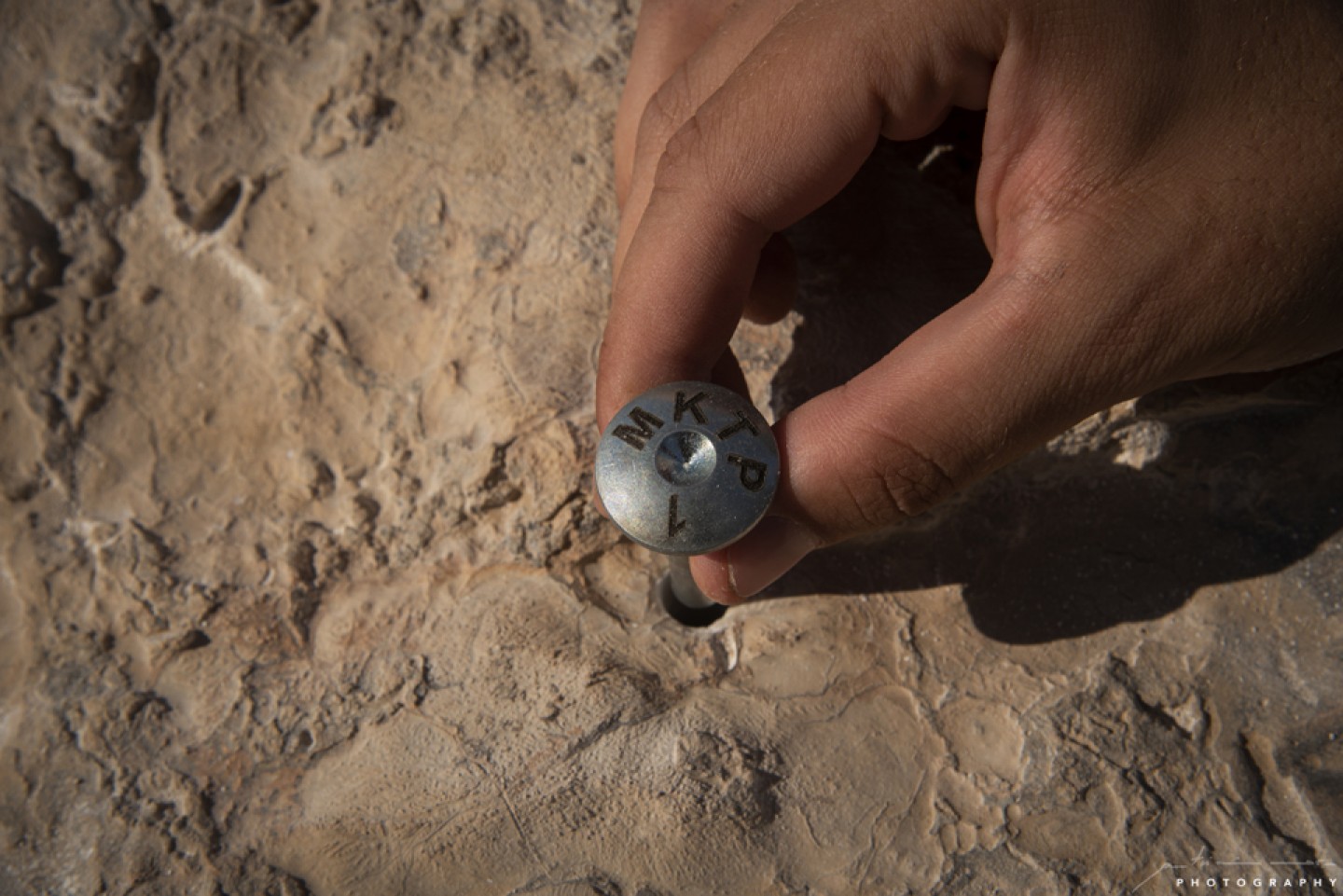
Placing targets

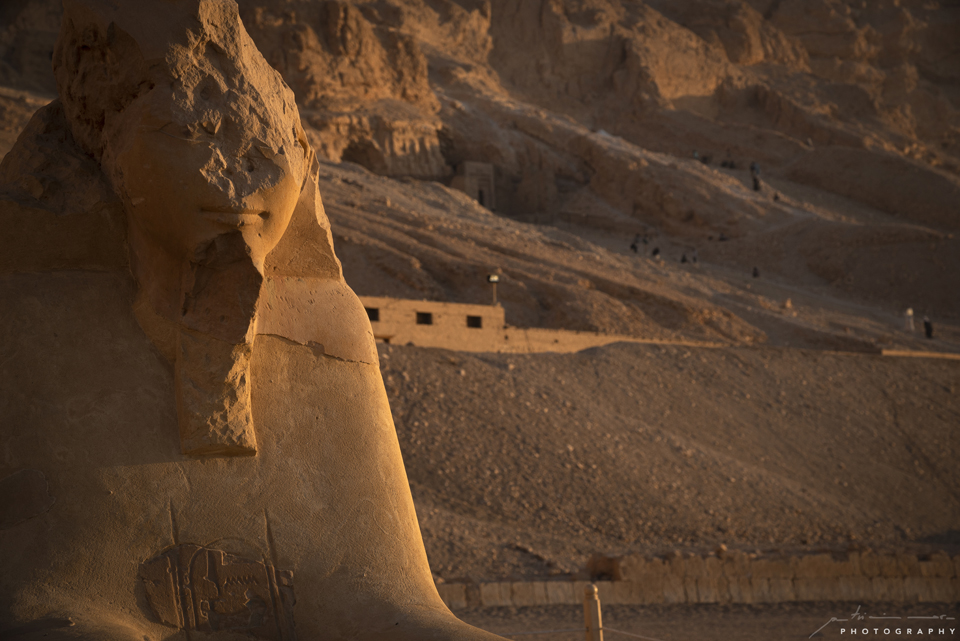
The sunrise today in Deir el-Bahari was beautiful. Patri couldn’t resist starting the morning by taking pictures of the surroundings. We are very lucky to be able to work every day in such a location.

Today at the tomb of Henenu we finished cleaning the corridor and started with a niche in which some cartonnage and new inscribed reliefs appeared, which Iria recorded. Inma has also been working at Henenu, where she has scanned some of the painted reliefs being studied by the epigraphers.

At Ipi’s tomb, Mohamed has continued to excavate and document the subsidiary chamber, while Bea and Antonio have been sifting the botanical remains that appeared at the entrance. Forensic anthropologists have been working with several mummified remains found in previous campaigns in the Ipi tomb, including a torso. They have been able to identify several individuals whose remains were found together.

Sergio, Raúl, Nisha, Carmen and Daniel have been working on E1, where they have been focusing on placing targets with the total station to carry out further photogrammetric work.

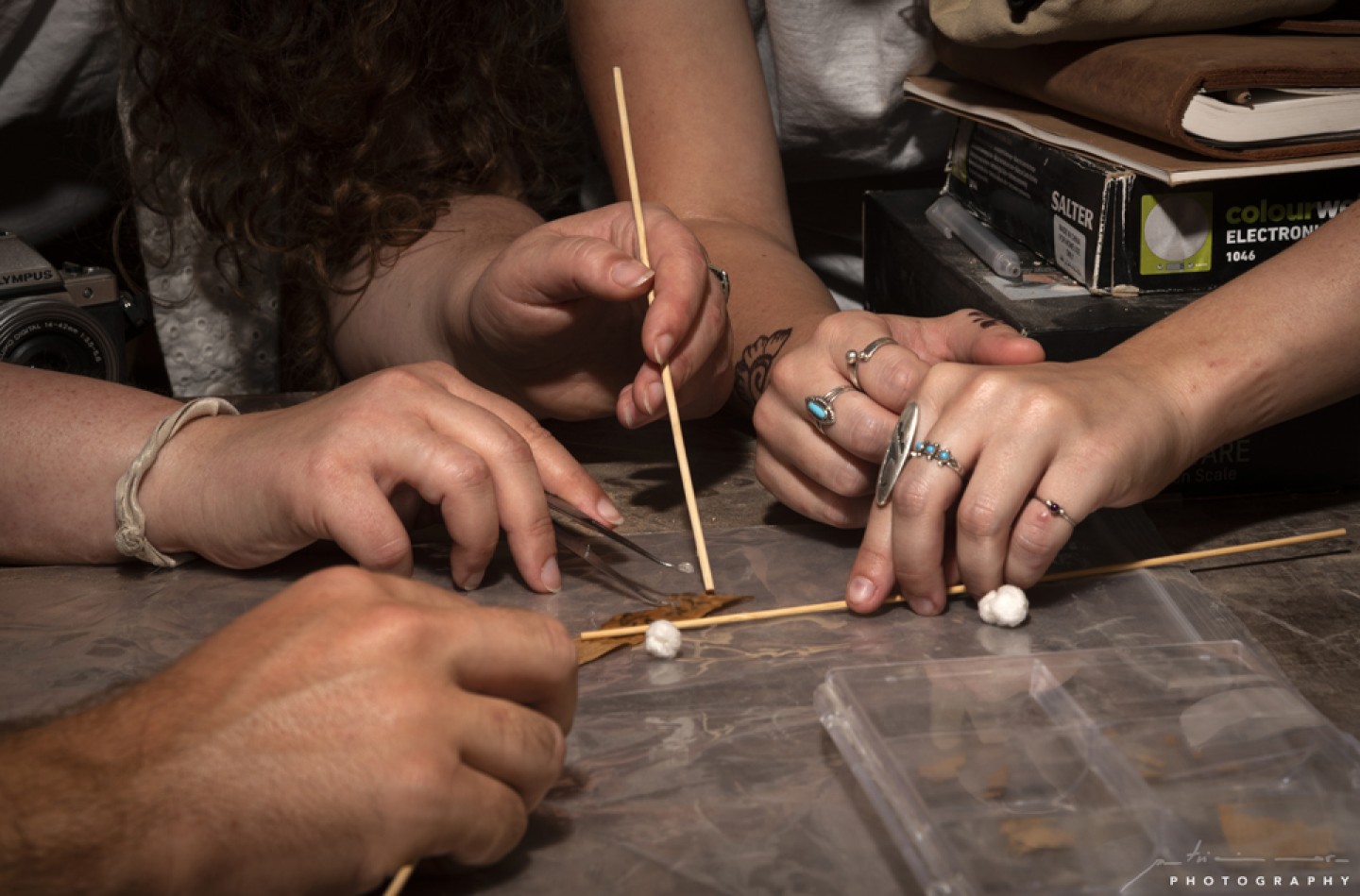
The conservation team has been working at all three tombs. Rawda is cleaning and consolidating various cartonnage from Ipi’s tomb. Meanwhile, Reed and Jaume are creating a list of the most special finds from Ipi during this campaign. This list aims to prioritise those that are in a more fragile state and therefore require more urgent treatment.

Last night Oscar left for Spain. Perhaps because of the absence of his jokes today has been a sadder day at Marsam. There are people who leave a great mark on the team despite their short stay with us and Oscar is certainly one of them. We miss you, hopefully we can meet again soon.

portada_DSC0393

Textiles, Trimble and Archaeology

Last night the last three members of the 2021 campaign team arrived: Elsa, Didi and Nisha. Each of these women are great specialists in different disciplines, so their work is absolutely essential to improve the project.

Elsa Yvanez is a specialist in the textiles of Meroitic Sudan. She works at the Centre for Textile Research (CTR) at the University of Copenhagen and is co-founder of the research project “Textile Archaeology in Egypt and Sudan”. Elsa will be with us for the rest of the campaign to analyse, in particular, the textiles from the mummification deposit.

Didi, who participated in this summer’s study season, continues to take points around Deir el-Bahari to produce a digital elevation model to analyse the geomorphology of the landscape. This is also part of a collaborative project with Angus Graham of Uppsala University, which aims to identify Middle Kingdom structures below ground.

Nisha, from Harvard University, has also joined the team and has quickly started working on E1. Together with Sergio, they have established fixed points in the tomb for photogrammetry. In addition, wooden panels have been added to the tomb to prevent sand and stones from falling into the excavated chamber.

At the tomb of Henenu, David has continued with the cleaning of the corridor and Iria has recorded new materials that have appeared. Inma scanned some of the most significant reliefs to create 3D models.

Inma also went to Ipi, where she scanned the heart of the vizier. We hope to be able to create a 3D model of the organ that will allow both researchers and the general public to easily approach this finding.

At Ipi’s tomb, the courtyard has been cleared for Mohamed to carry out the relevant photogrammetry. Meanwhile, Bea and Óscar have sifted and recorded many botanical remains from the entrance of the subsidiary chamber.

The conservation team is continuing to work with the special finds from each tomb: they have mainly consolidated and cleaned inscribed reliefs from Henenu and cartonnage from Ipi, as well as his sarcophagus.

Archaeologically it may have been a quieter day, but it is only the calm before the storm. In a few days the excavation of the courtyard of Henenu and the subsidiary chamber of Ipi will begin. E1 continues at a slow but steady pace and we hope to be able to finish the campaign with a fairly clear idea of the complicated architecture of the tomb’s entrance.

WhatsApp Image 2021-12-08 at 18.59.30

Splash

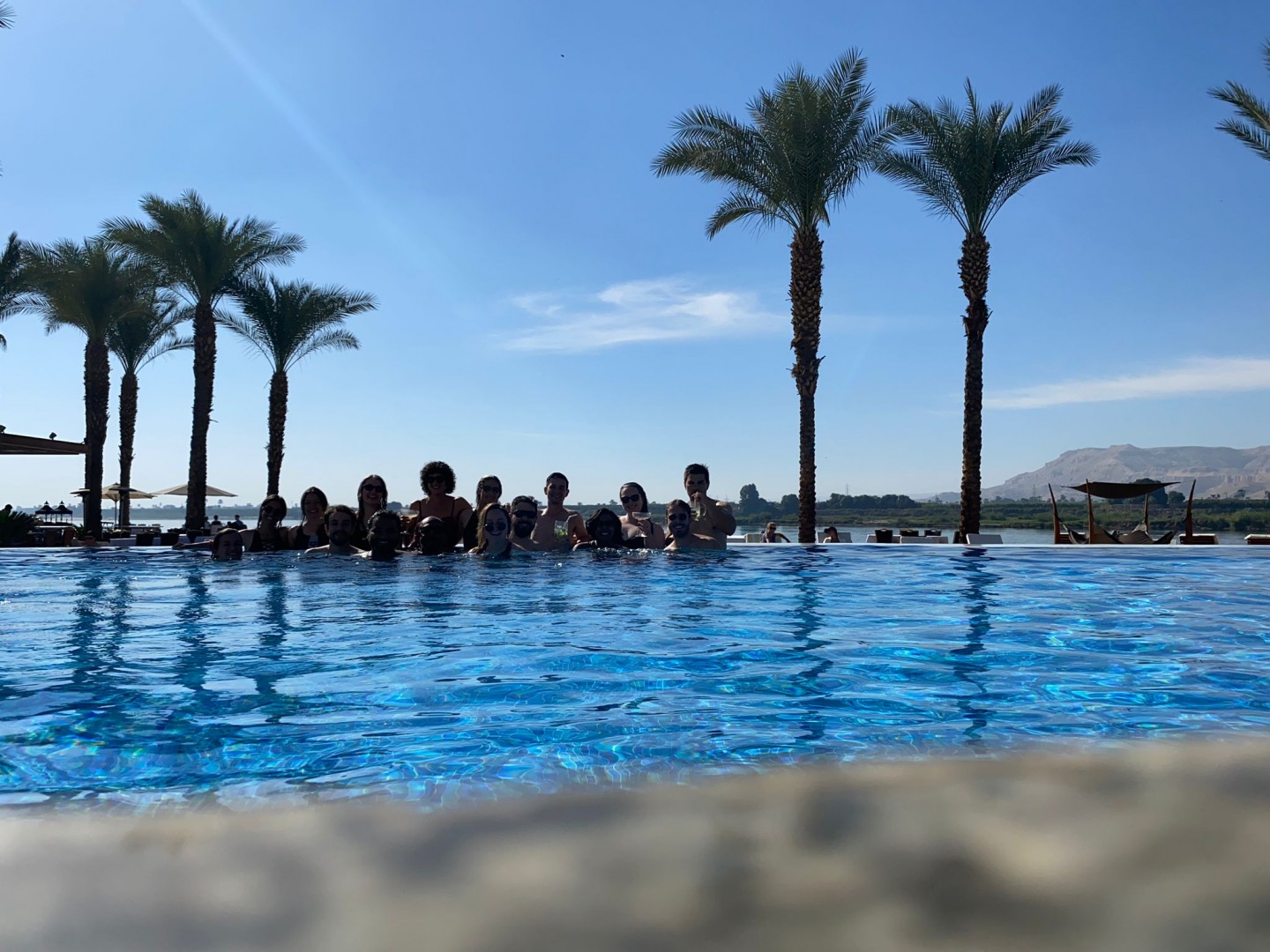
For the first time in over a month, most of the team took a well-deserved break. To celebrate Patri’s birthday, we went to spend the day at the Hilton Hotel.

The hotel is in a splendid location, right on the banks of the Nile. So after a quick ferry ride, the team arrived at the hotel without further delay.

As many of us travelled to Egypt without a swimsuit (who would have thought we would need one in December?), so we stopped at a shop to buy some. In the end, the selection of swimwear was very narrow, so most of the girls ended up in matching suits.

The team spent the day in the two hot pools of the Hilton, dancing to Arabic and Spanish music. There were dips, acrobatics and above all, lots of laughs. The team definitely needed a day to unwind from all the stress that a campaign like this entails.

They were not the only ones who took the day off. The forensic anthropologists, Manuel and Enrique, decided to visit the temple of Medinet Habu in the afternoon.

However, Antonio and Sergio had to stay at Marsam to work. Antonio had to teach in the ‘Formación en Egiptología’ courses and Sergio had to finish some work for Harvard University, where he is doing his PhD.

It has been one of the best days of the season so far, because the whole experience has brought us together as a team. Tomorrow we start a new week and considering that there are twenty intense days of work ahead, it was a great idea to recharge our batteries.

portada_DSC9587

Mummies and Garlands

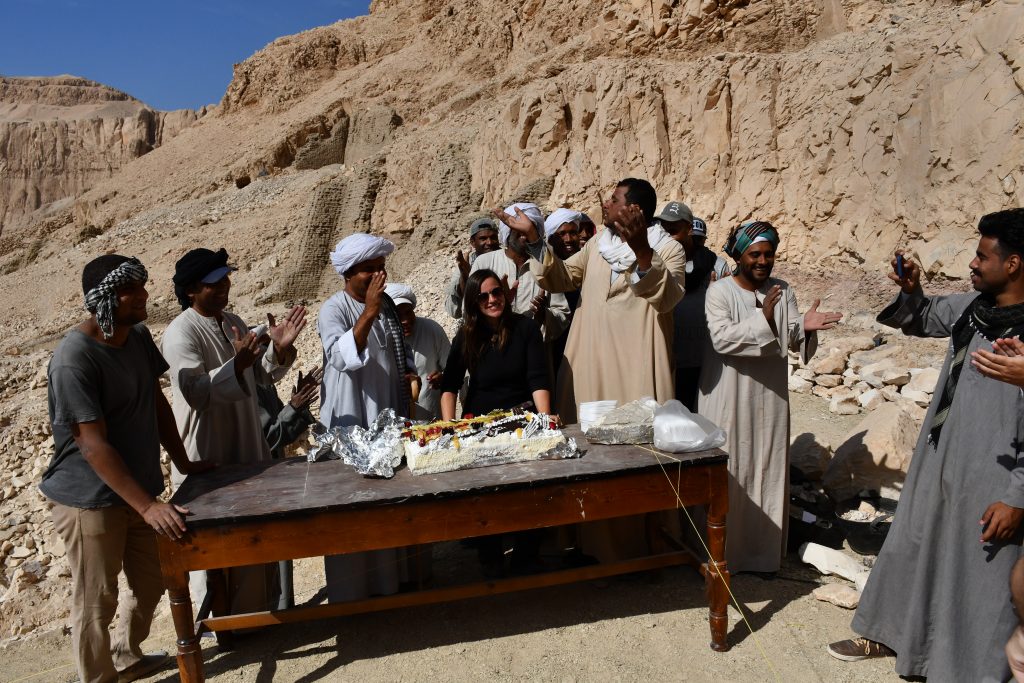
Today was once again a very special day at the site. Our dear Patri, the best photographer an archaeological team could wish for, had her birthday. Of course, at the site we celebrated such an event with cake, dancing and singing.

Photo: Mohamed Osman

Despite this special day, Patri has not stopped working. Not only is she finishing photographing all the natron bags, she is also taking care of documenting every detail of the flowers that are appearing in the subsidiary chamber of Ipi’s tomb and the E1 mummy.

Three more members of the team arrived last night: Sergio, Manuel and Enrique. Manuel and Enrique, forensic anthropologists, have already begun to analyse some fragments of mummies found in the first campaigns in the tomb of Ipi. The study of these mummies can help us to better understand mummification techniques, as well as the diet and various pathologies of ancient Egyptians.

Sergio has gone with Carmen and Raul to E1. There he has started to assess the structure of the tomb and to plan what the next steps should be for the excavation to continue safely.

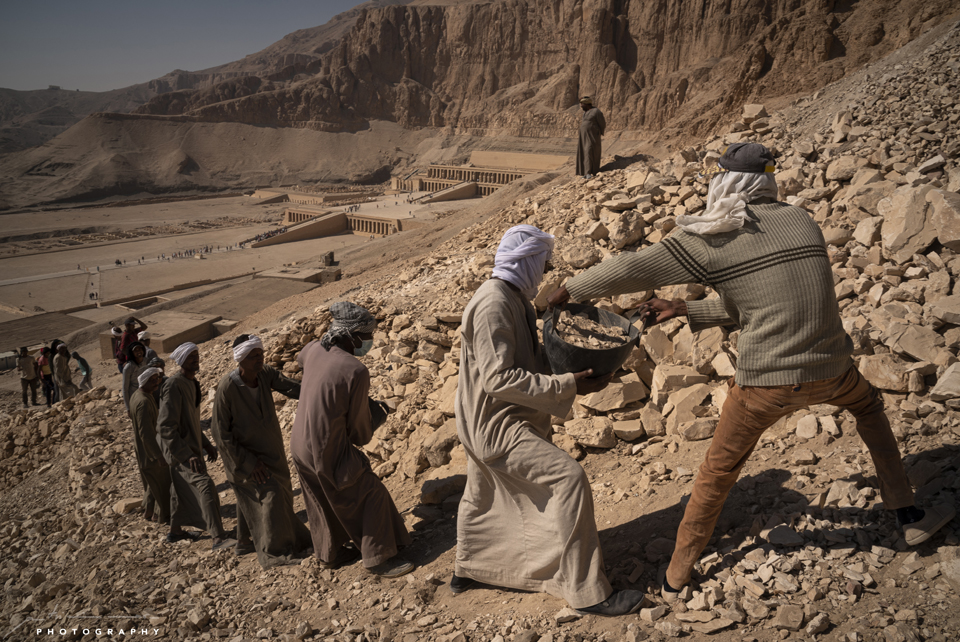
At Henenu’s tomb, sifting of the contents extracted from the corridor, the niches and some of the subsidiary chambers has begun. The excavation of the courtyard is expected to officially begin in the middle of next week.

At Ipi’s tomb, Mohamed and Bea have finished removing all the flowers with the help of the restorers. The garland, the most complex piece, needed the help of the whole restoration team to be removed. Reed has immediately started cleaning it, but due to its size it is likely to take several days of work.

Óscar has been working with Bea, recording all the materials, including a fragment of what appears to be the skin of a crocodile that has appeared in Ipi’s subsidiary chamber.

The afternoon at the Marsam was more relaxed today. With the help of the hotel staff, we gave Patri a surprise, including cake and ice cream. The evening ended on the roof terrace of the hotel, where we relaxed with drinks, dancing, and a game of cards, making the most of the beginning of our weekend.

portada_DSC8875

All the flowers

Today Ipi was once again in the spotlight. What seemed to be simple botanical remains at the threshold of the side chamber turned out to be a floral offering with the remains of palms, flowers and even a garland.

Mohamed and Bea have been carefully excavating the entrance all day. They have been taking samples of plant remains and fragments of charcoal that are being uncovered in order to analyze them, which will hopefully help to establish a date for the whole complex. It is a complicated and delicate excavation due to the fragility of the flowers and plants. Our aim is to try to extract all the flowers intact. For this reason, Ella, Lily and Jaume have been consolidating the most significant features as the excavation progresses. In addition, at the end of the day a seal impression appeared on a piece of clay attached to one of the bouquets of flowers.

Due to the amount of small plant fragments that have broken off at the entrance, Lily and Ella have put aside their work as conservators for a while to start sifting through all the sand that has been removed from the area.

Jaume has had to go to E1 because Carmen and Raúl have found a mummy’s torso. This is the first great discovery that this tomb has provided us with and it couldn’t come at a better time, as our forensic doctors are arriving this very night.

At Henenu everything is being prepared for the excavation of the courtyard, which will begin next week. The tomb has been cleaned and documented beforehand, the materials from inside the tomb have been recorded, and the conservation team has worked on the stone fragments found in the tomb, most of which come from the shafts.

Antonio, Mohamed and Bea spent the afternoon analysing the inscription on the seal impression found at Ipi. Thanks to the photographs that Patri has taken, they have been able to better discern some of the inscribed hieroglyphs. Tomorrow, we hope to finish the excavation of the entrance of this chamber, and hopefully it will continue to give us more joy.

portada_DSC8157_desenfocada

Work team

Today has been a day full of surprises, from the first minute of the morning the activity has been frenetic at Ipi’s tomb.

First of all, the conservation team has finished unfolding the papyrus fragments, and new inscriptions have appeared on them. After a preliminary analysis by Antonio, we can be almost certain that the papyrus can be dated to the Middle Kingdom.

While this was going on inside the tomb, the excavation of the subsidiary chamber continued in the courtyard. After ten minutes of excavating, a monumental entrance with botanical remains appeared. Attached to this entrance was also a section, delimited with limestone, with ceramic and bovine remains. This probably indicates a late burial, later than the initial monument which could be from the Middle Kingdom, which would explain why it is in the outermost part.

At Henenu’s tomb, David and Óscar have been doing photogrametry of different areas of the tomb. Iria has been recording materials that are still appearing during the cleaning process.

Raúl and Carmen have found a small wall of bricks inside E1. It is possible that Winlock or other previous archaeologists built it in order to move the sand and debris of the tomb.

As a result of all this activity, the work team at Ipi and the conservation team stayed at the site until after lunch. The excitement is palpable among the team, but archaeology requires patience. Even the smallest ceramic fragment can provide valuable information, which is why we have to analyze every stratum and record all the material present. Therefore, we will have to wait until tomorrow to continue excavating the subsidiary chamber, but you know what they said: patience is a virtue.

MKTP - Middle Kingdom Theban Project - Recuperando el pasado
logoUAH-footer

El proyecto

El Middle Kingdom Theban Project tiene como objetivos la excavación, estudio y publicación de varias tumbas de la necrópolis del Reino Medio en Deir el-Bahari (Henenu, Ipi, Neferhotep, E1) y de las tumbas de Dagi (TT 103) y Djari (TT 366) en la necrópolis de Asasif.

MKTP - Middle Kingdom Theban Project - Ministerio Egipcio de Antigüedades

Con la colaboración del Ministerio Egipcio de Antigüedades y las autoridades del Alto Egipto, Luxor y la Orilla Occidental.

Las tumbas

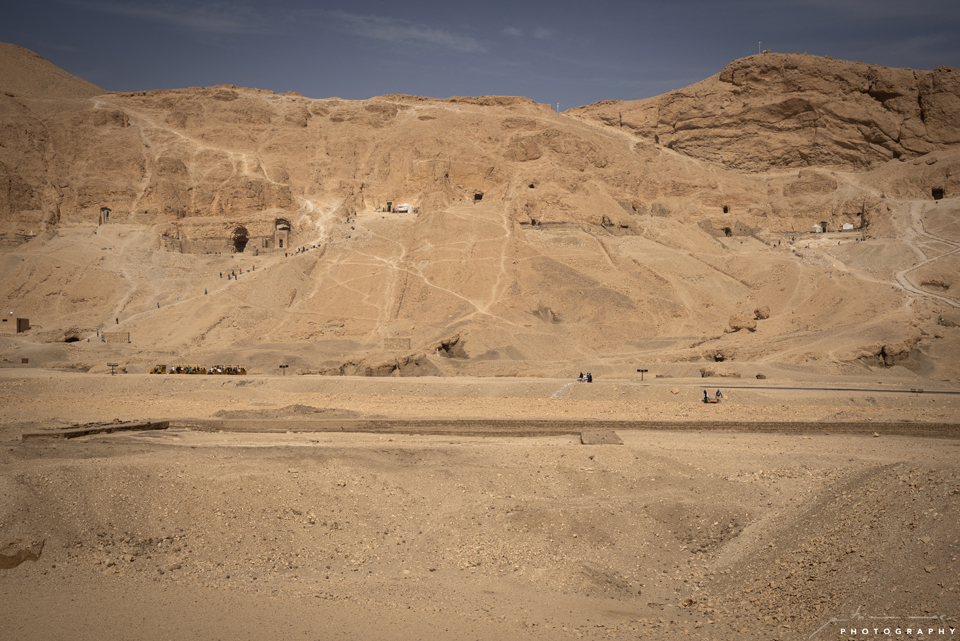
Las tumbas de Henenu (TT 313) e Ipi (TT 315) se encuentran en la colina norte de la necrópolis de Deir el-Bahari, donde fueron enterrados algunos de los oficiales más importantes de Mentuhotep II y principios del Reino Medio. 

La cámara funeraria de Harhotep (CG 28023) fue localizada en el patio de la tumba TT 314 y constituye uno de los ejemplos más interesantes en arquitectura, iconografía y epigrafía del yacimiento. 

En la planicie de Asasif, las tumbas de Dagi (TT 103) y Djari (TT 366) también representan monumentos a la memoria de altos cargos tebanos del reinado de Mentuhotep II que ayudaron a construir un gran estado.

MKTP - Middle Kingdom Theban Project - Patrocinadores - Ministerio de Ciencia e Innovación
MKTP - Middle Kingdom Theban Project - Patrocinadores - Gobierno de Castilla-La Mancha
MKTP - Middle Kingdom Theban Project - Patrocinadores - Fundación para el Conocimiento madri+d
MKTP - Middle Kingdom Theban Project - Patrocinadores - Ministerio de Cultura y Deporte
MKTP - Middle Kingdom Theban Project - Patrocinadores - Fundación Palarq
MKTP - Middle Kingdom Theban Project - Patrocinadores - Parque Científico y Tecnológico de Castilla-La Mancha
MKTP - Middle Kingdom Theban Project - Patrocinadores - Asociación Española de Egiptología
MKTP - Middle Kingdom Theban Project - Patrocinadores - Asociación de Amigos de la UAH

Copyright 2020 MKTP ©  Todos los derechos reservados. Editor: Antonio J. Morales
(con la colaboración de miembros MKTP)
Cookies | Privacidad

Sitio Web realizado por MindHouse