portada_DSC4532

The magic of restoration

In an archaeological campaign, excavating and documenting is not the only important thing. The restoration and conservation of materials is fundamental if we want to preserve our past. This season, the MKTP has a large team of restorers to carry out numerous tasks in all the tombs.

Last night Jaume arrived from the Scuola Superiore Meridionale (Naples), to joined the restoration team. He, Ella and Reed are working on Henenu’s tomb, they are cleaning and restoring limestone fragments, which are painted and inscribed. Thanks to their work, the epigraphers, Carlos and Sika, can study the fragments and analyse more details on them.

After the cleaning and analyses of the exterior shaft, another shaft within the corridor of the tomb was opened and studied by David. Besides, Iria continued her tasks on cataloguing and updating the inventory of the tomb.

At Ipi’s tomb, Bea supervised the excavation of some sectors of the main courtyard. She also classified and identified ceramics together with Bettina.

During the first half of the morning, Mohamed did some progress with the photogrammetry and the documentation of the courtyard of Ipi. After the breakfast, he went to the E1 where he also did the photogrammetry of the tomb, together with Jose.

At the East Sector, things are progressing well. Jose and Carmen have almost finished cleaning the entrance of the tomb and they have started documenting it. We hope that in a few days the corridor of the tomb is completely clean.

portada_DSC4156 copia

Translating Henenu

After two weeks, the team is getting bigger and bigger. We already need to take two trips from Marsam to Deir el-Bahari to move all our members, and this is just the beginning!

All the action has moved to Henenu’s tomb. The epigraphers, Sika and Carlos, have begun to work with the fragments of the sarcophagus. They connected some pieces and have started working with the conservation team to prioritise the cleaning and labelling of the fragments they want to study first. Then, Reed and Ella photograph the fragments, clean them to try to reveal more details of their decoration and label each piece with its specific object number.

Iria and David spent the day starting the photogrammetric documentation of one of the shafts, which is located in the courtyard of the tomb.

At E1, Jose continued cleaning the corridor of the tomb, which is still full of big stones.

Patri started her day as usual, visiting the different sites to document each excavation. After that, she started photographing the natron bags from the embalming shaft of Ipi.

Mohamed had a very busy day working between Ipi and Henenu to direct the surveying 3D documentation at both sites. While Mohamed was at Henenu, Bea focused on the excavation of the middle courtyard of Ipi, taking notes on the progress of the work. Meanwhile, Bettina made amazing progress with the ceramic jars, as this is her final week with us and she is very close to finishing the analysis of the entire set.

During the afternoon, most of the team went to the town to buy some sweets and SIM cards for their phones. They were very happy to find Nutella!

portada_DSC3750

E1 starts its engines

The eastern sector at the northern hills of Deir el-Bahari constitute the less examined area of the necropolis. In general, the whole area in the northern hills gathered tombs belonging to officials who lived in the period between mid-Twelfth Dynasty and XIII Dynasty.  The MKTP has the concesion of one of these tombs, E1 (MMA 521) and today, finally, we have started its excavation.

This tomb, whose owner is still unknown, it has not been excavated in modern times. This is why the work during this season is so promising.

Jose and Carmen are cleaning the entrance of the tomb, which was full of sand and stones. The architecture of this tomb seems really interesting and hopefully we would be able to share more details in the next few days.

At the same time, the works in Henenu’s tomb continued. Mohamed and David were documenting the shaft from the tomb and preparing the points for further photogrammetry. Iria assisted them and kept on registering new finds.

Ella, from the same programme at University College London as Reed, has joined the conservation team. Both of them started the restoration of the painted fragments found in Henenu’s tomb

In Ipi’s tomb, Bea spent the morning classifying finds and supervising the trenches related to ceramic material of the Middle Kingdom. Bettina continued studying the pottery from the embalming shaft of the tomb

In the evening, the epigraphers, Carlos and Sika, arrived in Luxor and joined the team to work during the following days at the tomb of Henenu.

portada_DSC3535-2

Retaking the works

Today after a free day, the archaeological activities of the MKTP team continued in Deir el-Bahari.

Jose, from the University of Jaen, arrived yesterday. With his arrival the East sector was opened once more. He is going to be in charge of the works at this tomb. Carmen is cooperating with him as archaeological assistance in helping to clear the tomb

At Henenu’s tomb, some cartonnage was found in the main chamber of the shaft that was treated in situ by Reed. David exhaustively documented the chambers as well as the passage of the main shaft. Iria registered the main finds of the day, which consisted mainly in wooden pieces and leather.

Reed and Fathi continued with the restoration labours of Henenu’s fragments and the fragments of ceramics from Ipi’s tomb.

Meanwhile, Bettina was also adding the manufacture details of the pottery coming from the courtyard of Ipi’s tomb and Mohamed continued the documentation and excavation of the courtyard.

During the afternoon, a sandstorm arrived and we quickly close the shutters and covered the windows in the workspace to wait out the storm. Luckily the worst of the storm had passed by the evening, when Ella arrived in Luxor and joined the MKTP.

DSC_0625

Spare time

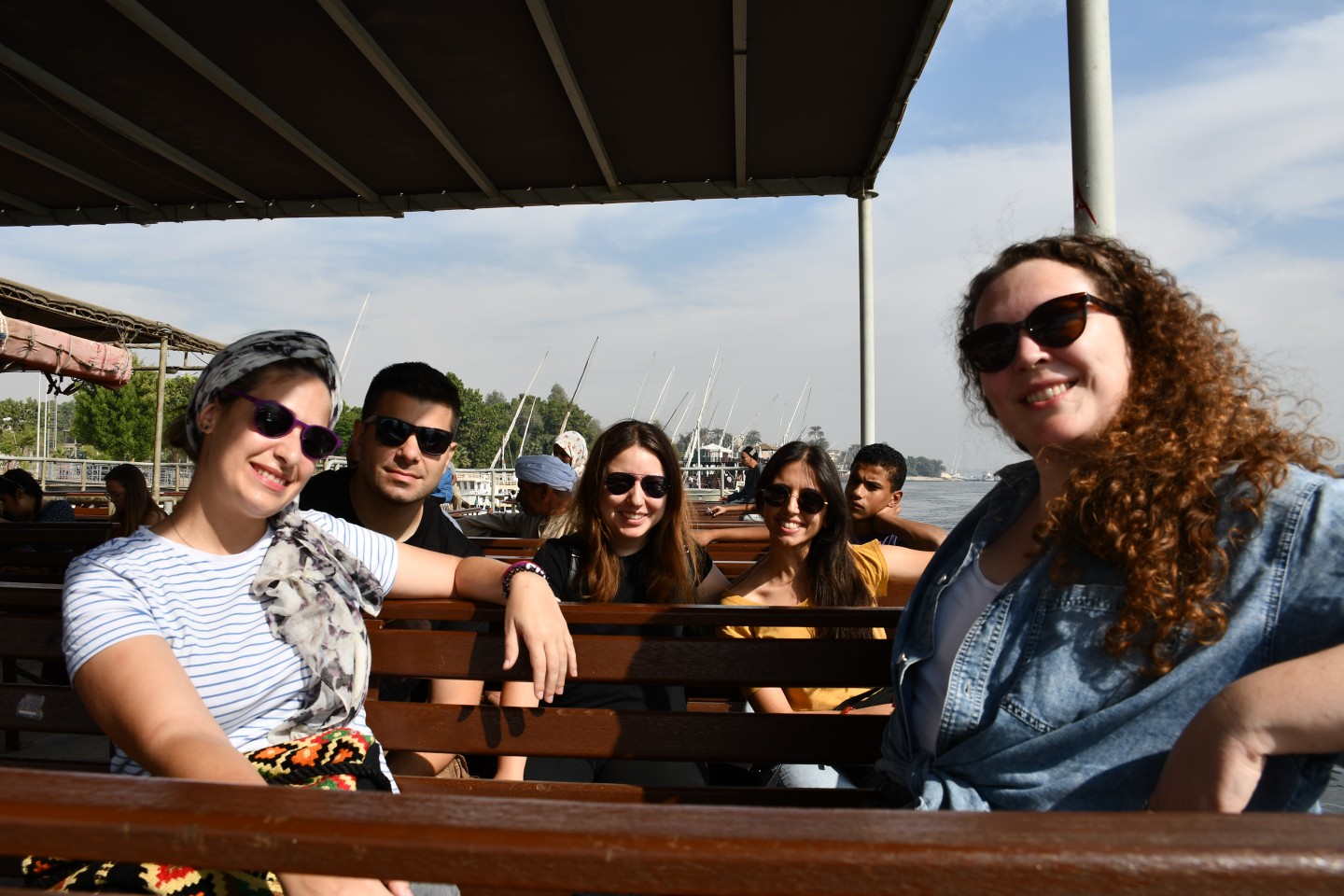
This Friday some members of the team visited the Karnak Temple and Khonsu Temple on the East bank of modern-day Luxor.

Once we were there, another member of the team, Hazem, joined us. He is currently working in TT110, but Hazem will re-join the MKTP next week. While we were in the Hypostile hall of Karnak temple, a student from the FSE program at the University of Alcalá was there spending her vacation and serendipitously met us. It was great to see you Alicia! 

During our visit we all greatly enjoyed the explanations provided by Mohamed and Bea. These consisted of an understanding of the architecture and various depictions within the temple.

Afterwards, the team visited the Aboudi Library to browse for some books and also went for lunch. Carmen was able to enjoy her favourite chocolate milkshake! After the meal, we came back to the Marsam Hotel and finished some work.

At the same time, Patri finished the weekly video of the project and Antonio gave his lecture to the FSE program.

It seems that a storm is coming tomorrow, we hope it passes quickly and brings better weather with it.

portada_DSC3258

Meeting other missions

Yesterday, the heat gave us a break and the archaeological works developed on site in slightly cooler weather.

David was working in Henenu’s shaft removing the debris and documenting the different parts of the shaft including the passage and chambers. Iria and Carmen assisted him and worked registering the objects and checking the last finds.

Mohamed worked on the excavation of the courtyard and identified ceramic materials from the Middle Kingdom coming from a few different areas by using the total station to search for patterns in their distribution. Reed and Fathi worked on the shabtis from Ipi’s tomb and Bea cleaned and extracted a human femur.

After breakfast, the team was invited to visit the Lost City of Amenhotep III and had the honour of meeting Dr. Zahi Hawass. Ahmed Naseh guided the team throughout the site and explained several aspects of the settlement.

After breakfast, the team was invited to visit the Lost City of Amenhotep III and had the honour of meeting Dr. Zahi Hawass. Ahmed Naseh guided the team throughout the site and explained several aspects of the settlement.

In the evening, the team went to the home of the head of the Marsam hotel for dinner, and there we met the Austrian-German excavation team. We talked about the very different projects and how they are currently developing in Egypt, while enjoying traditional Austrian food!

DSC_0542

Test day

Yesterday, the commission of the Permanent Committee of Antiquities visited the tomb of Ipi. They inspected the archaeological works in the main courtyard that are being carried out this season. They also entered the tomb of Ipi and saw the sarcophagus located in the funerary chamber. At the end of the visit, they evaluated the progress of the Middle Kingdom Theban Project very positively.

© Mohamed Osman

Due to this inspection the works started later than usual. In addition, the previous night we were notified that three members of the team (Antonio, Patri and Bettina) had been in contact with someone who tested positive for COVID. Luckily, the affected person was sensible and communicated the situation immediately so that these members of the team could self-isolate. Due to this, Antonio, Patri and Bettina could not continue with their tasks on site until they could take a COVID test themselves. Mohamed was the one who spoke to the commission and introduced the site. He did a great job and thanks to that we all obtained a satisfactory evaluation.

© Mohamed Osman

As we were less people working at the site, Henenu’s tomb remained closed for the day. David and Iria started to analyze the painted reliefs from Henenu’s tomb by recording the main data of each piece.

© Mohamed Osman

Mohamed kept on supervising the ongoing archaeological works of the courtyard. At the same time, Bea continued her tasks with the ceramic materials and identifying and classifying the finds of the day together with Carmen who registered the new objects.

© Mohamed Osman

Reed worked with some fragments from Henenu’s tomb and with the special finds from Ipi’s tomb. Among them, she selected a group of shabtis to begin working on the next day.

After thirty-six hours since the intitial contact with the person who had tested positive for covid, Antonio, Patri and Bettina were able to take a test that fortunately came back negative.

© Mohamed Osman

The activity during the day was calmer than usual and even the dinner was more unexpected than usual and a nice surprise as it consisted of pizza! Let’s see what tomorrow brings!

portada_DSC0814

Starting works at Henenu’s tomb

Henenu was king’s attendant, overseer of the great house and overseer of horn, hoof, feather and scale of Montuhotep II. At the end of the Eleventh Dynasty, this king unified the whole country. Henenu is one of the earliest high officials attested at Thebes and today we have started the excavation of his tomb.

David and the workers cleaned and started to document shaft 6A and checked passage 6B and the adjacent chamber 6D together with the inspectors. At the same time, Iria registered some finds coming from these areas.

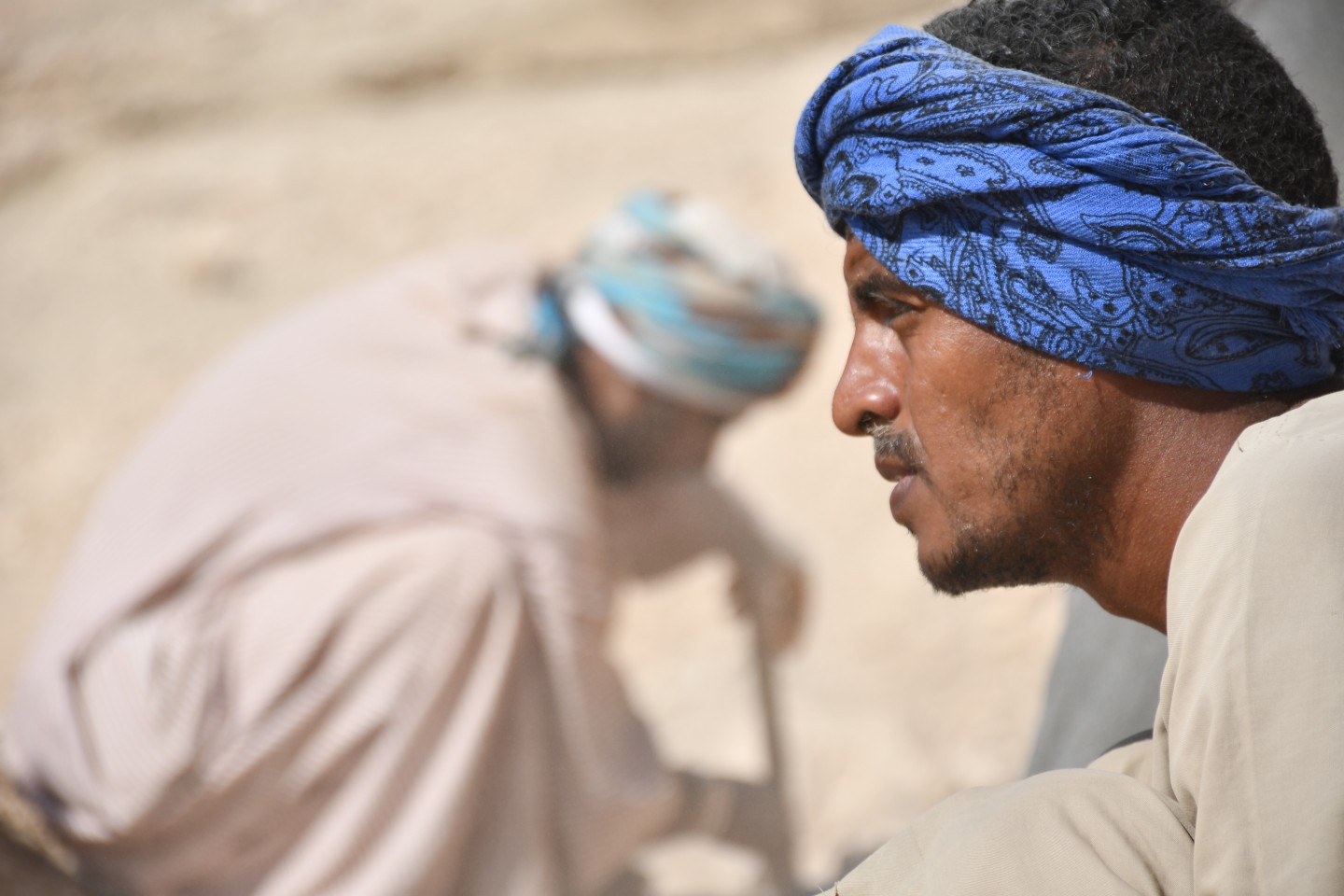
In Ipi’s tomb, one of our workers, Antar, used the big iron nails to help destroy the huge rock that we rolled out of the way the other day. The rock was still occupying the middle of the courtyard of the tomb and it was too dangerous to continue moving it as we were not able to control its trajectory. Thanks to these nails, Antar was able to cut the rock into small pieces, and at last Ipi’s courtyard is free of any rock!

Furthermore, Mohamed continued directing the excavation of the pits that have appeared in Ipi’s courtyard. The main materials emerging from these shafts are made of ceramic, so Bettina’s work is increasing every day!

Carmen registered the finds of the day from the open trenches. Bea and Bettina continued identifying and classifying the ceramics found in the 2016 and 2017 seasons.

Finally, Reed kept on documenting and treating Henenu’s fragments and assessing the recents finds including ceramics, bones, wooden pieces, textile as well as some unidentified materials.

In the afternoon, we have started the classes of the FSE, FSEI, and the masters degree of the University of Alcalá. Iria and Bea introduced the module of Magic and Religion in ancient Egypt and Iria started the first theme.

Carmen is working hard during her leisure time to learn some Arabic. She notes every Arabic word that she hears from the workers or the Marsam’s waiters in a small notebook that she carries everywhere. At the end of the campaign she is going to become bilingual!

6_portada_DSC2657

Arrivals and new methods

Today, the rais Alí has joined the team to lead the archaeological works. Without a doubt, there is no rais in Luxor who knows his workers and the site better than Ali Farouk.

Furthermore, David, from the University of Granada, arrived yesterday. He will be directing the archaeological works that are going to take place in Henenu’s tomb. David and Iria prepared the light system for the shaft of the tomb and made some room inside for a table and boxes of catalogued objects. David began cleaning the shaft and prepared all the tools and an inventory for the work which will start in the coming days.

Carmen and Bea continued organizing the ceramic materials with Bettina by dividing Middle Kingdom pottery from that of other periods. Bettina has also drawn some of the jars found in the embalming deposit that did not yet have previous illustrations.

Mohamed continued excavating the trenches and documented them through photography and 3D modeling. Carmen registered the materials discovered in the last few days. Afterwards, David and Iria separated and organized the ceramics and other materials which came from the opened trenches of the courtyard.

Reed has continued with the restoration of several pieces from the Henenu tomb with the help of inspector Fathi Badawy. When they are done, Patri will photograph each piece for documentation. The work of our photographer is incredible, she travels all over the site not only taking amazing archaeological photographs, but also documenting the human side of the project. It is impressive how well she manages to make us look after a whole day full of dust and sand.

© Mohamed Osman

2_portada_DSC2132

Working under the hot sun

It’s 7th November, but today the temperature has been over 35ºC. Not even the cold lemonades brought to us at mid-morning have been able to soothe the heat we have suffered in Ipi’s courtyard and Henenu’s tomb.

At the beginning of the day, the moudir visited Henenu’s tomb to check the organization and inventory process of the main finds from previous seasons of the MKTP. Meanwhile, Iria finished the inventory she started with Carmen in the previous days and prepared the tomb with Antonio for the archeological work that is going to take place in the following days.

The moudir has also worked on the epigraphy of a wooden piece found during the 2016 season. The piece still had some cursive hieroglyphs painted on it in black ink. First, Patri took photographs of the piece to document it. Then, the moudir has been in charge of copying the inscription to study it in the following days.

In regard to the tasks in Ipi’s tomb, Mohamed continued with the archaeological works in the courtyard. He is also preparing illustrations and sketches as well as the photogrametry of the courtyard. One of his main activities is surveying the area to search for archaeological indicators for opening future trenches. Also at Ipi’s tomb, Carmen and Bea organized the ceramic materials found in the 2016 and 2018 archaeological campaigns of the project with the help of Bettina. Together, they have separated the pottery fragments of the Middle Kingdom from those of the New Kingdom, Late Period and Graeco-roman period. During all of this, Mohamed continues to register the new findings within the site.

Reed has focused on the restoration and conservation of several pottery and stone fragments in order to guarantee their availability and access to researchers and collaborative experts of the MKTP.

In the afternoon, Antonio and Bea organized the economic aspects of the project and tonight, a new member is arriving to Luxor and joining the MKTP, David.

Welcome David! We hope the sun will be gentle to you.

MKTP - Middle Kingdom Theban Project - Recuperando el pasado
logoUAH-footer

El proyecto

El Middle Kingdom Theban Project tiene como objetivos la excavación, estudio y publicación de varias tumbas de la necrópolis del Reino Medio en Deir el-Bahari (Henenu, Ipi, Neferhotep, E1) y de las tumbas de Dagi (TT 103) y Djari (TT 366) en la necrópolis de Asasif.

MKTP - Middle Kingdom Theban Project - Ministerio Egipcio de Antigüedades

Con la colaboración del Ministerio Egipcio de Antigüedades y las autoridades del Alto Egipto, Luxor y la Orilla Occidental.

Las tumbas

Las tumbas de Henenu (TT 313) e Ipi (TT 315) se encuentran en la colina norte de la necrópolis de Deir el-Bahari, donde fueron enterrados algunos de los oficiales más importantes de Mentuhotep II y principios del Reino Medio. 

La cámara funeraria de Harhotep (CG 28023) fue localizada en el patio de la tumba TT 314 y constituye uno de los ejemplos más interesantes en arquitectura, iconografía y epigrafía del yacimiento. 

En la planicie de Asasif, las tumbas de Dagi (TT 103) y Djari (TT 366) también representan monumentos a la memoria de altos cargos tebanos del reinado de Mentuhotep II que ayudaron a construir un gran estado.

MKTP - Middle Kingdom Theban Project - Patrocinadores - Ministerio de Ciencia e Innovación
MKTP - Middle Kingdom Theban Project - Patrocinadores - Gobierno de Castilla-La Mancha
MKTP - Middle Kingdom Theban Project - Patrocinadores - Fundación para el Conocimiento madri+d
MKTP - Middle Kingdom Theban Project - Patrocinadores - Ministerio de Cultura y Deporte
MKTP - Middle Kingdom Theban Project - Patrocinadores - Fundación Palarq
MKTP - Middle Kingdom Theban Project - Patrocinadores - Parque Científico y Tecnológico de Castilla-La Mancha
MKTP - Middle Kingdom Theban Project - Patrocinadores - Asociación Española de Egiptología
MKTP - Middle Kingdom Theban Project - Patrocinadores - Asociación de Amigos de la UAH

Copyright 2020 MKTP ©  Todos los derechos reservados. Editor: Antonio J. Morales
(con la colaboración de miembros MKTP)
Cookies | Privacidad

Sitio Web realizado por MindHouse